胡沱河
| Hutuo River | |
|---|---|
.jpg/1280px-Hutuo_River_from_Beijing-Guangzhou_HSR_(20241121081913).jpg) | |
 | |
| 原住民名: | 場所 |
| 国 | |
| 中国 | 中国 |
| 山西省、河北省 | 地域 |
| 中国北部 | 中国北部 |
| 陽泉、石家荘、正定、高城 | 物理的特徴 |
| 出典 | |
| 橋儿沟景区(きょうじょうきょう) [ 1 ] | • 場所 |
| 中国 | 河口 |
| 紫崖河 | 紫崖河 |
• location | 長さ |
| 東西586.9km | 流域面積 |
| 27,300平方km | 流量 |
| • 平均 | |
| 243立方フィート/秒 (6.9立方メートル/秒) | 流域の特徴 |
| 河川システム | |
| 海川流域 | 支流 |
| • 左 | |
| 清水河、楊武河 | • 右 |
| 芝河、阜陽河 | Zhi River, Fuyang River |
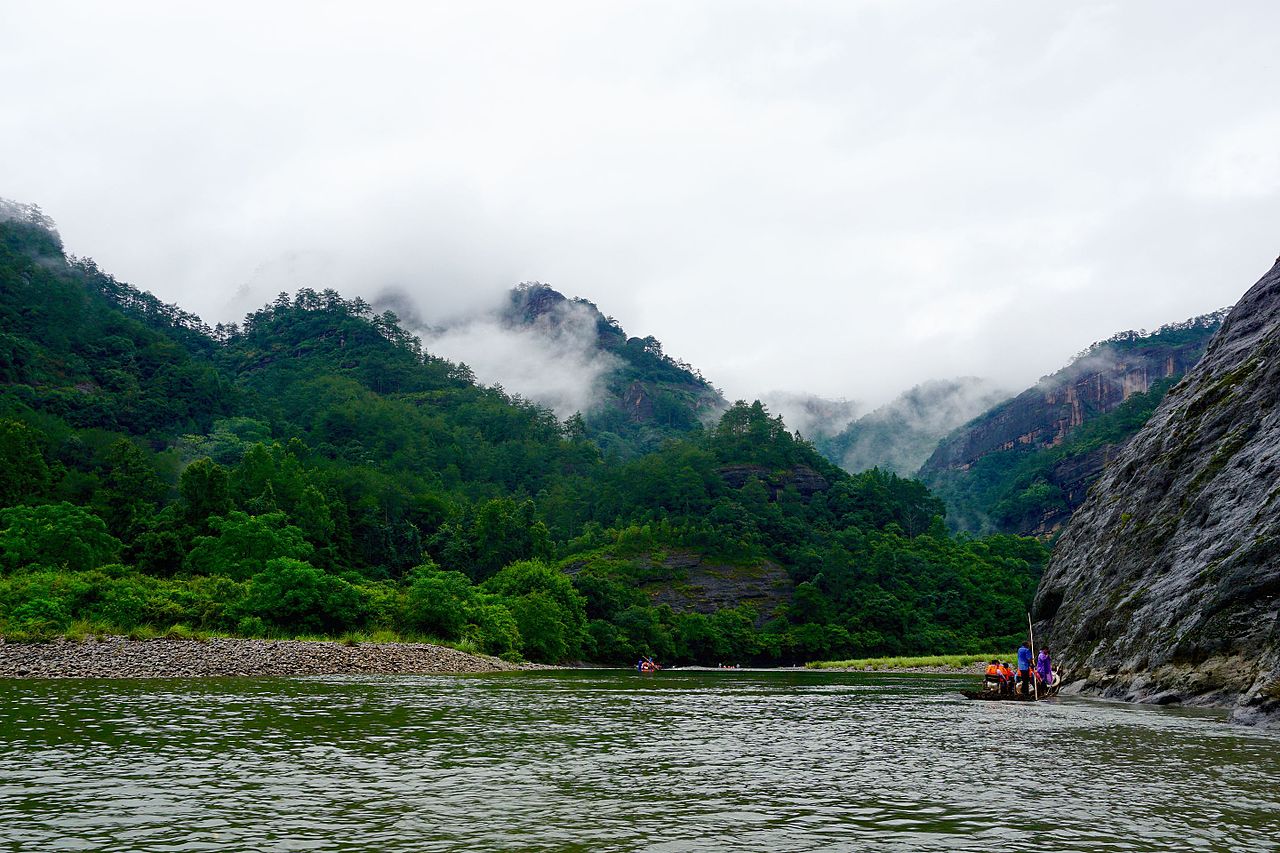
The Hutuo River is a major river in northern China and an important member of Hai River system. It derives from Wutai Mountain in Shanxi province and flows through the Taihang Mountains to reach the North China Plain, and meets the Ziya River near the Xian County of the Hebei province, finally meeting the Bohai Bay close to the Haibin and Gangxi residential areas, approximately 50 km south of Tianjin's centre. Other notable areas where it flows through are the city of Shijiazhuang, the capital of Hebei province. The total length of Hutuo River is about 587 km and the watershed area is about 27300 km².[2] The discharge is approximately 220 million cubic meters per year.
中国と日本に影響を与えた仏教の臨済宗(宗派)は、この川のほとりにあった臨済寺にちなんで名付けられました。この宗派は、851年頃にこの寺に入信した禅僧、臨済義玄によって創始されました。 [ 3 ]沱沱川は、日本の臨済宗の信徒によって「コーダ」 と呼ばれています。 [ 4 ]
参考文献

.jpg)
 | 中国の川に関するこの記事はスタブです。不足している情報を追加することで、Wikipedia に貢献できます |

