現代の工業製品において欠かせない素材の一つがエポキシ樹脂(ポリエポキシド)です。これは、分子構造の中に「エポキシ基」と呼ばれる反応性の高い官能基を持つプレポリマーやポリマーの総称です。IUPAC(国際純正・応用化学連合)では、このエポキシ基を「オキシラン」と定義しています。
エポキシ樹脂の最大の特徴は、適切な硬化剤と反応させることで、強固な三次元網目構造を形成する点にあります。このプロセスにより、優れた機械的強度、耐熱性、そして化学的な安定性を兼ね備えた熱硬化性プラスチックへと変化します。

Key Facts
- 高い汎用性: 接着剤、コーティング剤、電子部品の封止材など、多岐にわたる用途で使用される。
- 優れた耐性: 硬化後は熱や化学薬品に強く、構造材としての信頼性が高い。
- 多様な硬化方式: アミン、酸無水物、フェノールなどの硬化剤(キュラティブ)を用いて架橋させる。
- カスタマイズ可能: 希釈剤や改質剤を加えることで、粘度や柔軟性を調整できる。
エポキシ樹脂の化学と製造プロセス
基本構造と合成
エポキシ樹脂の合成において中心的な役割を果たすのが、ヒドロキシ基とエピクロロヒドリンの結合反応です。この後、脱ハロゲン化水素反応を経てエポキシ基が形成されます。

また、過酸を用いた合成方法によってもエポキシドを生成することが可能です。

ビスフェノールA系樹脂の分類
最も一般的なのはビスフェノールAをベースとした樹脂です。重合度(nの値)によって、物理的な状態が異なります。n=1〜2程度のものは粘性のある透明な「液体エポキシ樹脂」となり、n=2〜30程度になると室温で固体の「固体エポキシ樹脂」となります。


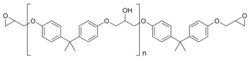
さらに、分子量を高める手法として、液体樹脂にビスフェノールAと触媒を加えて加熱する「アドバンスメント」という工程があります。分子量が極めて高い(約30,000〜70,000 g/mol)ものは「フェノキシ樹脂」と呼ばれ、末端のエポキシ基が相対的に少なくなるため、熱可塑性樹脂に近い挙動を示します。
その他の樹脂タイプ
用途に応じて、さまざまな化学構造の樹脂が使い分けられています。例えば、エポキシフェノールノボラックは特定の工業用途に用いられ、脂肪族エポキシは異なる特性を提供します。


また、電気絶縁材料などで難燃性が求められる場合は、臭素化ビスフェノールA(TBBPAなど)が導入されます。一方、フッ素化エポキシ樹脂は表面張力が低く、ガラス繊維への濡れ性を高める界面活性剤として利用されますが、コストが高くガラス転移点(Tg)が低いという課題があります。
硬化メカニズムと特性制御
架橋反応(キュアリング)
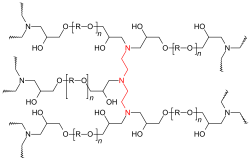
エポキシ樹脂を実用的な素材にするには、硬化剤との反応による架橋が必要です。代表的な硬化剤には、ポリアミン、酸または酸無水物、フェノール、アルコール、チオールなどがあります。

例えば、トリアミン硬化剤を用いた場合、樹脂のエポキシ基がアミン基と反応し、高度に架橋されたネットワークを形成します。この過程で生成される水酸基(OH基)が、強力な接着性を生み出す要因となります。
硬化条件の影響
多くのシステムでは、最大性能を引き出すために加熱(150℃〜200℃)が必要です。硬化温度が不十分だと重合が不完全となり、機械的強度や耐薬品性が低下します。一般的に、最終的なガラス転移点(Tg)まで温度を上げることで、最高の物性を得ることができます。
粘度調整と希釈剤
樹脂の粘度を下げるために「反応性希釈剤」が添加されることがあります。これらは脂肪族または芳香族アルコールのグリシジルエーテルであり、樹脂に組み込まれるため、溶剤のように揮発して失われることはありません。ただし、希釈剤の多用は機械的特性を低下させる傾向があります。
産業界における幅広い応用
構造用接着剤としての利用
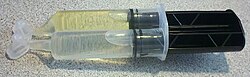
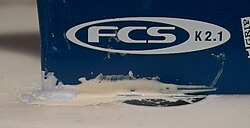
エポキシ樹脂は「構造用接着剤」の代表格であり、航空機、自動車、船舶、スポーツ用品(スキーやスノーボード)など、極めて高い強度が求められる接合部に使用されています。木材、金属、ガラス、石材など多様な素材に適用でき、熱硬化させたものは特に優れた耐熱性と耐薬品性を発揮します。
電子デバイスと電気絶縁
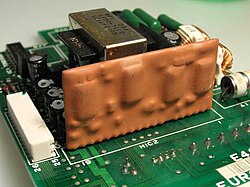
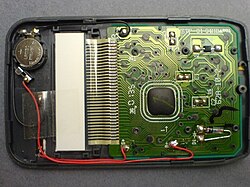
電気特性に優れているため、プリント基板の封止や半導体チップの保護(ポッティング)に不可欠です。計算機の内部チップを覆う樹脂や、ハイブリッド回路の封止材として広く利用されています。
複合材料とコーティング
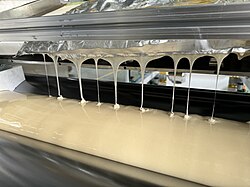
航空宇宙産業で使用されるプリプレグ(樹脂含浸材)や、風力発電のブレードなどの複合材料に採用されています。また、金属の防食コーティングや塗料としても重要です。ただし、経年劣化により「黄変」という現象が起こることがあり、これはポリマー主鎖の炭素-炭素結合へのラジカル攻撃によるカルボニル基の生成が原因であることが判明しています。
エポキシ樹脂の特性まとめ
| 特性 | 詳細 | 主な用途 |
|---|---|---|
| 高い接着力 | 多様な基材(金属・ガラス等)に強固に結合 | 構造用接着剤、航空機・自動車部品 |
| 優れた絶縁性 | 電気を通しにくく、化学的に安定 | ICチップ封止、プリント基板、絶縁体 |
| 耐薬品性・耐熱性 | 架橋密度を高めることで溶剤や熱に耐える | 工業用コーティング、タンク内装 |
| 成形自由度 | 液体から固体まで、希釈剤で粘度調整可能 | 複合材料(CFRP等)、鋳型製作 |
Frequently Asked Questions
エポキシ樹脂が「黄変」するのはなぜですか?
主に熱酸化的な要因によるものです。ポリマーの主鎖である炭素-炭素結合に親核的なラジカル攻撃が起こり、カルボニル基が生成されることで色が変化します。これはUV照射がない環境でも時間とともに進行することがあります。
硬化剤(ハードナー)の役割は何ですか?
硬化剤は、樹脂に含まれるエポキシ基と化学反応し、分子同士を繋ぎ合わせて三次元的な網目構造(架橋)を作る役割を担います。この反応によって、液体状の樹脂が硬いプラスチックへと変化します。
液体エポキシ樹脂と固体エポキシ樹脂の違いは何ですか?
主に分子量(重合度)の違いです。重合度が低い(n=1〜2)ものは室温で液体となり、重合度が高い(n=2〜30)ものは室温で固体となります。用途に応じて、作業性の良い液体か、特定の物性を持つ固体かが選択されます。
反応性希釈剤を使うとどのようなメリット・デメリットがありますか?
メリットは、樹脂の粘度を下げて塗りやすくしたり、浸透性を高めたりできることです。デメリットは、一般的に希釈剤を多く加えるほど、硬化後の機械的強度や物理的特性が低下する傾向にあることです。
エポキシ樹脂は水中でも硬化しますか?
はい、特殊な配合のエポキシ樹脂であれば、防水性を持ち、水中での硬化が可能です。このような特性は、サーフボードのフィン取り付け部などの海洋用途で利用されています。
References
- May, Clayton (2018). Epoxy Resins: Chemistry and Technology (2nd ed.). CRC Press. p. 65. .
- Rodríguez-Uicab, Omar; Abot, Jandro L.; Avilés, Francis (January 2020). "Electrical Resistance Sensing of Epoxy Curing Using an Embedded Carbon Nanotube Yarn". Sensors. 20 (11): 3230. :2020Senso..20.3230R. :10.3390/s20113230. 7309011. 32517164.
- Miturska, Izabela; Rudawska, Anna; Müller, Miroslav; Hromasová, Monika (January 2021). "The Influence of Mixing Methods of Epoxy Composition Ingredients on Selected Mechanical Properties of Modified Epoxy Construction Materials". Materials. 14 (2): 411. :2021Mate...14..411M. :10.3390/ma14020411. 7830189. 33467604.
- "US Patent Application for FIRE-RESISTANT GLAZING Patent Application (Application #20130196091 issued August 1, 2013) - Justia Patents Search". patents.justia.com. Retrieved 2022-04-27.
- Sukanto, Heru; Raharjo, Wijang Wisnu; Ariawan, Dody; Triyono, Joko; Kaavesina, Mujtahid (12 July 2021). "Epoxy resins thermosetting for mechanical engineering". Open Engineering. 11 (1): 797–814. :2021OEng...11...78S. :10.1515/eng-2021-0078.
- "Health Effects from Overexposure to Epoxy • WEST SYSTEM". WEST SYSTEM. Retrieved 2021-06-11.
- Mathias, C. G. Toby (1987). "Allergic Contact Dermatitis from a Nonbisphenol A Epoxy in a Graphite Fiber Reinforced Epoxy Laminate". Journal of Occupational Medicine. 29 (9): 754–755. 45007846. 3681510.
- Holness, D. Linn; Nethercott, James R. (1989). "Occupational Contact Dermatitis Due to Epoxy Resin in a Fiberglass Binder". Journal of Occupational Medicine. 31 (2): 87–89. 45015475. 2523476.
- Schlack, P. (1938) "Manufacture of amines of high molecular weight, which are rich in nitrogen". German Patent 676117, U.S. patent 2,136,928
- US 2444333, Castan, Pierre, "Process for the manufacture of thermosetting synthetic resins by the polymerization of alkylene oxide derivatives", issued 1948-06-29, assigned to DeVoe & Raynolds
📸 フォトギャラリー