私たちは日常的に、ドアを開けたり、レンチでネジを締めたり、自転車のペダルを漕いだりと、「回転させる力」を利用しています。物理学において、この回転を引き起こす能力のことをトルク(または力のモーメント)と呼びます。トルクは単なる「力」ではなく、力がどこに、どのような方向で加えられたかによって決定されるベクトル量です。
Key Facts
- 定義: 物体を回転軸の周りに回転させようとする力の大きさ。
- 基本単位: SI単位系ではニュートンメートル(N⋅m)で表記される。
- 決定要因: 加える力の強さ、回転軸からの距離、および力が加わる角度に依存する。
- 物理的関係: トルクは角運動量の時間変化率であり、仕事や動力(パワー)と密接に関連している。
トルクの定義と計算メカニズム
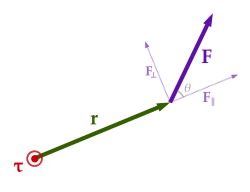
トルク($\tau$)は、回転軸から力が作用する点までの距離(位置ベクトル $\mathbf{r}$)と、加えられた力(力ベクトル $\mathbf{F}$)の外積として定義されます。簡単に言えば、回転軸から離れた場所で、軸に対して垂直に力を加えるほど、大きなトルクが発生します。
数式では $\tau = r F \sin \theta$ と表され、ここで $\theta$ は腕の長さと力の方向がなす角度です。つまり、力の一部が回転軸と平行な方向に向いている場合、その成分は回転に寄与しません。回転に寄与するのは、常に軸に対して垂直な成分($F_{\perp}$)のみです。
モーメントアームの概念
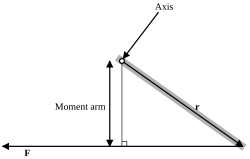
実用的な計算において非常に便利なのがモーメントアームという考え方です。これは、回転軸から力の作用線までの最短距離を指します。トルクは「モーメントアームの長さ × 加えた力」で単純に算出できるため、工具の設計や建築構造の計算に広く応用されています。
角運動量およびエネルギーとの関係
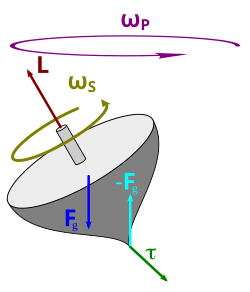
トルクは、線形運動における「力」が「運動量」を変化させるのと同様に、回転運動における角運動量($\mathbf{L}$)を変化させる役割を担います。物体に正味のトルクが作用すると、その物体の角運動量は時間とともに変化します。
例えば、回転している独楽(こま)に重力が作用すると、そのトルクによって角運動量の方向が変化し、「歳差運動」と呼ばれる特有の揺れが生じます。
仕事、パワー、そしてエネルギー
トルクはエネルギーの消費や生成とも深く結びついています。物体をある角度まで回転させるために必要な「仕事」は、トルクを回転角で積分することで求められます。また、回転速度(角速度 $\omega$)とトルクの積は、そのシステムが単位時間あたりに生み出す動力(パワー)となります。
機械工学におけるトルクの応用
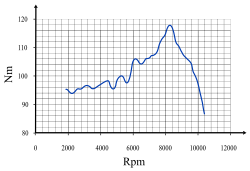
自動車のエンジンやモーターの性能表記において、トルクは極めて重要な指標です。エンジンの出力(馬力)は、「トルク × 回転数」で決定されます。内燃機関の場合、効率よくトルクを発生させられる回転域が限られているため、これをグラフ化した「トルクカーブ」を用いて性能を評価します。
また、自転車のギアシステムは一種の「トルク変換機」です。低いギア(大きな後輪スプロケット)を選択すると、ペダルを漕ぐ速度(角速度)は上がりますが、車輪に伝わるトルクが増大するため、急な坂道を登りやすくなります。このとき、入力されるパワーは一定ですが、トルクと回転数の比率が変化しています。
物理的特性のまとめ
| 項目 | SI単位 | 物理的意味 | 関係式(簡略) |
|---|---|---|---|
| トルク ($\tau$) | N⋅m | 回転させる能力 | $\tau = r \times F$ |
| 角運動量 ($L$) | kg⋅m²/s | 回転の勢い | $\tau = dL/dt$ |
| 動力 ($P$) | W (ワット) | 単位時間あたりの仕事 | $P = \tau \cdot \omega$ |
| 仕事 ($W$) | J (ジュール) | 回転によるエネルギー変化 | $W = \int \tau d\theta$ |
Frequently Asked Questions
トルクとエネルギー(ジュール)は単位が同じですが、なぜ区別するのですか?
次元的にはどちらも $\text{kg} \cdot \text{m}^2 / \text{s}^2$ であり、単位も N⋅m と J は一致します。しかし、ジュールは「消費されたエネルギー(スカラー量)」を表すのに対し、トルクは「回転させる能力(ベクトル量)」を表します。物理的な意味が根本的に異なるため、トルクにはジュールという単位を用いません。
静的平衡状態にあるとき、トルクはどうなりますか?
物体が完全に静止して安定している(静的平衡)ためには、物体に作用するすべての力の合計がゼロであるだけでなく、任意の点周りのすべてのトルクの合計(正味のトルク)もゼロである必要があります。
なぜレンチの柄が長いほどネジが回しやすいのですか?
トルクの計算式 $\tau = r F$ において、柄の長さが $r$ に相当します。同じ力 $F$ を加えたとしても、$r$ が大きくなれば得られるトルク $\tau$ が増大するため、より強い回転力をネジに伝えることができるからです。
正味の力がゼロでもトルクは発生しますか?
はい、発生します。例えば、互いに逆向きの2つの力が離れた位置で作用している場合(偶力)、全体の合力はゼロになりますが、物体を回転させるトルクは発生します。
References
- Serway, R. A. and Jewett, J. W. Jr. (2003). Physics for Scientists and Engineers. 6th ed. Brooks Cole. .
- Physics for Engineering by Hendricks, Subramony, and Van Blerk, Chinappi page 148, Web link Archived 2017-07-11 at the
- Thomson, James; Larmor, Joseph (1912). Collected Papers in Physics and Engineering. University Press. p. civ.
- Thompson, Silvanus Phillips (1893). Dynamo-electric machinery: A Manual For Students Of Electrotechnics (4th ed.). New York, Harvard publishing co. p. 108.
- "torque". Oxford English Dictionary. 1933.
- Kane, T.R. Kane and D.A. Levinson (1985). Dynamics, Theory and Applications pp. 90–99: Free download Archived 2015-06-19 at the .
- (1811). Traité de mécanique, tome premier. p. 67.
- "Right Hand Rule for Torque". Archived from the original on 2007-08-19. Retrieved 2007-09-08.
- Halliday, David; Resnick, Robert (1970). Fundamentals of Physics. John Wiley & Sons. pp. 184–85.
- Knight, Randall; Jones, Brian; Field, Stuart (2016). College Physics: A Strategic Approach (3rd technology update ed.). Boston: Pearson. p. 199. . 922464227.
📸 フォトギャラリー