宇宙空間には、2つの大きな天体(例えば太陽と地球)の重力が互いに打ち消し合い、小さな物体が相対的に静止できる特別な場所が存在します。これをラグランジュ点と呼びます。この地点は、燃料を最小限に抑えて特定のポジションを維持できるため、現代の宇宙探査において極めて重要な戦略的拠点となっています。
通常、天体の周りを回る物体は、その距離に応じて公転周期が決まります。しかし、ラグランジュ点では、2つの天体による重力の相互作用と遠心力が絶妙にバランスしているため、小さな衛星が大きな天体と同じ周期で公転することが可能です。
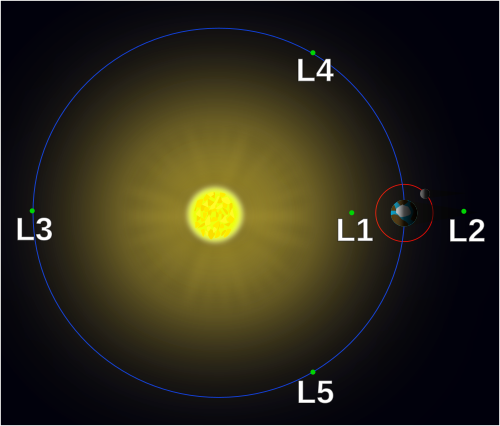
Key Facts
- 5つの地点: 任意の2天体システムには、L1からL5まで5つのラグランジュ点が存在する。
- 安定性の違い: L1、L2、L3は不安定な均衡点であり、L4とL5は安定した均衡点である。
- 実用的活用: L1は太陽観測、L2は深宇宙観測(赤外線望遠鏡など)に最適。
- 自然物: L4やL5には、トロヤ群のような塵や小惑星が集まりやすい。
ラグランジュ点の種類と特性
L1点:太陽と地球の間に位置する観測拠点
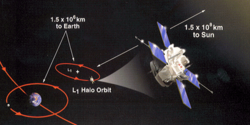
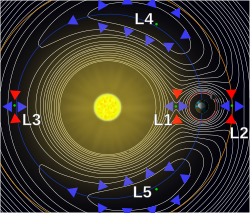
L1点は、2つの大きな天体を結ぶ直線上にあります。ここでは、地球の重力が太陽の引力を一部打ち消すため、本来なら地球より短い周期で回るはずの地点でありながら、地球と同じ周期で公転できます。太陽と地球の間にあるため、太陽風の監視や地球の気候変動を捉えるDSCOVRのような衛星の配置に適しています。
L2点:深宇宙を覗くための静寂な場所
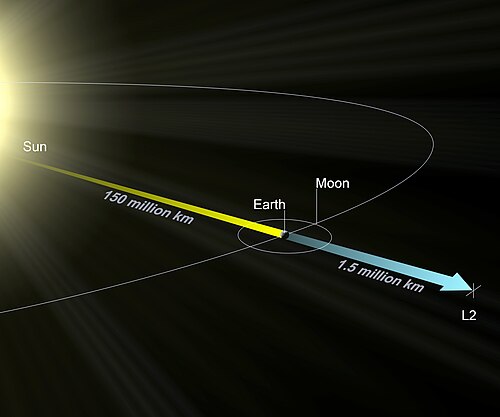
L2点は、地球の裏側(太陽の反対側)の直線上に位置します。ここでは、太陽と地球の両方の重力が合わさって遠心力と釣り合います。この地点の最大の特徴は、太陽、地球、月をすべて同じ方向に配置できることです。これにより、巨大なサンシールド(遮光板)一枚で熱源を遮断でき、極低温での観測が必要なジェイムズ・ウェッブ宇宙望遠鏡(JWST)や、将来のナンシー・グレース・ローマン宇宙望遠鏡の運用に最適です。
L3点:太陽の裏側に隠れた不安定な点
L3点は、太陽を挟んで地球のほぼ正反対側に位置します。理論上は存在しますが、他の惑星(特に金星)からの重力摂動の影響を強く受けるため、非常に不安定です。かつてのSF作品では「反地球」が存在する場所として描かれましたが、天体力学的にそのような巨大天体が長期的に留まることは不可能です。
L4・L5点:安定した「重力の溜まり場」
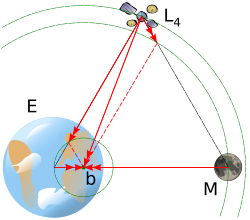
L4とL5は、2天体が作る正三角形の頂点に位置します。これらは「ポテンシャルの丘」のような状態にありますが、コリオリの力が働くため、そこから外れようとする物体は再び点の方へ引き戻される安定した性質を持っています。そのため、宇宙塵や小惑星(2010 TK 7や2020 XL 5など)が自然に集まりやすい傾向があります。
![Visualization of the relationship between the Lagrange points (red) of a planet (blue) orbiting a star (yellow) counterclockwise, and the effective potential in the plane containing the orbit (grey rubber-sheet model with purple contours of equal potential).[20]Click for animation.](/images/40/94/409417454935dc6dec0c8dd8587bff6c996ba5694f582441ad2b97e03bfa0e22.png)
物理的メカニズムと軌道制御
ラグランジュ点の位置は、天体の質量比と距離によって決定されます。特にL1とL2の距離は、ヒル圏(天体が重力的に支配する領域)の半径に近似されます。数学的には、重力による向心力と遠心力のバランスを解くことで導き出されます。
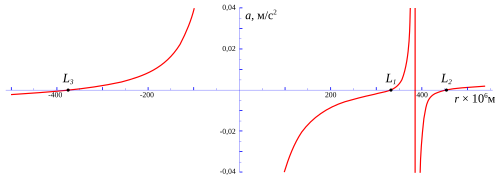
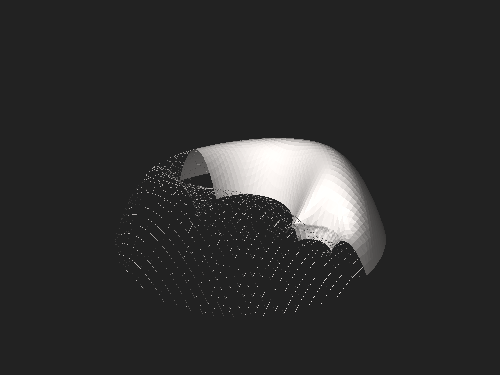
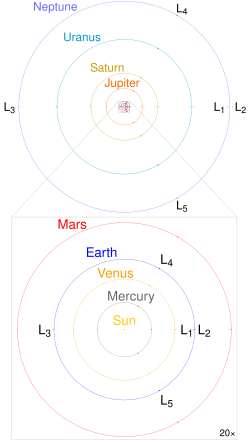
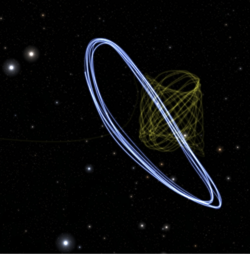
実際には、L1やL2の「点」に完全に静止し続けることは困難です。そのため、衛星は点の周囲を回るハロー軌道やリサージュ軌道を描くように運用されます。これにより、地球による日食(通信遮断や電力不足)を避けつつ、安定してポジションを維持することが可能になります。
太陽系におけるラグランジュ点の距離(例)
以下は、主要な天体ペアにおけるラグランジュ点の位置関係をまとめた表です。
| 天体ペア | 軌道長半径 (SMA) | L1 距離 (中心から) | L2 距離 (中心から) | L3 距離 (中心から) |
|---|---|---|---|---|
| 地球–月 | 0.3844 × 10⁹ m | 0.32639 × 10⁹ m | 0.4489 × 10⁹ m | −0.38168 × 10⁹ m |
| 太陽–地球 | 149.598 × 10⁹ m | 148.11 × 10⁹ m | 151.1 × 10⁹ m | −149.6 × 10⁹ m |
| 太陽–火星 | 227.94 × 10⁹ m | 226.86 × 10⁹ m | 229.03 × 10⁹ m | −227.94 × 10⁹ m |
| 太陽–木星 | 778.34 × 10⁹ m | 726.45 × 10⁹ m | 832.65 × 10⁹ m | −777.91 × 10⁹ m |
Frequently Asked Questions
なぜL2点は宇宙望遠鏡に最適なのですか?
太陽、地球、月がすべて同じ方向に集まるため、一つの遮光板でこれらすべての熱と光を遮断でき、望遠鏡を極低温に保つことができるからです。これにより、微弱な赤外線を捉える観測が可能になります。
L4とL5に物体が集まるのはなぜですか?
これらの点は力学的に安定しており、付近に迷い込んだ塵や小惑星がコリオリの力によって軌道に捉えられやすいためです。これをトロヤ群と呼びます。
ラグランジュ点に完全に静止することはできますか?
理論上は可能ですが、L1、L2、L3は不安定な均衡点であるため、わずかな乱れで位置がずれます。そのため、実際には点の周囲を回るハロー軌道などの特殊な軌道を用いて維持しています。
L1点とL2点の距離に違いはありますか?
太陽–地球システムの場合、どちらも地球から約150万km離れた位置にあり、ほぼ等距離にあります。これは、地球の質量が太陽に比べて非常に小さいためです。
References
- Actually (25 + 3√69)/2 ≈ 24.9599357944 (sequence A230242 in the )
📸 フォトギャラリー