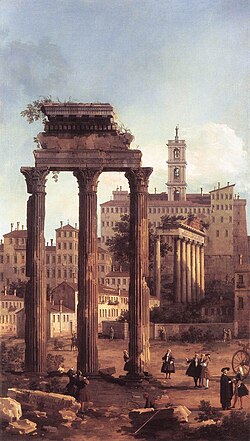
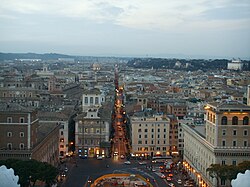
Rome: Ruins of the Forum, Looking towards the Capitol (1742) by Canaletto
← ホームへ戻る

ローマの歴史建国から現代まで続く「永遠の都」の軌跡

イタリアの首都ローマは、単なる都市ではなく、人類史における権力と文化の象徴です。伝説的な建国から、地中海を支配した帝国時代、そして宗教的中心地としての時代を経て、現代のグローバルシティに至るまで、この街は絶えず変容し続けてきました。

Key Facts

  • 建国の起源: 紀元前753年にロムルスによって建国されたという伝説を持つ。
  • 政治体制の変遷: 王政から始まり、共和政、そして広大な版図を持つ帝国へと移行した。
  • 地中海の覇権: ポエニ戦争(紀元前264年〜146年)を経て、カルタゴを破り西地中海の主導権を握った。
  • 宗教的転換: 西ローマ帝国の崩壊後、教皇領としてキリスト教世界の中心地となった。
  • 現代の地位: 2015年時点で人口440万人のイタリア最大都市であり、世界的な重要都市に分類される。

古代ローマ:王政から帝国の頂点へ

ローマの始まりは、紀元前8世紀に遡ります。初期の王政時代を経て、紀元前509年には選出された政務官が統治する共和政へと移行しました。この時期、ローマはラティウム地方での支配力を強め、さらには地中海全域へと勢力を拡大させました。
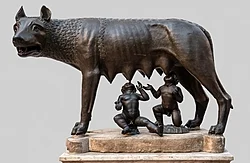
Capitoline Wolf, showing the twins Romulus and Remus suckling the she-wolf.

紀元前1世紀になると、アウグストゥスによって帝国体制が確立されます。その後、ローマは絶頂期を迎え、コロッセオなどの巨大建築物が建設されました。しかし、3世紀には深刻な危機に見舞われ、アウレリアヌス城壁などの防衛施設が整備されることになります。

Temple of Jupiter Optimus Maximus 526–509 BC[19]

395年には、統治の効率化のために西ローマ帝国と東ローマ帝国に完全に分断されました。西ローマ帝国は、410年のゴート族や455年のヴァンダル族による略奪を経て、476年にロムルス・アウグストゥスが廃位されたことで終焉を迎えました。
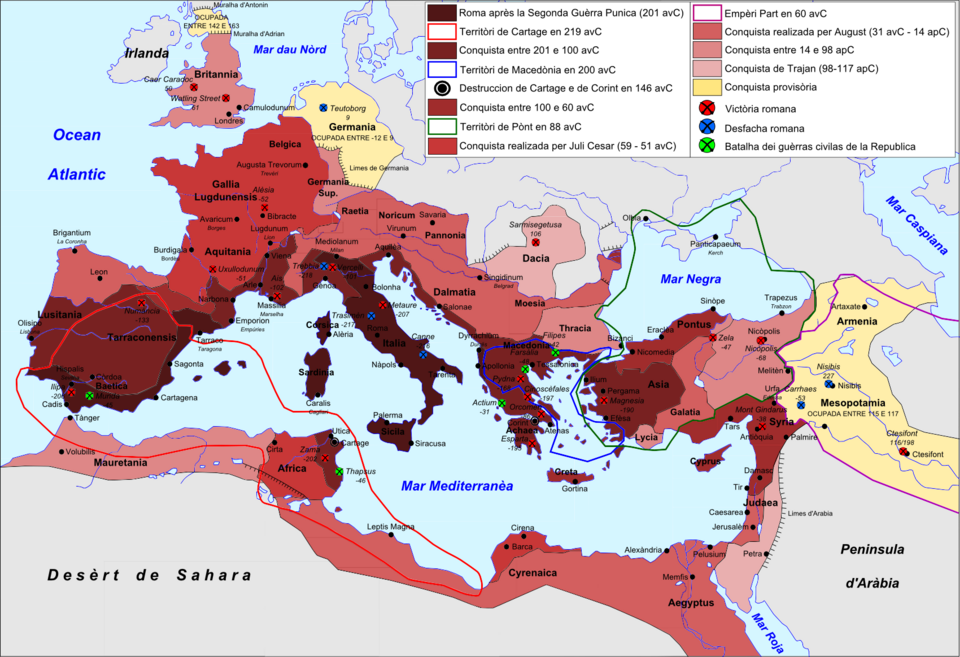
Development of the Roman Empire

中世からルネサンス:信仰と芸術の都

西ローマ帝国の崩壊後、ローマはオストロゴート王国や東ローマ帝国の支配、そしてランゴバルド族の侵攻など、激動の時代を過ごします。その後、教皇領が形成されると、ローマは政治的な中心地から、精神的な中心地へとその役割を変えていきました。
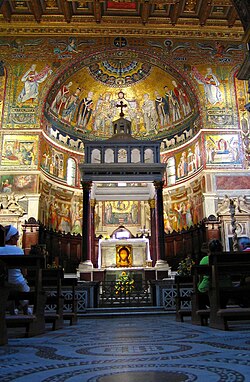
Interior of the basilica of Santa Maria in Trastevere, one of the most beautiful Roman churches built or re-built in the Middle Ages

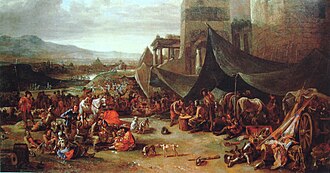
15世紀になると、文化の重心がフィレンツェからローマへと移り、ローマ・ルネサンスが花開きます。芸術と学問が飛躍的に発展しましたが、1527年の「ローマ略奪」によってその流れは一時的に断たれました。しかし、その後の対抗宗教改革を通じて、バロック様式の壮麗な建築物や彫刻が街を彩ることになります。
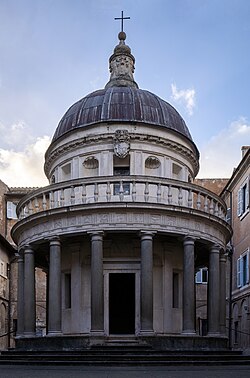
The Tempietto (San Pietro in Montorio), an excellent example of Italian Renaissance architecture

近代から現代へ:イタリア統一と首都への道

19世紀、ローマはイタリア統一運動の象徴となりました。当時、街は依然として教皇の支配下にありましたが、1870年にイタリア軍がポルタ・ピア付近から侵入し、ついにローマを奪還しました。これにより、1871年に首都がフィレンツェからローマへと移されました。
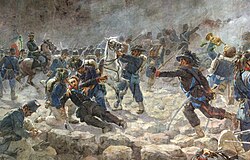
Italian soldiers enter Rome in 1870.

20世紀に入ると、第二次世界大戦の戦火にさらされ、1943年8月14日には「開放都市」として宣言されました。戦後、1946年にイタリア共和国が成立し、ローマはその首都として、政治・経済・文化の中心的役割を担い続けています。
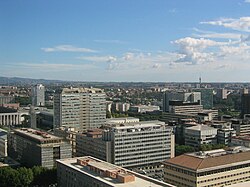
View of the EUR district (2003)

ローマの歴史的変遷まとめ

ローマの主要な統治時代と特徴
時代 期間 主な特徴・出来事
ローマ王国 紀元前753年〜509年 伝説的な建国と初期の王政時代
ローマ共和国 紀元前509年〜44年 政務官による統治、地中海への領土拡大
ローマ帝国 紀元前27年〜紀元後395年 アウグストゥスによる帝国成立、版図の最大化
教皇領 756年〜1798年(断続的) キリスト教の権威による統治
イタリア王国・共和国 1870年〜現在 イタリア統一後の首都としての発展

Frequently Asked Questions

ローマはいつ建国されたとされていますか?

伝説によれば、紀元前753年にロムルスによって建国されたと伝えられています。

共和政から帝国へ変わったきっかけは何ですか?

紀元前1世紀、ユリウス・カエサルの台頭とその後のアウグストゥスによる体制確立により、選出された政務官による共和政から、皇帝が権力を握る帝国へと移行しました。

西ローマ帝国が滅亡した原因は何ですか?

ゲルマン民族などの異民族による度重なる侵攻(ゴート族やヴァンダル族による略奪など)と、内部的な混乱が重なり、476年に最後の皇帝が廃位されたことで滅亡しました。

ローマがイタリアの首都になったのはいつですか?

1870年にイタリア軍がローマを占領し、翌1871年に首都がフィレンツェからローマに移されました。

ルネサンス期のローマにどのような影響がありましたか?

15世紀に文化の中心がフィレンツェからローマへ移り、芸術や建築が飛躍的に発展しました。その後、バロック様式へと発展し、現在の街並みの基礎となる多くの傑作が誕生しました。

References

  1. Procopius, Gothic War, III.xxii. "In Rome he suffered nothing human to remain, leaving it altogether, in every part, a perfect desert."
  2. Cf. and his "", Book IV, Chapter IV, written in 1762, where he writes in a footnote that the word for Rome is Greek in origin and means force. "There are writers who say that the name 'Rome' is derived from 'Romulus'. It is in fact Greek and means force."</recan Cneve Tarchunies Rumach, interpreted as Gnaeus Tarquinius of Rome. http://www.mysteriousetruscans.com/francois.html Archived 22 April 2009 at the
  3. Heiken, G., Funiciello, R. and De Rita, D. (2005), The Seven Hills of Rome: A Geological Tour of the Eternal City. Princeton University Press.
  4. Potter, D.S. (2009). Rome in the Ancient World: From Romulus to Justinian. London: Thames & Hudson. p. 10.  .
  5. Hooper, John (13 April 2014). "Archaeologists' findings may prove Rome a century older than thought". The Guardian. Archived from the original on 31 July 2018. Retrieved 6 February 2017.
  6. "Science: Rome: Older Than Ever". Time. 21 November 1960. Archived from the original on 5 March 2016. Retrieved 26 July 2014.
  7. Urbanus, Jason M. "A Brief Glimpse into Early Rome – Archaeology Magazine". archaeology.org. Archived from the original on 14 October 2023. Retrieved 6 February 2017.
  8. , I, 7.
  9. , , 1:8.
  10. , , 1:9–13.

📸 フォトギャラリー
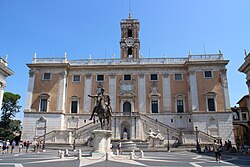
Rome: Ruins of the Forum, Looking towards the Capitol (1742) by Canaletto
Capitoline Wolf, showing the twins Romulus and Remus suckling the she-wolf.
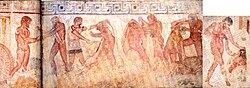
The Etruscan François Tomb, IV century BC
Temple of Jupiter Optimus Maximus 526–509 BC[19]
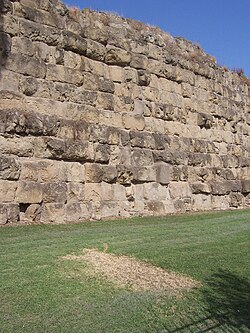
The Servian Wall takes its name from king Servius Tullius and is the first true wall of Rome.
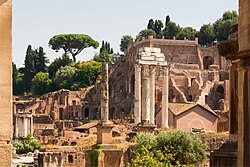
Forum Romanum
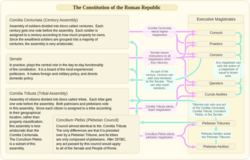
Chart showing the checks and balances of the Roman Constitution
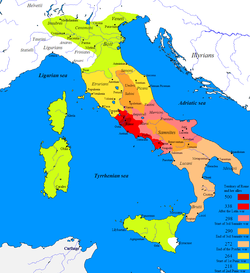
Roman expansion in Italy from 500 BC to 218 BC through the Latin War (light red), Samnite Wars (pink/orange), Pyrrhic War (beige), and First and Second Punic War (yellow and green). Cisalpine Gaul (238–146 BC) and Alpine valleys (16–7 BC) were later added. The Roman Republic in 500 BC is marked with dark red.
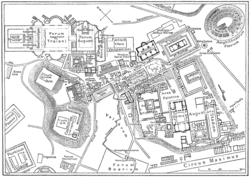
Map of the centre of Rome during the time of the Roman Empire
Development of the Roman Empire
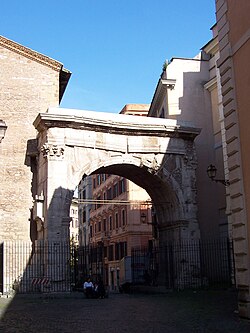
The Arch of Gallienus is one of the few monuments of ancient Rome from the 3rd century, and was a gate in the Servian Wall. Two side gates were destroyed in 1447.
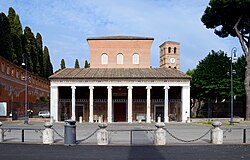
The ancient basilica of St. Lawrence, outside the walls, was built directly over the tomb of the people's favourite Roman martyr.
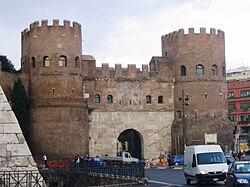
Porta San Paolo, a gate in the Aurelian Walls, built between AD 271 and AD 275. During the Gothic Wars of the mid-6th century, Rome was besieged several times by Eastern Roman and Ostrogoth armies. Ostrogoths of Totila entered through this gate in 549, because of the treason of the Isaurian garrison.
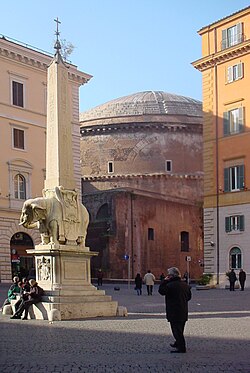
Southeast view of the Pantheon
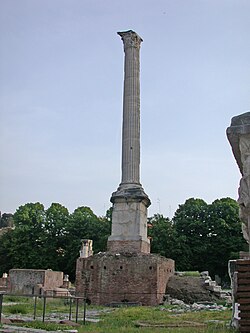
The Column of Phocas, last imperial monument in the Roman Forum
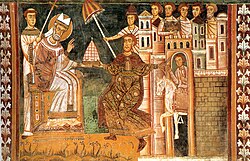
A 13th-century fresco of Sylvester and Constantine, showing the Donation of Constantine, Santi Quattro Coronati, Rome
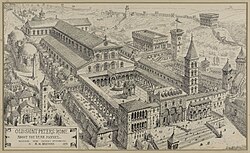
19th-century drawing of Old St. Peter's Basilica as it is thought to have looked around AD 1450
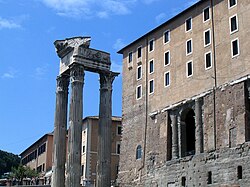
From the Forum, the medieval and Renaissance Senate House stands directly upon the Tabularium, ancient Rome's repository of archives.
Interior of the basilica of Santa Maria in Trastevere, one of the most beautiful Roman churches built or re-built in the Middle Ages
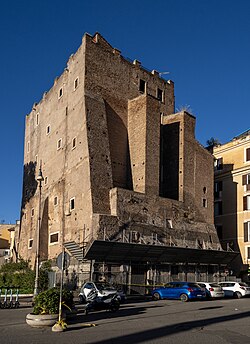
The Torre dei Conti was one of the many towers built by the noble families of Rome to mark their power and defend themselves in the several feuds that marked the city in the Middle Ages. Only the lower third part of Torre dei Conti can be seen today.
Cola di Rienzo stormed the Capitoline Hill in 1347 to create a new Roman Republic. Though short-lived, his attempt is recorded by a 19th-century statue near the ramped Cordonata leading to Michelangelo's Piazza del Campidoglio.
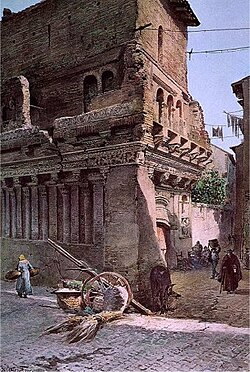
The so-called Casa di Rienzi still in its urban context before the opening of the Via del Mare in a watercolour by Ettore Roesler Franz (about 1880)
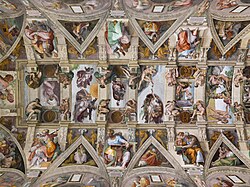
Michelangelo's ceiling in the Sistine Chapel
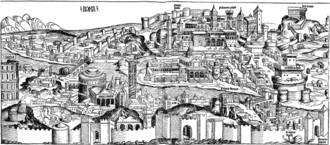
View of Rome in 1493
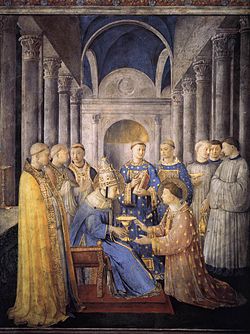
A painting from the Roman Renaissance
The Tempietto (San Pietro in Montorio), an excellent example of Italian Renaissance architecture
The sack of Rome in 1527, by Johannes Lingelbach, 17th century
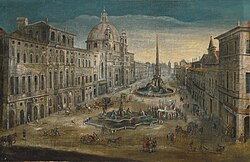
Piazza Navona (17th century)
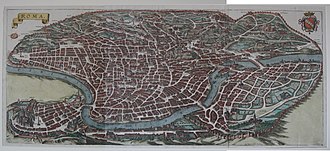
Map of Rome from Topographia Italiae, published by Matthaeus Merian's heirs in 1688
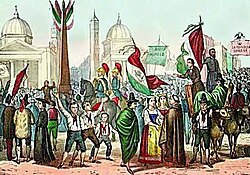
Proclamation of the Roman Republic in 1849, in Piazza del Popolo
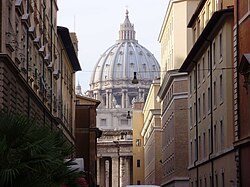
View of the dome of Saint Peter's Basilica from Borgo Santo Spirito
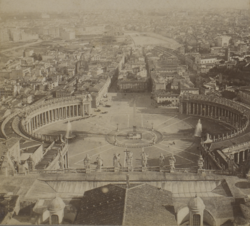
Rome from the Saint Peter's Basilica, 1901
Italian soldiers enter Rome in 1870.
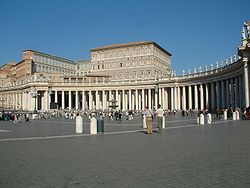
The Apostolic Palace
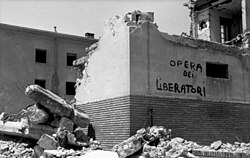
Propaganda inscription, "the work of the liberators" (opera dei liberatori), on wall of a bombed building, Rome, 1944
View of Via del Corso (2008)
View of the EUR district (2003)