Wilhelm in 1867, aged 8
← ホームへ戻る

ヴィルヘルム2世ドイツ帝国の終焉を導いた最後の皇帝

19世紀後半から20世紀初頭にかけて、欧州の政治地図を大きく揺るがした人物がいます。それがドイツ帝国の最後の皇帝であり、プロイセン王でもあったヴィルヘルム2世です。彼は強烈な個性と野心を持って帝国を率いましたが、その統治は結果としてドイツを第一次世界大戦という破滅的な衝突へと導き、400年続いたホーエンツォレルン家の支配に終止符を打つこととなりました。

主要な事実(Key Facts)

  • 在位期間:1888年6月15日から1918年11月9日まで。
  • 家系:プロイセンの名門ホーエンツォレルン家出身。
  • 政治的転換:就任後、名宰相オットー・フォン・ビスマルクを解任し、独自の外交路線を追求した。
  • 外交的衝突:イギリスとの海軍軍拡競争や、モロッコ危機などを通じて国際的な緊張を高めた。
  • 没落:第一次世界大戦の敗北に伴い退位し、オランダへ亡命。1941年に死去した。

若き日のヴィルヘルムと帝位への道

1859年、ベルリンのクロンプリンツェンパレに生まれたヴィルヘルムは、幼少期から厳しい環境にありました。特に誕生時のトラウマは、後の彼の性格形成に影響を与えたと言われています。
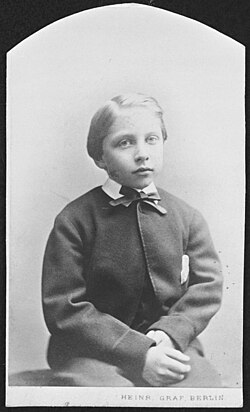
Wilhelm in 1867, aged 8

学生時代をカッセルで過ごした彼は、軍事的な規律とプロイセン的な価値観を深く吸収しました。
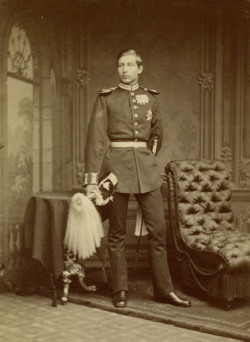
Prince Wilhelm as a student at the age of 18 in Kassel.

彼の即位は劇的なものでした。1888年、祖父のヴィルヘルム1世が崩御し、父フリードリヒ3世が即位しましたが、父は喉頭癌に侵されており、わずか99日で世を去りました。これにより、29歳の若さでヴィルヘルム2世がドイツ皇帝およびプロイセン王として即位することになります。
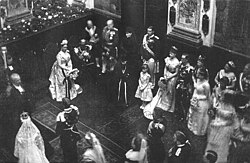
Wedding of Prince Henry of Prussia with Princess Irene of Hesse on 24 May 1888. The future emperor Wilhelm II is on the right. The emperor Frederick III is seated on the left and would have died just three weeks after.

権力の集中と「新航路」の追求

即位したヴィルヘルム2世は、それまでドイツの政治を実質的に支配していた「鉄血宰相」オットー・フォン・ビスマルクとの対立を深めました。ビスマルクの慎重な外交バランスを嫌った皇帝は、1890年に彼を強引に解任し、自らが主導権を握る「新航路(Neuer Kurs)」と呼ばれる政策へと舵を切りました。
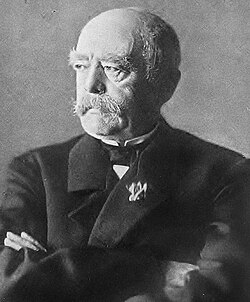
Otto von Bismarck, the Chancellor who effectively dictated German policy until Wilhelm II assumed the throne in 1888

この解任劇は、当時の風刺画でも象徴的に描かれており、ドイツ政治の大きな転換点となりました。
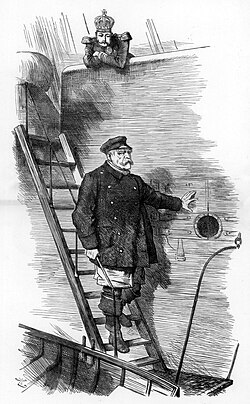
"Dropping the Pilot" by John Tenniel, published in Punch on 29 March 1890, two weeks after Bismarck's forced resignation as Chancellor

皇帝は芸術や科学の振興に力を入れる一方で、軍事的な誇示を好みました。特に華美な軍服へのこだわりは有名であり、彼の権威主義的な性格を象徴しています。
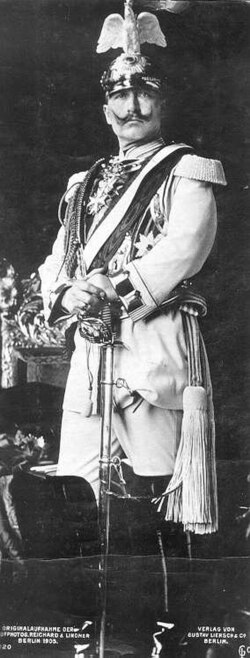
Wilhelm indulging in his famed appreciation of flamboyant uniforms

不安定な国際関係と外交的孤立

ヴィルヘルム2世は、親族が多くいた欧州の王室間で複雑な関係を築いていました。しかし、彼の衝動的な言動はしばしば外交問題を引き起こしました。例えば、イギリスとの関係悪化を招いた「デイリー・テレグラフ事件」や、海軍力の増強を急いだ軍拡競争などが挙げられます。
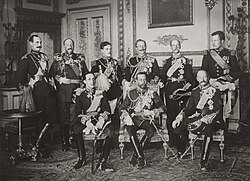
The Nine Sovereigns at Windsor for the funeral of King Edward VII, photographed on 20 May 1910. Standing, from left to right: King Haakon VII of Norway, Tsar Ferdinand I of Bulgaria, King Manuel II of Portugal, Kaiser Wilhelm II of Germany, kings George I of Greece and Albert I of Belgium. Seated, from left to right: kings Alfonso XIII of Spain, George V of the United Kingdom and Frederick VIII of Denmark.

また、ロシアのニコライ2世とは親密な関係を演じ、互いの軍服を交換して着用するなどのパフォーマンスを行いましたが、実質的な同盟関係を維持することは困難でした。
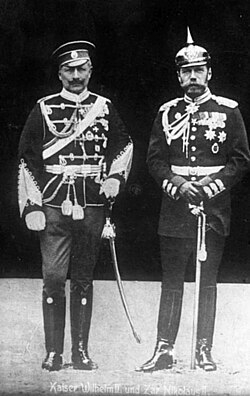
Wilhelm with Nicholas II of Russia in 1905, wearing the military uniforms of each other's army

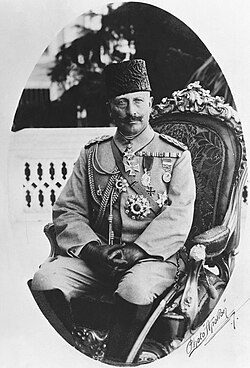
外交の舞台では、オスマン帝国への接近も図りました。1898年のエルサレム訪問や、トルコ軍の元帥服を着用した姿は、イスラム世界への影響力を強めたいという彼の意図を示しています。
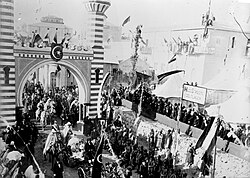
Wilhelm in Jerusalem during his state visit to the Ottoman Empire, 1898
Wilhelm in Turkish field marshal uniform at Dolmabahçe Palace (15 October 1917)

しかし、こうした強硬な姿勢は周辺国に警戒心を与え、イギリスとフランスの「英仏協商」を促進させる結果となりました。当時の風刺画には、イギリスがヴィルヘルム2世に背を向け、フランスへと歩み寄る様子が描かれています。
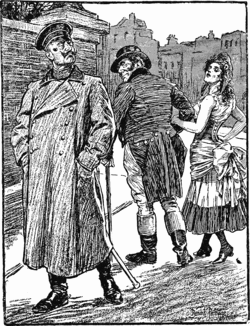
A 1904 British cartoon commenting on the Entente cordiale: John Bull walking off with Marianne, turning his back on Wilhelm II, whose sabre is shown extending from his coat

海軍力の競争は激化し、世界各国が軍備を増強する混沌とした状況へと突き進んでいきました。
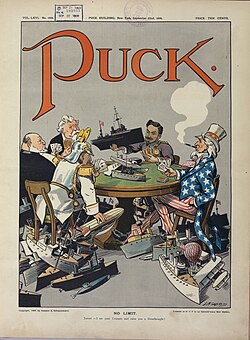
1909 cartoon in Puck shows five nations engaged in naval race; the Kaiser is in white.

戦前の軍事演習には、多くの親族や将軍たちが集まり、軍事国家としてのドイツの威容を誇示していました。
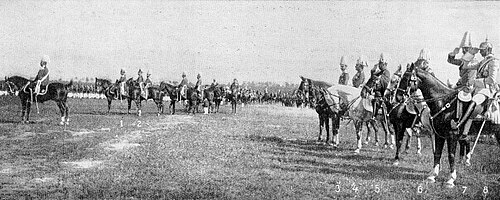
Wilhelm with the Grand Duke of Baden, Prince Oskar of Prussia, the Grand Duke of Hesse, the Grand Duke of Mecklenburg-Schwerin, Prince Louis of Bavaria, Prince Max of Baden and his son, Crown Prince Wilhelm, at pre-war military manoeuvres in autumn 1909

第一次世界大戦と帝国の崩壊

1914年、サラエボ事件をきっかけに第一次世界大戦が勃発します。開戦当初、ヴィルヘルム2世は前線で将軍たちを鼓舞し、勝利を確信していました。
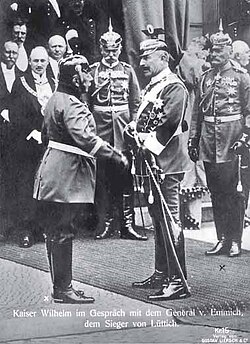
Wilhelm conversing with the victor of Liège, General Otto von Emmich; in the background the generals Hans von Plessen (middle) and Moriz von Lyncker (right)

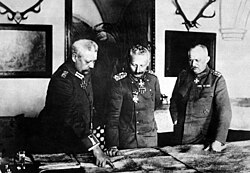
しかし、戦争が長期化するにつれ、実権はヒンデンブルクやルデンドルフといった軍部へと移っていきました。皇帝は次第に「影の皇帝」となり、政治的な影響力を失っていきます。

ภาพประกอบบทความ
Hindenburg, Wilhelm, and Ludendorff in January 1917

1918年、敗色が濃厚となったドイツ国内で革命が起こり、ヴィルヘルム2世は退位を余儀なくされました。これにより、ドイツ帝国は崩壊し、ワイマール共和国へと移行しました。

亡命生活と晩年

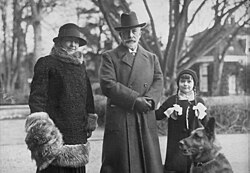
退位後、彼はオランダのドールンにあるハウス・ドールンへ亡命しました。かつての権力を失った皇帝は、愛犬と共に静かな生活を送りましたが、心の中では依然として帝国の復活を夢見ていたと言われています。
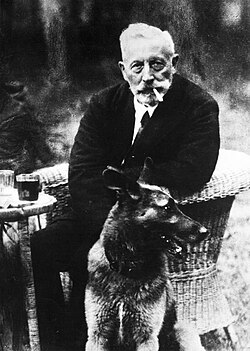
Kaiser Wilhelm II and his dog in exile. Doorn, 1938

1941年4月4日、彼は亡命先の地で82歳で没し、ハウス・ドールンの敷地内に埋葬されました。
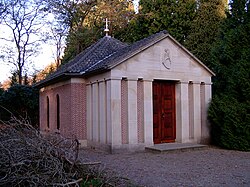
Wilhelm's tomb at Huis Doorn

家族と私生活

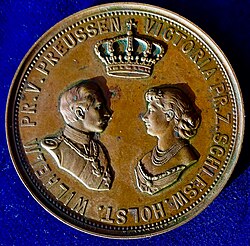
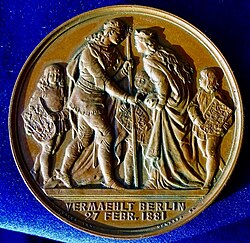
ヴィルヘルム2世は、最初の妻アウグスタ・ヴィクトリアとの間に7人の子供をもうけました。彼らの結婚は、中世風の衣装を用いたメダルなどで記念されるなど、伝統と形式を重視したものでした。
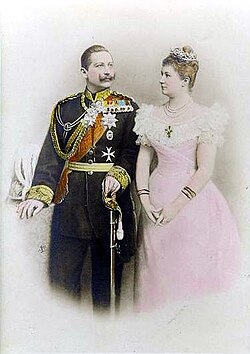
Wilhelm and his first wife, Augusta Victoria
Wedding medal of Prince Wilhelm and Princess Augusta, obverse
The reverse shows the couple in medieval costumes in front of 3 squires carrying the shields of Prussia, Germany, and Schleswig-Holstein.

その後、彼はヘルミネと再婚し、新たな家族を築きました。

With second wife, Hermine, and her daughter, Princess Henriette

また、政治的な結びつきから、オスマン帝国のエンヴェル・パシャらとも親交がありましたが、これは後の歴史において議論の対象となる複雑な関係性を含んでいました。
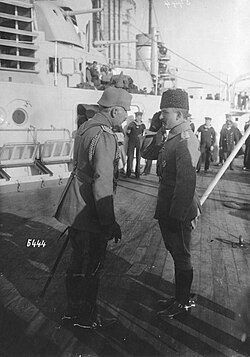
Kaiser Wilhelm II with Enver Pasha, October 1917. Staunchly pro-German, Enver was one of the main perpetrators of the Armenian genocide.

まとめ:ヴィルヘルム2世の統治

ヴィルヘルム2世の基本プロフィール
項目 詳細
正式名称 フリードリヒ・ヴィルヘルム・ヴィクトール・アルベルト
在位期間 1888年 〜 1918年
主な政治的出来事 ビスマルク解任、海軍軍拡、第一次世界大戦
没落の原因 第一次世界大戦の敗北と国内革命
没後 オランダのハウス・ドールンに埋葬

よくある質問(FAQ)

ヴィルヘルム2世がビスマルクを解任したのはなぜですか?

ヴィルヘルム2世は、ビスマルクの慎重な外交方針が自分の野心や権威を制限していると感じたためです。自らが政治の主導権を握り、より積極的な世界政策(世界政策)を展開したいと考えたことが主な理由です。

「新航路」とはどのような政策でしたか?

ビスマルク時代の現状維持的な外交から脱却し、海軍力の強化や植民地の拡大を通じて、ドイツを世界的な強国として位置づけようとする積極的な外交・政治路線のことを指します。

第一次世界大戦における彼の役割は何でしたか?

開戦当初は最高司令官として軍を統率していましたが、次第に実権をヒンデンブルクやルデンドルフといった軍部指導者に奪われ、形式的な権限のみを持つ「影の皇帝」となりました。

退位後、彼はどこで過ごしましたか?

オランダのドールンにあるハウス・ドールンという屋敷に亡命し、そこで1941年に亡くなるまで余生を過ごしました。

彼がイギリスとの関係を悪化させた主な要因は何ですか?

特に海軍力の増強を急いだことが、海上の覇権を握っていたイギリスにとって大きな脅威となり、激しい軍拡競争に発展したことが最大の要因です。

References

  1. Compared with other historical monarchs, the term "William II" is not commonly used in modern English, but many older sources used this name.

📸 フォトギャラリー

Wilhelm in 1867, aged 8
Prince Wilhelm as a student at the age of 18 in Kassel.
Wedding of Prince Henry of Prussia with Princess Irene of Hesse on 24 May 1888. The future emperor Wilhelm II is on the right. The emperor Frederick III is seated on the left and would have died just three weeks after.
Otto von Bismarck, the Chancellor who effectively dictated German policy until Wilhelm II assumed the throne in 1888
"Dropping the Pilot" by John Tenniel, published in Punch on 29 March 1890, two weeks after Bismarck's forced resignation as Chancellor
Wilhelm indulging in his famed appreciation of flamboyant uniforms
The Nine Sovereigns at Windsor for the funeral of King Edward VII, photographed on 20 May 1910. Standing, from left to right: King Haakon VII of Norway, Tsar Ferdinand I of Bulgaria, King Manuel II of Portugal, Kaiser Wilhelm II of Germany, kings George I of Greece and Albert I of Belgium. Seated, from left to right: kings Alfonso XIII of Spain, George V of the United Kingdom and Frederick VIII of Denmark.
Wilhelm with Nicholas II of Russia in 1905, wearing the military uniforms of each other's army
Wilhelm in Jerusalem during his state visit to the Ottoman Empire, 1898
Wilhelm in Turkish field marshal uniform at Dolmabahçe Palace (15 October 1917)
A 1904 British cartoon commenting on the Entente cordiale: John Bull walking off with Marianne, turning his back on Wilhelm II, whose sabre is shown extending from his coat
1909 cartoon in Puck shows five nations engaged in naval race; the Kaiser is in white.
Wilhelm with the Grand Duke of Baden, Prince Oskar of Prussia, the Grand Duke of Hesse, the Grand Duke of Mecklenburg-Schwerin, Prince Louis of Bavaria, Prince Max of Baden and his son, Crown Prince Wilhelm, at pre-war military manoeuvres in autumn 1909
Wilhelm conversing with the victor of Liège, General Otto von Emmich; in the background the generals Hans von Plessen (middle) and Moriz von Lyncker (right)
ภาพประกอบบทความ
Hindenburg, Wilhelm, and Ludendorff in January 1917
Kaiser Wilhelm II and his dog in exile. Doorn, 1938
Wilhelm's tomb at Huis Doorn
Wilhelm and his first wife, Augusta Victoria
Wedding medal of Prince Wilhelm and Princess Augusta, obverse
The reverse shows the couple in medieval costumes in front of 3 squires carrying the shields of Prussia, Germany, and Schleswig-Holstein.
With second wife, Hermine, and her daughter, Princess Henriette
Kaiser Wilhelm II with Enver Pasha, October 1917. Staunchly pro-German, Enver was one of the main perpetrators of the Armenian genocide.