私たちが地球で見上げる空は、青い大気と太陽、そして夜には月や星々が彩る馴染み深いものです。しかし、視点を太陽系の他の天体に移すと、そこには想像を絶する全く異なる光景が広がっています。太陽の大きさが点のように見える極寒の辺境から、巨大惑星が空の大部分を覆い尽くす衛星まで、宇宙の視点による景色の変化は、物理学的な距離と幾何学的な関係によって決まります。
Key Facts
- 光度の減衰: 太陽からの距離が離れるほど、光の強さは距離の2乗に反比例して弱くなります。
- 視直径の変化: 観測地点から見た天体の見かけの大きさ(視直径)は、距離に応じて変化します。
- 月からの地球: 月の空では、地球は太陽や月よりも約3.7倍大きく見えます。
- 火星からの地球: 地球は月を伴う「二重星」のように見え、最大で木星ほどの明るさに達します。
- 冥王星の太陽: 太陽は点のように見えますが、明るさは満月の150〜450倍に相当します。
天体の見え方を決める物理法則
宇宙のどこから天体を眺めるにせよ、その見え方を支配するのは光度と視直径という2つの要素です。光の強さは距離の2乗に反比例するため、例えば地球から平均40天文単位(AU)離れた冥王星では、太陽の明るさは地球に比べて1600分の1まで低下します。
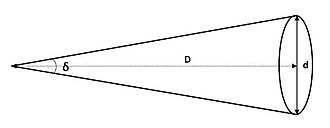
また、天体が空でどれほどの大きさを占めるかは、天体自体の直径と観測者までの距離によって決まる「視直径」の公式で算出されます。
内惑星と地球近傍の景色
金星の雲の上から
金星の厚い雲の上に立つ観測者にとって、地球と月は非常に明るい天体として輝きます。特に地球は最大でマイナス6.6等級という強い光を放ちます。地球と月の最大離角は約0.612度であり、これは地球から見た月の見かけの大きさとほぼ同じです。また、水星も最大マイナス2.7等級まで明るくなり、太陽から最大40.5度まで離れるため、容易に観測可能です。
月からの視点
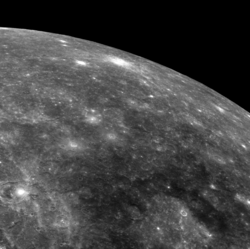
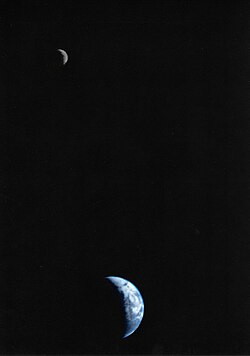
月の空において、地球は非常にダイナミックな存在です。その視直径は1°48′から2°に及び、地球から見た太陽や月の約3.7倍の大きさで空に鎮座しています。
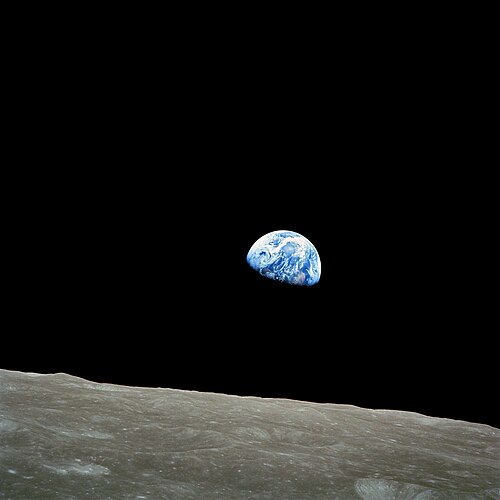
![In the Moon's sky Earth has an angular size of 1° 48′ to 2°,[19] about 3.7 times the apparent size of the Moon or Sun in Earth's sky (due to the near equal apparent size of the Moon and Sun at lunar distance).](/images/72/7e/727e45f9038220144755a38149d5735d3c54a2e9635742318696ba96a66f1395.png)
月の夜側(地球に面していない側)では、太陽系内の塵によって散乱された黄道光(zodiacal light)が観測されます。この塵の分布は地球軌道から木星の軌道共鳴点まで広がっており、火星などがその供給源である可能性が示唆されています。
![Two false dawns,[24] gegenschein (middle) and the rest of the zodiacal band of light and zodiac marked (visually crossed by the Milky Way), in this composite image of the night sky above the Northern and Southern Hemisphere](/images/77/14/7714bde43aafb137ced64a4d13312afb09fb19a29922793e99ab66ae2fd89d4f.jpg)
火星と外惑星のダイナミズム
火星の空と地球の姿
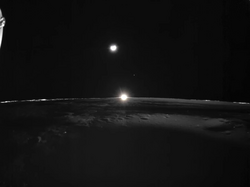
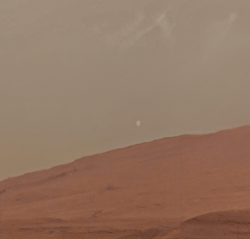
火星から地球を眺めると、地球の傍らに小さな月が寄り添う「二重星」のように見えます。地球の視直径は6.6秒から48.1秒の間で変化し、これは地球から見た金星や水星の大きさに匹敵します。最大離角付近では、地球はマイナス2.5等級、月はプラス0.9等級まで明るくなり、地球から見た木星や火星のような輝きを放ちます。
木星と土星の衛星からの絶景
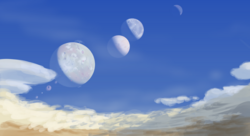
木星の衛星に立つ観測者にとって、空の主役は圧倒的に木星です。例えばイオからは、木星の視直径が約20度に達し、空の5%を覆い尽くします。さらに内側のメティスでは、木星が空の18%を占め、その明るさは太陽の約4%にまで達します。
![Water vapor plume on Europa (artist concept; December 12, 2013)[55]](/images/2d/63/2d634fbcdc3c4ae577711fa047ff90cedcb380a89f1356573255a880e2d31601.jpg)
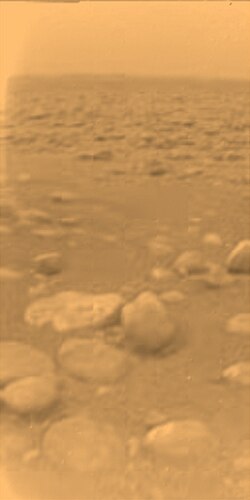
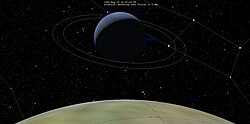
土星の衛星タイタンでは、厚い大気の影響を受けた独特の空が広がっています。また、海王星の空では、巨大な衛星トリトンが地球から見た満月よりわずかに小さいサイズで現れ、逆行軌道のため速い速度で移動します。
太陽系の果てと星間空間
冥王星とカロンの相互関係
太陽系の辺境にある冥王星では、太陽はもはや円盤ではなく、非常に明るい「点」として見えます。照度は約85ルクスとなり、これは地球のオフィスビルの廊下やトイレ程度の明るさに相当します。
また、冥王星とその衛星カロンは互いに潮汐ロック(同期自転)しているため、常に同じ面を向け合っています。冥王星から見たカロンの視直径は約3.8度と非常に大きく、地球から見た月の約8倍の直径を持ちます。
深宇宙からの地球
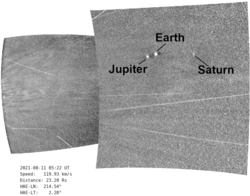
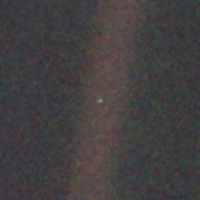
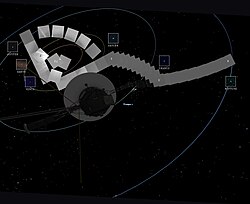
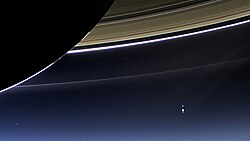
太陽系を離れた探査機ボイジャー1号が捉えた地球は、広大な闇の中に浮かぶ「淡い青い点(Pale Blue Dot)」に過ぎません。さらに遠く、大マゼラン雲のような別の銀河系から見た場合、天の川銀河は全天に36度(満月約70個分)にわたって広がり、マイナス2.0等級という強烈な輝きを放つ巨大な構造物として見えます。
天体観測まとめ
| 観測地点 | 主に見える天体 | 視覚的特徴 | 特記事項 |
|---|---|---|---|
| 月 | 地球 | 太陽の約3.7倍の大きさ | 地球照や黄道光が顕著 |
| 金星 | 地球・月 | 地球が非常に明るい(-6.6等) | 雲の上からの観測を想定 |
| 火星 | 地球・月 | 二重星のように見える | 地球は木星ほどの明るさに |
| イオ | 木星 | 空の5%を覆う巨大惑星 | 太陽の4%の明るさに達する |
| 冥王星 | 太陽・カロン | 太陽は点、カロンは巨大 | 照度はオフィス廊下程度 |
Frequently Asked Questions
冥王星から見た太陽は暗いのでしょうか?
地球に比べれば極めて暗いですが、完全に真っ暗ではありません。明るさは満月の150倍から450倍に相当し、地球の屋内照明(廊下など)に近い明るさで周囲を照らしています。
月から見た地球は、地球から見た月と同じ大きさですか?
いいえ、ずっと大きく見えます。月の空における地球の視直径は、地球から見た太陽や月の約3.7倍に達します。
火星から地球を見るとどのように見えますか?
地球と月が非常に近い距離にあるため、一つの明るい星(地球)とその隣に寄り添う小さな星(月)という「二重星」のような姿で観測されます。
他の恒星系から太陽は見えますか?
はい、肉眼で確認できる可能性があります。ただし、太陽が肉眼で見えるのは、およそ20〜27パーセク(約60〜90光年)以内の距離にある恒星系からであると考えられています。
木星の衛星から見る木星はどれくらい大きいですか?
衛星によって異なりますが、例えばイオからは空の5%を、さらに内側のメティスからは空の18%を木星が占めることになります。
References
- This can be derived using the formula for the length of a cord found at https://mathworld.wolfram.com/CircularSegment.html
- note: due to , the lunar pole describes a small circle on the celestial sphere every 18.6 years. (1983), The Guinness Book of Astronomy Facts & Feats, p. 29,
In 1968 the north pole star of the Moon was Omega Draconis; by 1977 it was 36 Draconis. The south pole star is Delta Doradus.
- Charon's radius is 606 km to the Moon's 1737 (surface ratio 0.12), its albedo is 0.35 to the Moon's 0.14 (2.6 ratio), its semi-major axis is 19591 km to the Moon's 384,400 (385 ratio of illumination), and the Sun is 39.482 times farther (0.00064 ratio of solar illumination). Multiplying these together yields an illuminance 0.077 times the Moon's.
- These numbers are extrapolated from the fact that the human eye can generally see up to magnitude 6.5 on , while it can see up to magnitude 7 under the best possible conditions.
- Some of the figures in the "View" section were extrapolated from data in the Appendix of Chaisson and McMillan's Astronomy Today (Englewood Cliffs: Prentice-Hall, Inc., 1993).
📸 フォトギャラリー