私たちが暮らす太陽系は、約46億年前という想像を絶するほど遠い過去に誕生しました。巨大な分子雲の一部が自らの重力で崩壊し、その中心に太陽が、周囲に惑星や衛星などの天体が形成されたと考えられています。このダイナミックなプロセスは、単なる過去の出来事ではなく、今この瞬間も緩やかに続いており、そしていつかは劇的な終焉を迎えます。
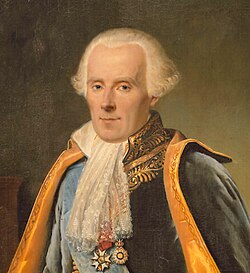
太陽系の起源を説明する最も有力な理論が星雲説です。これは18世紀にエマニュエル・スウェーデンボリ、イマヌエル・カント、そしてピエール=シモン・ラプラスらによって提唱されました。天文学だけでなく、化学、地質学、物理学などの多角的な視点から研究が進められ、現代では系外惑星の発見などの最新データによってさらに精緻なモデルへと進化しています。
Key Facts
- 誕生時期: 約46億年前、巨大分子雲の重力崩壊によって開始。
- 形成プロセス: 中心に太陽が誕生し、周囲の原始惑星系円盤から惑星や小惑星が形成。
- 進化の要因: 天体同士の巨大衝突や、惑星の軌道が変化する「惑星移動」が構造に大きな影響を与えた。
- 太陽の未来: 将来的に赤色巨星へと膨張し、最終的には白色矮星となって一生を終える。
太陽系の誕生と惑星の形成
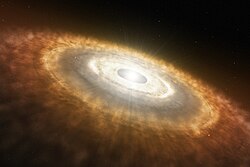
太陽系の始まりは、宇宙に漂うガスと塵の集まりである分子雲の崩壊から始まりました。崩壊した物質の大部分は中心に集まって太陽となり、残りの物質は回転しながら平らな円盤状に広がりました。これが原始惑星系円盤であり、ここから塵が衝突・合体を繰り返すことで、惑星や衛星、小惑星といった天体が作り出されました。
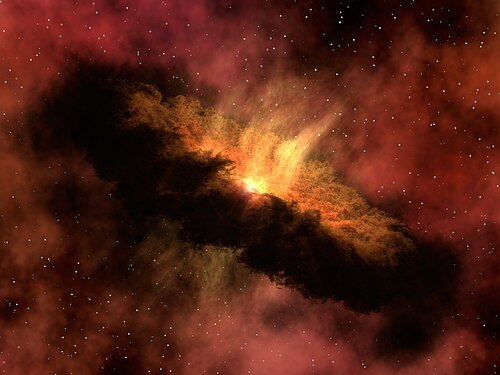
現在の宇宙でも、オリオン大星雲のような星形成領域では、かつての太陽系に似た環境で新しい星と惑星系が生まれている様子が観測されています。
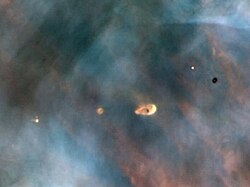
太陽を取り囲んでいたこの円盤の中で、物質の密度や温度に応じて、岩石主体の地球型惑星や、ガス・氷を主成分とする巨大惑星へと分かれて形成が進みました。
激動の進化プロセス:衝突と移動
太陽系は誕生してすぐに現在の安定した姿になったわけではありません。初期の太陽系では天体同士の激しい衝突が頻発していました。例えば、地球の月は、地球に巨大な天体が衝突した際に飛び散った破片から形成されたという説が有力視されています。
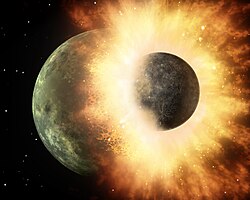
また、惑星の軌道自体も時間とともに変化したと考えられています。これを惑星移動と呼びます。木星や土星などの巨大惑星が移動することで、周囲の小惑星や海王星より外側に位置する「太陽系外縁天体(トランス・ネプチュニアン天体)」の分布に大きな影響を与えました。
![Simulation showing outer planets and Kuiper belt:[2] a) Before Jupiter/Saturn 2:1 resonance b) Scattering of Kuiper belt objects into the Solar System after the orbital shift of Neptune c) After ejection of Kuiper belt bodies by Jupiter Orbit of Jupiter Orbit of Saturn Orbit of Uranus Orbit of Neptune](/images/00/4a/004a97db5cefdeac67f13c6322beedb28ab94a0d345364d8359a7d6672dbebd9.png)
こうした天体同士の衝突は、数億年前の「後期重爆撃期」だけでなく、現代に至るまで続いています。アリゾナ州にある隕石クレーターは、太陽系の物質集積プロセスが今なお終わっていないことを物語る証拠の一つです。
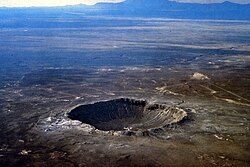
衛星の多様な成り立ち
惑星の周りを回る衛星の形成ルートは複数あります。巨大惑星の周囲にあったガス円盤から同時に形成されたものもあれば、独立して形成された後に惑星の重力に捕らえられたもの、あるいは巨大衝突の残骸から生まれたものなど、多様な経緯があります。
例えば、海王星の衛星トリトンは捕獲されたと考えられており、将来的には海王星のロシュ限界(天体が潮汐力で破壊される距離)まで近づき、分解されて新たな環を形成する可能性があります。
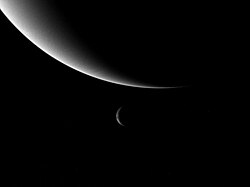
太陽系の未来と終焉
太陽系は今後、太陽の進化に伴って劇的な変化を迎えます。太陽が中心核の水素を使い切り、ヘリウムへの核融合が進むと、太陽は赤色巨星へと進化し、巨大に膨張します。このとき、水星や金星、そしておそらく地球までもが太陽に飲み込まれると予測されています。
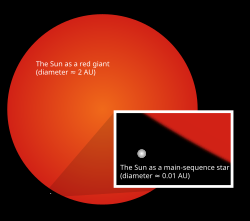
その後、太陽は外層のガスを放出して「惑星状星雲」となり、中心には小さく高密度な白色矮星だけが残ります。外惑星やその衛星たちは生き残る可能性がありますが、太陽系はかつての輝きを失い、静かな終焉へと向かいます。
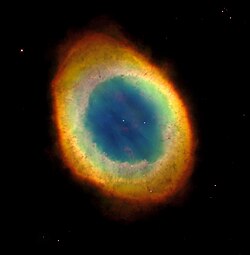
このようなプロセスは、すでに宇宙の他の場所で観測されており、白色矮星の周囲を回る木星サイズの系外惑星(MOA-2010-BLG-477L bなど)の発見は、私たちの太陽系の未来を暗示しています。
太陽系の位置と構成
私たちの太陽系は、天の川銀河という巨大な渦巻銀河の中にある、ごく一部の領域に位置しています。
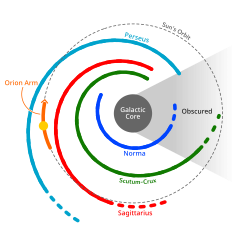
中心の太陽を筆頭に、8つの惑星、数多くの衛星、そして小惑星や彗星などの小さな天体が、調和を保ちながら公転しています。

| 段階 | 形成からの経過時間 | 主な出来事 |
|---|---|---|
| 誕生前 | 46億年以上前 | 巨大分子雲の重力崩壊 |
| 太陽系の誕生 | 0年(46億年前) | 太陽の形成と原始惑星系円盤の出現 |
| 惑星形成期 | 〜1億年後 | 惑星の誕生、激しい衝突と合体 |
| 主系列星段階 | 現在まで | 太陽が安定して燃焼し、惑星が公転 |
| 赤色巨星段階 | 約60億年後 | 太陽が膨張し、内惑星を飲み込む |
| 白色矮星段階 | 約75億年後〜 | 太陽が縮小し、星の残骸となる |
Frequently Asked Questions
太陽系はどうやってできたのですか?
約46億年前、巨大なガスと塵の雲(分子雲)が重力で崩壊し、中心に太陽が、その周囲に平らな円盤状の物質が集まりました。その円盤の中で物質が衝突・合体することで、惑星や小惑星が形成されました。
「惑星移動」とは何ですか?
惑星が誕生した当初の軌道にとどまらず、周囲のガスや他の天体との重力的相互作用によって、公転軌道が内側または外側へ移動することです。これにより、現在の太陽系の構造が形作られたと考えられています。
地球の月はどのようにして誕生しましたか?
有力な説の一つに、形成初期の地球に火星サイズの巨大天体が衝突し、その際に放出された破片が地球の周りに集まって月になったという「巨大衝突説」があります。
太陽が死ぬとき、地球はどうなりますか?
太陽が寿命を迎え、赤色巨星へと膨張すると、その大きさが地球の軌道まで達し、地球は太陽に飲み込まれて消滅すると予測されています。
太陽の最後はどのような姿になりますか?
赤色巨星として膨張した後、外層のガスを宇宙空間に放出して惑星状星雲となり、中心には非常に小さく高温な「白色矮星」という星の死骸が残ります。
References
- An astronomical unit, or AU, is the average distance between the Earth and the Sun, or about 150 million kilometres. It is the standard unit of measurement for interplanetary distances.
- The combined mass of Jupiter, Saturn, Uranus and Neptune is 445.6 Earth masses. The mass of remaining material is ~5.26 Earth masses or 1.1% (see and )
- The reason that Saturn, Uranus and Neptune all moved outward whereas Jupiter moved inward is that Jupiter is massive enough to eject planetesimals from the Solar System, while the other three outer planets are not. To eject an object from the Solar System, Jupiter transfers energy to it, and so loses some of its own orbital energy and moves inwards. When Neptune, Uranus and Saturn perturb planetesimals outwards, those planetesimals end up in highly eccentric but still bound orbits, and so can return to the perturbing planet and possibly return its lost energy. On the other hand, when Neptune, Uranus and Saturn perturb objects inwards, those planets gain energy by doing so and therefore move outwards. More importantly, an object being perturbed inwards stands a greater chance of encountering Jupiter and being from the Solar System, in which case the energy gains of Neptune, Uranus and Saturn obtained from their inwards deflections of the ejected object become permanent.
- In all of these cases of transfer of angular momentum and energy, the angular momentum of the two-body system is conserved. In contrast, the summed energy of the moon's revolution plus the primary's rotation is not conserved but decreases over time due to dissipation via frictional heat generated by the movement of the tidal bulge through the body of the primary. If the primary were a frictionless ideal fluid, the tidal bulge would be centered under the satellite, and no transfer would occur. It is the loss of dynamical energy through friction that makes the transfer of angular momentum possible.
📸 フォトギャラリー