私たちの身の回りにあるあらゆる構造物や製品は、常に何らかの力にさらされています。重力や外部からの圧力、摩擦などが加わったとき、材料の内部ではそれに抗おうとする力が働きます。この内部的な抵抗力が応力(ストレス)です。応力を正しく理解することは、建築物の安全設計から精密機器の開発まで、現代工学のあらゆる場面で不可欠な要素となっています。
一般的に、固体材料に力が加わって変形(ひずみ)が生じると、バネのように元の形状に戻ろうとする「弾性応力」が発生します。一方、液体や気体などの流体では、体積が変化する変形に対してのみ持続的な弾性応力が生じますが、時間の経過とともに変化する変形に対しては「粘性応力」として抵抗します。これらを総称して機械的応力と呼びます。
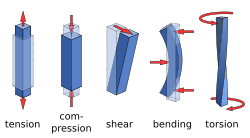
Key Facts
- 定義: 応力とは、材料内部の仮想的な断面における単位面積あたりの力を指す。
- 単位: 国際単位系(SI)ではパスカル(Pa)が用いられ、1 Pa = 1 N/m² と定義される。
- 種類: 面に対して垂直に働く「垂直応力」と、平行に働く「せん断応力」に大別される。
- 限界: 応力が材料の強度限界を超えると、永久変形(塑性流動)や破断、結晶構造の変化が起こる。
- 数学的表現: 複雑な応力状態を記述するために、3×3の行列である「コーシー応力テンソル」が用いられる。
応力の定義と物理的意味
物理学的な視点で見ると、応力は「力」という物理量と「面積」という幾何学的量を組み合わせた概念です。具体的には、材料内部に想定した微小な境界表面において、その表面を通過する力を面積で割った値として定義されます。これにより、材料の性質や力の原因に関わらず、定量的な解析が可能になります。
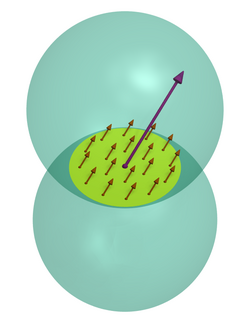
静止した流体においては、力は常に表面に対して垂直に働くため、これは馴染み深い「圧力」と同じ意味になります。しかし、固体や粘性流体の場合、力は必ずしも垂直に働くとは限りません。そのため、応力は単なる数値(スカラー)ではなく、方向を持つベクトル量として扱う必要があります。さらに、断面の向きによって応力の大きさや方向が変わるため、材料全体の応力状態を記述するには「テンソル」という数学的枠組みが必要となります。
垂直応力とせん断応力
材料に作用する応力ベクトルは、大きく分けて2つの成分に分解して考えることができます。
垂直応力(Normal Stress)
断面に対して垂直に作用する応力です。材料を引っ張る方向に働く場合は引張応力、押しつぶす方向に働く場合は圧縮応力と呼ばれます。例えば、均一な断面を持つ棒の両端から軸方向に力を加えた場合、その内部には一様な垂直応力が発生します。
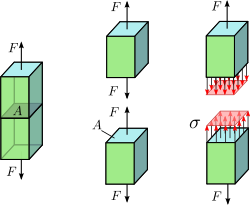
ただし、実際の製品では端部の固定方法や製造工程の影響で、応力が不均一に分布することがあります。この場合、単純な計算式(力÷面積)で得られる値は「平均応力(公称応力)」と呼ばれます。
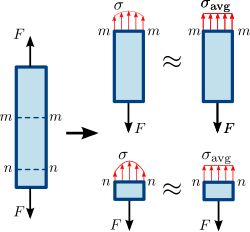
せん断応力(Shear Stress)
断面に対して平行に、ずらすように作用する応力です。例えば、水平な棒に互い違いに荷重をかけた際に生じる力がこれに当たります。
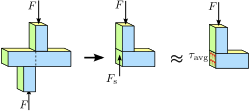
特殊な応力状態とモデル化
工学設計では、計算を簡略化するために特定の応力パターンを想定することがあります。
- 等方性応力: あらゆる方向の断面に対して、等しい大きさの垂直応力が作用している状態です。圧縮の場合は「静水圧」と呼ばれます。
- 一軸応力: 1つの軸方向にのみ応力が作用している単純な状態です。
- 複合応力: 垂直応力とせん断応力が同時に作用している状態で、より現実的な複雑な負荷状況を表します。
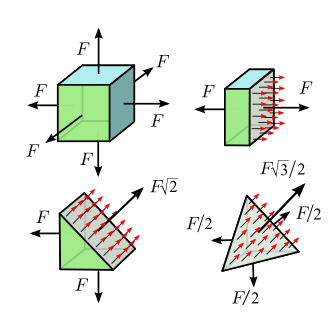
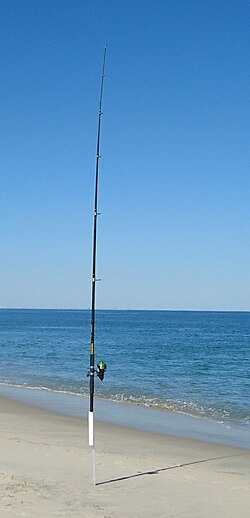
また、解析対象の形状に応じてモデルを簡略化します。例えば、釣り竿のような細長い物体は「1次元モデル」として、薄い鋼板などは「2次元モデル」として扱うことで、効率的な解析が可能になります。
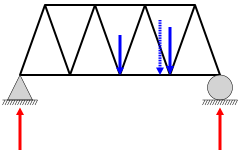
さらに、曲げられたパイプや溶接されたタンクなどの円筒形構造物では、回転対称性を利用して応力解析を簡略化します。

高度な解析:コーシー応力テンソル
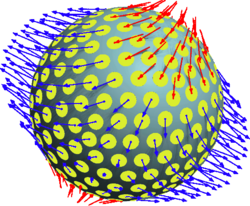
複雑な3次元的な応力状態を完全に記述するために用いられるのがコーシー応力テンソルです。これは、任意の断面の法線ベクトルと、その面に作用する応力ベクトルを線形に関係付ける3×3の対称行列として表現されます。
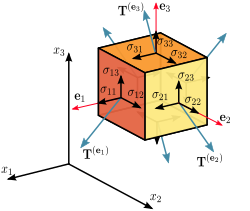
このテンソルを用いることで、どの方向の断面に最大の応力がかかっているか(主応力)を特定でき、材料がどの方向から破壊されやすいかを予測することが可能になります。均質な材料であっても、応力は場所や時間によって変動するため、実際には「時間変動するテンソル場」として解析されます。
応力の発生と材料への影響
応力は外部からの荷重だけでなく、急激な温度変化などによっても発生します。例えば、半溶融状態のガラスを水に浸した際に生じる激しい応力は、特有のひび割れ模様(クラックレ)を作り出します。
![Glass vase with the craquelé effect. The cracks are the result of brief but intense stress created when the semi-molten piece is briefly dipped in water.[10]](/images/f5/85/f5852660c41b94eef43d81344448cd3624ca1a853ce0125e40d1b55affcff02f.jpg)
応力が材料の許容限界を超えると、以下のような現象が起こります。
- 塑性変形: 荷重を取り除いても元の形に戻らない永久的な変形。
- 破断・破壊: 材料が物理的に切り離される現象。
- 構造変化: 結晶構造や化学組成が変化する場合もあります。
応力のまとめ
| 項目 | 垂直応力 | せん断応力 |
|---|---|---|
| 作用方向 | 断面に対して垂直 | 断面に対して平行 |
| 主な種類 | 引張応力、圧縮応力 | せん断(ずり)応力 |
| 物理的効果 | 伸び、縮み、体積変化 | 形状の歪み、ずれ |
| 代表的な例 | 吊り下げられたワイヤー | ハサミで切る動作 |
Frequently Asked Questions
応力と圧力は何が違うのですか?
圧力は流体(液体・気体)において、常に面に垂直に作用するスカラー量です。一方、応力は固体を含むあらゆる材料で定義され、垂直方向だけでなく平行方向(せん断)の力も含むベクトル的な概念です。つまり、圧力は応力の一種(等方的な圧縮応力)と言えます。
「弾性」と「塑性」の違いは何ですか?
弾性とは、力を取り除いたときに元の形状に完全に回復する性質のことです。対して塑性とは、ある限界(降伏点)を超えた応力が加わり、力を取り除いても変形が残る性質を指します。
なぜ応力をテンソルで表現する必要があるのですか?
材料内部の応力は、どの方向で断面を切るかによって、その大きさと方向が変化するためです。単一の数値やベクトルでは、あらゆる方向への応答を同時に記述できないため、行列形式のテンソルを用いて表現します。
平均応力(公称応力)で十分な場合はいつですか?
材料が均質であり、荷重が断面全体に均等に分布していると見なせる場合に有効です。一般的に、端部から十分に離れた位置にある直線的な部材などの解析では、平均応力による近似が実用的です。
References
- "12.3 Stress, Strain, and Elastic Modulus - University Physics Volume 1 | OpenStax". openstax.org. 19 September 2016. Retrieved 2022-11-02.
- "Class Physical-Quantity in theory Physical-Quantities". www-ksl.stanford.edu. Retrieved 2022-11-02.
- Connor, Nick (2020-07-31). "What is Shear Stress - Materials - Definition". Material Properties. Retrieved 2022-11-02.
- Gordon, J.E. (2003). Structures, or, Why things don't fall down (2. Da Capo Press ed.). Cambridge, MA: Da Capo Press. .
- Jacob Lubliner (2008). "Plasticity Theory" Archived 2010-03-31 at the (revised edition). Dover Publications.
- https://archive.org/details/historyofstrengt0000timo_k8r2/page/110/mode/2up, pp.107-110
- Wai-Fah Chen and Da-Jian Han (2007), "Plasticity for Structural Engineers". J. Ross Publishing
- Peter Chadwick (1999), "Continuum Mechanics: Concise Theory and Problems". Dover Publications, series "Books on Physics". . pages
- I-Shih Liu (2002), "Continuum Mechanics". Springer
- (2009) The art of making glass. Lamberts Glashütte (LambertsGlas) product brochure. Accessed on 2013-02-08.
📸 フォトギャラリー