岩石を観察していると、細かい粒の中にひときわ大きく目立つ結晶が点在していることがあります。地質学では、このような火成岩の地質学的特徴を斑晶(はんしょう)と呼びます。斑晶は単なる見た目の特徴ではなく、その岩石がどのような環境で、どのようなプロセスを経て形成されたかを示す重要な手がかりとなります。
Key Facts
- 斑晶とは、岩石の主成分である石基(地質的なベース部分)よりも明らかに大きい結晶のこと。
- 斑晶を持つ岩石は斑状組織(porphyritic texture)を持つと言われ、ポルフィリーとも呼ばれる。
- 一般的に直径0.5mm以上の結晶が斑晶と定義されるが、それ以下の小さいものは微斑晶、極めて大きいものは巨斑晶と区別される。
- 結晶の縁から中心にかけて組成が変化するゾーニング現象は、マグマの温度や組成の変化を記録している。
- 斑晶の有無や種類によって、岩石の分類名(例:斑状カンラン石玄武岩など)が決定される。
斑晶の定義と結晶のサイズ分類
斑晶は、マグマが冷却される過程で、周囲の石基よりも早い段階で成長した結晶です。多くの場合、結晶面がはっきりとした自形(euhedral)をしていますが、これはマグマの中で自由に成長したか、あるいは配置後に再結晶化したためです。
結晶のサイズによって、以下のように呼び方が変わります。一般的に肉眼やルーペで確認できる0.5mm以上が斑晶の基準となりますが、この境界線は分析手法によって多少異なります。また、変成岩において同様の形態を持つ結晶は、斑晶ではなく斑状晶(porphyroblast)と呼ばれます。
- 微斑晶(Microphenocrysts):石基よりは大きいが、斑晶の基準サイズに満たない結晶。
- 斑晶(Phenocrysts):石基より明らかに大きく、目視可能な結晶。
- 巨斑晶(Megaphenocrysts):特に巨大に成長した結晶。
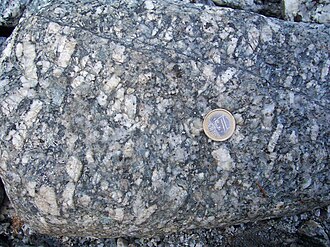
例えば、モンブラン山塊で見られる花崗岩には、大きな斜長石の斑晶が含まれており、その白く際立つ外観が特徴的です。
岩石の分類における斑晶の役割
地質学者は、斑晶の種類、大きさ、そして含有量に基づいて岩石を分類します。斑晶がほとんど含まれていない(体積比で1%未満)岩石は無斑状(aphyric)と呼ばれます。一方で、斑晶が存在する場合は斑状(phyric/porphyritic)と表現されます。
具体的な岩石名をつける際は、含まれている鉱物の量が多い順に名前を冠します。例えば、玄武岩にカンラン石の斑晶が主に含まれていれば「斑状カンラン石玄武岩」となり、さらに斜長石の斑晶も混在していれば「カンラン石ー斜長石斑状玄武岩」と詳細に記述されます。
また、結晶のサイズに差がある場合、大きな結晶を優先して名称に記載します。例えば、斜長石の斑晶が少量あり、カンラン石の微斑晶が多く含まれる場合は、サイズの大きい斜長石を先に挙げて分類します。
マグマの履歴を解明する分析手法
斑晶は、形成時の圧力や温度に依存するため、岩石の起源や変遷を分析するための貴重なデータソースとなります。特に注目されるのが、結晶内部の化学組成が層状に変化するゾーニングという現象です。
ゾーニングの種類
- 正ゾーニング:中心部が高温組成で、外縁に向かって低温組成に変化するもの。通常の冷却過程を示します。
- 逆ゾーニング:外縁部の方が中心部よりも高温組成を示す、稀なケースです。
- 振動ゾーニング:高温と低温の組成が周期的に繰り返される現象です。
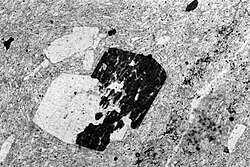
また、ラパキビ花崗岩のように、正長石の斑晶が斜長石の縁取りに包まれている特殊な構造も見られます。火山流や浅い貫入岩では、噴出前に形成された斑晶が、急冷されたガラス質や微粒の石基に囲まれており、結晶が一定方向に並ぶ流理構造(flow banding)を示すことがあります。
斑晶に関するまとめ
| 項目 | 特徴・定義 | 備考 |
|---|---|---|
| 斑晶 (Phenocryst) | 石基より著しく大きい結晶(一般に0.5mm〜) | 早期に形成される |
| 微斑晶 (Microphenocryst) | 石基よりは大きいが、斑晶より小さい結晶 | 分析手法により定義が変動 |
| 巨斑晶 (Megaphenocryst) | 極めて巨大な結晶 | ペグマタイトなどで顕著 |
| 無斑状 (Aphyric) | 斑晶がほぼ含まれない(1%未満)状態 | 均質な組織 |
| 斑状組織 (Porphyritic) | 結晶サイズに明確な差がある組織 | 冷却速度の変化を示す |
Frequently Asked Questions
斑晶はどのような岩石に多く見られますか?
特にフェルサイトや安山岩などのシリカ含有量が多い(明るい色の)火成岩によく見られますが、超塩基性岩を含むあらゆる火成岩に現れる可能性があります。また、ペグマタイトの中には非常に巨大な斑晶を持つものがあります。
斑晶と斑状晶の違いは何ですか?
どちらも周囲より大きい結晶を指しますが、形成される岩石の種類が異なります。斑晶はマグマから冷えて固まる「火成岩」に見られるものであり、斑状晶(porphyroblast)は熱や圧力で変化した「変成岩」に見られるものです。
ゾーニングから何が分かりますか?
結晶の組成が層状に変わるゾーニングを分析することで、マグマが冷却される過程で温度がどう変化したか、あるいは周囲の環境とどのように反応して組成が変わったかという「マグマの履歴」を読み解くことができます。
なぜ結晶のサイズに差が出るのですか?
これはマグマの冷却速度が変化するためです。地下深くでゆっくりと時間をかけて冷却された段階で大きな結晶(斑晶)が成長し、その後、地表近くに上昇して急激に冷却されることで、残りの成分が細かい結晶(石基)として固まるため、サイズに差が生まれます。
References
- The minimum size boundary is arbitrary and not precise. It is based upon observation and may vary depending upon whether technical aids, such as a hand lens or a microscope are used or not. One analyst used a 100 limit on the size of crystals as that was the minimum that could be point-counted accurately by optical means. Murphy, M. D.; Sparks, R. S. J.; ; Carroll, M. R. & Brewer, T. S. (2000). "Remobilization of andesite magma by intrusion of mafic magma at the Soufriere Hills Volcano, Montserrat, West Indies". Journal of Petrology. 41 (1): 21–42. :10.1093/petrology/41.1.21.
- Smith, George I. (1964). Geology and Volcanic Petrology of the Lava Mountains, San Bernardino County, California. United States Geological Survey professional paper 457. Washington, D.C.: United States Geological Survey. p. 39. 3598916.
- Gill, Robin (2011). Igneous Rocks and Processes: A Practical Guide. Hoboken, New Jersey: Wiley. p. 34. .
- Some use a 1% boundary condition, Sen, Bibhas; Sabale, A. B. & Sukumaran, P. V. (2012). "Lava channel of Khedrai Dam, northeast of Nasik in western Deccan Volcanic province: Detailed morphology and evidences of channel reactivation". Journal of the Geological Society of India. 80 (3): 314–328. :10.1007/s12594-012-0150-8. 128608511. and Ocean Drilling Program, Texas A & M University (1991). Proceedings of the Ocean Drilling Program. Part A, Initial report. Vol. 140. National Science Foundation (U.S.). p. 52., while others suggest a limit of 5%. Piccirillo, E. M. & Melford, A. J. (1988). The Mesozoic Flood Volcanism of the Paraná Basin: Petrogenetic and Geophysical Aspects. São Paulo, Brazil: Universidade de São Paulo, Instituto Astronômico e Geofísico. p. 49. . and Moulton, B. J. A.; et al. (2008). Volcanology of the Felsic Volcanic Rocks of the Kidd-Munro assemblage in Prosser and Muro Townships and Premininary Correlations with the Kidd Creek Deposit, Abitibi Greenstone Belt, Ontario. Geological Survey of Canada, Current Research, No. 2008-18. Ottawa: Geological Survey of Canada. p. 19. .
- Gill, Robin (2011). Igneous Rocks and Processes: A Practical Guide. Hoboken, New Jersey: Wiley. p. 21. .
- Byerly, Gary R. & Wright, Thomas L. (1978). "Origin of major element chemical trends in DSDP Leg 37 basalts, Mid-Atlantic Ridge". Journal of Volcanology and Geothermal Research. 3 (3–4): 229–279. :1978JVGR....3..229B. :10.1016/0377-0273(78)90038-0.
- Gangopadhyay, A. M. I. T. A. V. A.; Sen, Gautam & Keshav, Shantanu (2003). "Experimental Crystallization of Deccan Basalts at Low Pressure: Effect of Contamination on Phase Equilibrium" (PDF). Indian Journal of Geology. 75 (1/4): 54.
- Williams, Howel; Turner, Francis J. & Gilbert, Charles M. (1954). Petrography: An introduction to the study of rocks in thin sections. San Francisco: W. H. Freeman. p. 102–103. .
{{}}: ISBN / Date incompatibility () - "Crystal zoning." Oxford Reference. Accessed 8 Aug. 2020. https://www.oxfordreference.com/view/10.1093/oi/authority.20110803095651756.
- Cox, S. F. & Etheridge, M. A. (1983). "Crack-seal fibre growth mechanisms and their significance in the development of oriented layer silicate microstructures". Tectonophysics. 92 (1): 147–170. :1983Tectp..92..147C. :10.1016/0040-1951(83)90088-4.
📸 フォトギャラリー