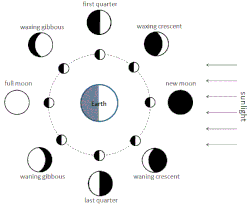
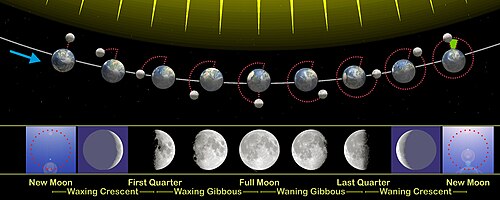
夜空を彩る月の形が日々変化する現象を「月相(げっそう)」と呼びます。私たちは地球から月を眺めていますが、実際には月自体が形を変えているわけではありません。この現象は、太陽・地球・月の相対的な位置関係によって、太陽光に照らされる範囲が変化することで起こります。
月は地球に対して潮汐ロック(常に同じ面を地球に向ける状態)されているため、私たちは常に月の表面の半分しか見ることができません。しかし、月が地球の周りを公転するにつれて、照らされる領域が移動するため、地球からは満ち欠けしているように見えます。
Key Facts
- 月相の周期: 平均して約29.5日(朔望月)で一巡します。
- 主要な4つの相: 新月、上弦の月、満月、下弦の月の4つに大別されます。
- 視覚的な違い: 北半球と南半球では、月の見え方(満ち欠けの方向)が左右反転します。
- 原因: 地球の影ではなく、月自身の夜側(太陽が当たっていない面)が見えることで起こります。
- 地球照: 三日月などの時に、暗い部分がかすかに光って見える現象です。
月相が変化する仕組み
月は地球を公転しながら同時に自転しています。この自転周期と公転周期がほぼ等しいため、地球からは常に同じ面が見えています。しかし、太陽に対する月の向きは常に変化しているため、太陽光が当たる範囲も変わります。
太陽と月が地球から見てほぼ同じ方向にあるとき、地球に面した側は全く照らされず「新月」となります。そこから月が移動し、照らされる面積が増えていく過程を満ちる(waxing)、逆に減っていく過程を欠ける(waning)と表現します。
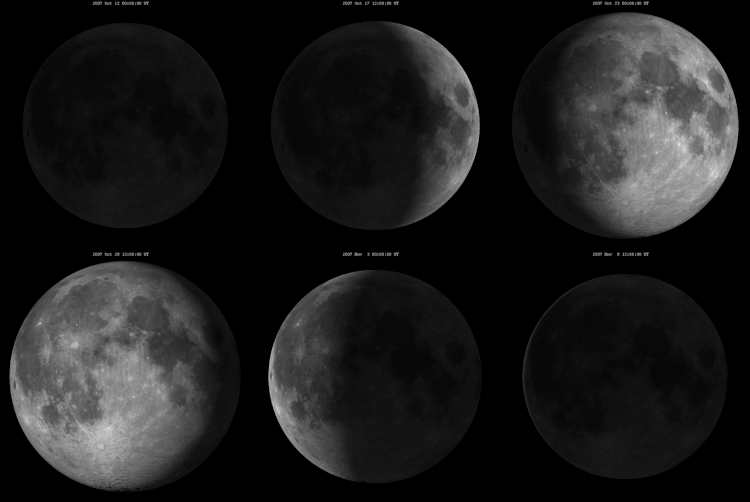
主要な相と中間的な相
天文学的に重要な4つの主要相は、太陽と月の角度(黄経)によって定義されます。0度で新月、90度で上弦、180度で満月、270度で下弦となります。これらの間には、三日月のような「crescent(クレセント)」や、満月に近い「gibbous(ギバス/凸月)」という中間的な形態が存在します。
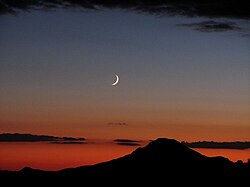
例えば、新月から満月に向かう途中の三日月は「waxing crescent(満ちていく三日月)」と呼ばれ、満月から新月へ向かう途中の三日月は「waning crescent(欠けていく三日月)」と呼ばれます。
観測地点による見え方の違い
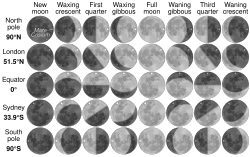
月の見え方は、観測者が地球上のどこにいるかによって異なります。特に北半球と南半球では、視点が180度異なるため、右側から満ちる北半球に対し、南半球では左側から満ちるように見えます。
また、赤道に近い低緯度地域では、月の向きが回転して見え、三日月の「角」が上下に向くこともあります。これは太陽と月の高度関係によって決まります。
時間帯と月の位置
月の相によって、空で最も高く昇る(南中する)時間帯が異なります。新月は正午頃に南中し、満月は真夜中に南中します。この特性を利用すれば、月の形と位置からおおよその時刻を推測することが可能です。
![The time of day at a location on Earth (except at the poles) can be inferred from the culmination of the Moon in the sky and its phase: each lunar phase culminates closest to the zenith (being exactly south or north of it, crossing the meridian) in the sky at a specific daytime, as marked in the diagram, rising (east) and setting (west) during the time of the day preceding and succeeding the culmination.[10]](/images/fa/e7/fae7d383da4e9a73324cd8d6975715f14f928f316973d4ec7d72b6b08b98c5e0.png)
その他の天文現象
地球照(アースシャイン)
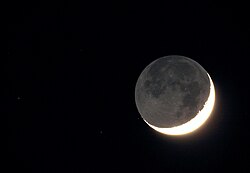
細い三日月が見えるとき、太陽が当たっていない暗い部分がぼんやりと光って見えることがあります。これは地球で反射した太陽光が月に当たり、それが再び地球に届くことで起こる現象で、「地球照」と呼ばれます。
秤動(ひょうどう)と視差
月の軌道が楕円であるため、地球から見た月の角度がわずかに変動します。これを秤動(libration)と呼びます。このおかげで、実際には月の表面の約59%を地球から観測することができています。
日食と月食のメカニズム
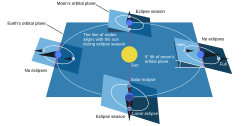
毎月新月と満月が訪れますが、毎回食が起こるわけではありません。それは、月の公転面が地球の公転面(黄道面)に対して約5度傾いているためです。月がこの2つの面の交点(ノード)付近に位置したときのみ、日食や月食が発生します。
月相のまとめ
| 月相 | 照らされた割合 | 視認性 | 平均南中時刻 |
|---|---|---|---|
| 新月 | 0% | ほぼ不可視 | 12:00 |
| 上弦の月 | 50% (右側) | 午後〜夜間 | 18:00 |
| 満月 | 100% | 日没〜日の出 | 00:00 |
| 下弦の月 | 50% (左側) | 深夜〜午前 | 06:00 |
Frequently Asked Questions
月の満ち欠けは地球の影によるものですか?
いいえ、違います。月相は地球の影で月が隠れることではなく、太陽光が当たっている側と当たっていない側がある中で、地球から見える範囲が変わることで起こります。地球の影が月に落ちるのは「月食」のときだけです。
なぜ1ヶ月はちょうど28日ではないのですか?
月の公転周期(恒星月)は約27.3日ですが、その間に地球自身も太陽の周りを移動しています。そのため、再び太陽と同じ方向(新月)に戻るにはさらに時間がかかり、平均して約29.5日(朔望月)必要になります。
北半球と南半球で月の形は違って見えますか?
はい、見え方は逆になります。北半球で右側から満ちていく月は、南半球では左側から満ちていくように見えます。これは観測者が月を眺める角度が上下逆さまになるためです。
「新月」と「旧月」は何が違うのですか?
新月は太陽と一直線に並び、地球から全く見えなくなった瞬間を指します。一方、旧月(old moon)は新月になる直前の、非常に細くなった欠けていく三日月のことを指します。
日食や月食が毎月起こらないのはなぜですか?
月の公転軌道が地球の公転軌道に対して約5度傾いているためです。ほとんどの場合、新月や満月のとき、月は地球と太陽を結ぶ直線の少し上か下に位置しており、影が重なりません。
References
- The quarter phases happen when the observer–Moon–Sun angle is 90°[], also known as [ – ]. This is not the same as a [ – ], but the difference is very slight. /
- Their durations because the is somewhat , so its is not constant.
- As with sunrise and sunset, there are seasonal variations in the time of moonrise and moonset.
- Lunar months vary in length about the mean by up to seven hours in any given year. In 2001, the synodic months varied from 29d 19h 14m in January to 29d 07h 11m in July.
📸 フォトギャラリー