私たちの周囲にある空気や水など、形を変えて流れる物質の挙動を研究するのが流体力学です。これは流体メカニクスの一分野であり、液体を扱う「流体動力学(ハイドロダイナミクス)」と、気体を扱う「空気力学(エアロダイナミクス)」に大きく分かれます。航空機の設計から気象予測、さらには宇宙の星雲の解析や血液の流れに至るまで、その応用範囲は極めて広範です。
流体力学の目的は、時間と空間の変化に伴う流体の速度、圧力、密度、温度といった物理量を正確に算出することにあります。これにより、物体に働く力や物質の輸送効率を定量的に把握することが可能になります。
Key Facts
- 保存則が基盤:質量、運動量、エネルギーの3つの保存則がすべての解析の基礎となる。
- 連続体近似:流体を個々の分子の集まりではなく、連続した物質として扱うことで計算を可能にする。
- ナビエ・ストークス方程式:ニュートン流体の運動を記述する非線形微分方程式であり、現代の流体解析の中核をなす。
- レイノルズ数の重要性:慣性力と粘性力の比率を示す無次元数であり、流れが層流か乱流かを判断する指標となる。
流体を支配する基本原理と方程式
流体力学では、物理学の根本的な原則である「保存則」を適用します。具体的には、質量が消滅も生成もしないこと(質量保存)、外力が加わった分だけ運動量が変化すること(運動量保存)、そしてエネルギーの総量が一定であること(エネルギー保存)に基づいています。
これらの法則を数学的に表現したものがナビエ・ストークス方程式です。これは、流体の応力が速度勾配と圧力に線形に依存すると仮定したニュートン流体における運動方程式です。非常に複雑な非線形方程式であるため、一般的な解(閉じた形式の解)を求めることは困難であり、多くの場合、コンピュータを用いた数値シミュレーション(CFD)によって解析されます。
また、流体を解析する際は「連続体近似」という考え方を用います。実際には流体は分子の集合体ですが、微小な点においても密度や温度が定義できる連続的な物質として扱うことで、微分方程式による記述が可能になります。
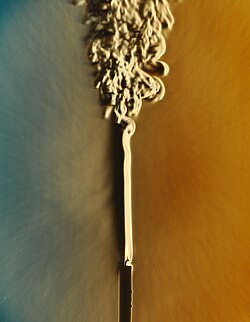
流れの分類と特性
圧縮性と非圧縮性
圧力や温度の変化によって密度が変動することを「圧縮性」と呼びます。一般に液体は密度変化が極めて小さいため非圧縮性流体としてモデル化されます。一方、気体の場合はマッハ数(音速に対する流速の比)が0.3を超える場合に圧縮性の影響を考慮する必要があります。音波そのものが圧力と密度の変動であるため、音響解析では常に圧縮性が重要となります。
粘性とレイノルズ数
流体の「ねばりけ」である粘性は、流れの形態を決定づける重要な要素です。ここで指標となるのがレイノルズ数です。この値が非常に小さい場合は粘性力が支配的な「ストークス流(クリーピング流)」となり、逆に非常に大きい場合は慣性力が支配的になります。慣性力が極めて強い場合、粘性を無視した「非粘性流」として近似し、オイラー方程式やベルヌーイの定理を用いて解析することがあります。
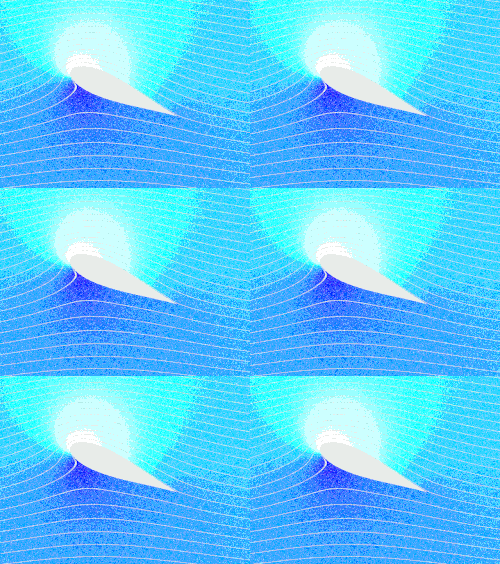
層流と乱流
流れの状態は、規則正しく層をなして流れる層流と、不規則に乱れて混ざり合う乱流に分けられます。大規模な航空機の翼などの高レイノルズ数環境では、ほぼ必然的に乱流が発生します。乱流の完全なシミュレーション(DNS)は計算負荷が膨大であるため、実務ではRANS(レイノルズ平均ナビエ・ストークス方程式)やLES(ラージエディシミュレーション)といった乱流モデルが活用されています。

形状と流動の相互作用
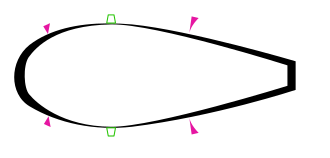
物体の形状は流体の流れ方に決定的な影響を与えます。例えば、空気抵抗を最小限に抑えるためには、後方で流れが剥離(フローセパレーション)することを防ぐ「ティアドロップ(涙滴)形状」が理想的です。また、あえて後端を切り落とした「カムバック形状」を採用することで、圧力分布を制御し抵抗を減らす手法も存在します。
さらに、密度の異なる流体が接触した際に発生する「レイリー・テイラー不安定性」のような現象は、天体物理学や爆発現象の解析において重要な視点となります。
![Hydrodynamics simulation of the Rayleigh–Taylor instability[7]](/images/9c/3e/9c3e44f8c2d53e920207d7192f4c41282a437982bd65051cfd844b3592221cad.gif)
流体力学の主要概念まとめ
| 分類項目 | 対比される概念 | 決定要因・指標 | 主な特徴 |
|---|---|---|---|
| 密度変化 | 圧縮性 vs 非圧縮性 | マッハ数 (M < 0.3) | 気体は圧縮性、液体は概ね非圧縮 |
| 粘性の影響 | 粘性流 vs 非粘性流 | レイノルズ数 (Re) | Reが低いと粘性が支配的になる |
| 流れの形態 | 層流 vs 乱流 | レイノルズ数 (Re) | 乱流は不規則で混合が激しい |
| 時間変化 | 定常流 vs 非定常流 | 時間微分 (∂/∂t) | 定常流は時間的に特性が不変 |
専門的な応用分野
流体力学は単独の学問ではなく、多くの他分野と融合しています。例えば、電磁場の中を流れる導電性流体(プラズマや液体金属)を扱う電磁流体力学 (MHD)や、血液の流れを解析する血行動態学、地球規模の海流や気流を扱う地球流体力学などが挙げられます。
Frequently Asked Questions
ナビエ・ストークス方程式とは何ですか?
流体の運動を記述する基本的な微分方程式です。質量保存と運動量保存の法則に基づいており、流体の速度や圧力の変化を計算するために使用されます。非常に複雑なため、多くの場合コンピュータによる数値計算で解かれます。
レイノルズ数とはどのような意味を持つ数値ですか?
流体の慣性力と粘性力の比率を示す無次元数です。この数値が大きいほど慣性が強く乱流になりやすく、小さいほど粘性が強く層流になりやすいという特性があります。
層流と乱流の決定的な違いは何ですか?
層流は流体が平行に、規則正しく層をなして流れる状態です。一方、乱流は流速や方向に激しい変動があり、渦が複雑に絡み合って混ざり合う状態で、熱や物質の輸送効率が非常に高いのが特徴です。
非圧縮性流体とは具体的に何を指しますか?
圧力の変化があっても密度がほとんど変わらない流体のことです。水などの液体は一般的に非圧縮性として扱われますが、気体であっても流速が十分に遅い(マッハ数0.3以下)場合は、計算を簡略化するために非圧縮性と見なして解析することが一般的です。
空気力学と流体力学はどう違うのですか?
流体力学が液体と気体の両方を含む広範な学問であるのに対し、空気力学はその中の「気体(特に空気)」の動きに特化したサブディシプリン(分科)です。
References
- Eckert, Michael (2006). The Dawn of Fluid Dynamics: A Discipline Between Science and Technology. Wiley. p. ix. .
- Anderson, J. D. (2007). Fundamentals of Aerodynamics (4th ed.). London: McGraw–Hill. .
- Nangia, Nishant; Johansen, Hans; Patankar, Neelesh A.; Bhalla, Amneet Pal S. (2017). "A moving control volume approach to computing hydrodynamic forces and torques on immersed bodies". Journal of Computational Physics. 347: 437–462. :1704.00239. :2017JCoPh.347..437N. :10.1016/j.jcp.2017.06.047. 37560541.
- White, F. M. (1974). Viscous Fluid Flow. New York: McGraw–Hill. .
- Wilson, DI (February 2018). "What is Rheology?". Eye. 32 (2): 179–183. :10.1038/eye.2017.267. 5811736. 29271417.
- Platzer, B. (2006-12-01). "Book Review: Cebeci, T. and Cousteix, J., Modeling and Computation of Boundary-Layer Flows". ZAMM. 86 (12): 981–982. :2006ZaMM...86..981P. :10.1002/zamm.200690053. 0044-2267.
- Shengtai Li, Hui Li "Parallel AMR Code for Compressible MHD or HD Equations" (Los Alamos National Laboratory) Archived 2016-03-03 at the
- "Transient state or unsteady state? -- CFD Online Discussion Forums". www.cfd-online.com.
- Pope, Stephen B. (2000). Turbulent Flows. Cambridge University Press. .
- See, for example, Schlatter et al, Phys. Fluids 21, 051702 (2009); :10.1063/1.3139294
📸 フォトギャラリー