宇宙に存在するあらゆる物体は互いに引き合っていますが、その引き合う力は場所によって均一ではありません。この重力の差によって物体が引き伸ばされたり、変形したりする現象を引き起こす力が「潮汐力(ちょうせきりょく)」です。私たちは日常的に「潮の満ち引き」としてこの力を実感していますが、その影響は地球の海にとどまらず、銀河の衝突やブラックホール周辺の極端な現象にまで及びます。
潮汐力の正体:重力の「勾配」がもたらす効果
潮汐力とは、単純な重力そのものではなく、ある天体の異なる地点間で生じる重力強度の差(重力勾配)のことを指します。例えば、大きな天体(天体S)の近くに別の天体(天体O)がある場合、天体Sに最も近い側は強く引かれ、最も遠い側は相対的に弱く引かれます。この「引き方のムラ」が、天体Oをラグビーボールのような楕円形に引き伸ばそうとする力として働きます。
数学的には、これは重力場の微分や重力ポテンシャルの勾配として表現されます。もし重力場が完全に均一であれば、物体全体が同じ加速度で移動するだけで変形は起きませんが、現実の宇宙では距離に応じて重力が変化するため、物体内部に歪みが生じるのです。
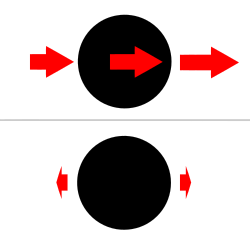
距離とサイズの相関関係
潮汐力の強さは、天体の大きさと距離に強く依存します。具体的には、影響を受ける天体の直径に比例し、相手天体までの距離の3乗に反比例します。このため、たとえ全体の重力が強くても、距離が遠ければ潮汐力は弱くなります。

例えば、太陽は月よりも圧倒的に質量が大きいですが、地球に及ぼす潮汐力は月の約半分にすぎません。これは、太陽が非常に遠くにあるため、地球の「手前側」と「奥側」で受ける重力の差(勾配)が緩やかであるためです。対して月は地球に近いため、急激な重力の変化が生じ、より強い潮汐力を発生させます。
地球と月、そして太陽による潮汐現象
地球の海で起こる潮汐は、主に月の重力と、補助的に太陽の重力によって引き起こされます。月に向いている側の海水は月の方へ引き寄せられ、逆に月と反対側の海水は、地球本体が月へ引かれる速度よりも遅いため、相対的に外側へ押し出される形になります。その結果、地球の両側に盛り上がった「潮汐バルジ」が形成されます。
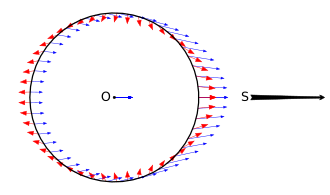
地球が自転することで、私たちは1日に2回の満潮を経験することになります。また、潮汐力は液体だけでなく、地球の岩盤(固体地球潮汐)にも影響を与えており、微細な地殻の変動を引き起こしています。
宇宙規模で起こる劇的な潮汐効果
潮汐力の影響は、海水の移動だけではありません。天文学的なスケールでは、より破壊的な現象を引き起こします。
ロッシュ限界と天体の崩壊
天体が主星に近づきすぎると、天体自身の重力(まとまろうとする力)よりも、主星による潮汐力(引き裂こうとする力)が上回る境界線に達します。これをロッシュ限界と呼びます。この限界を超えて接近した衛星や小惑星は、バラバラに砕け散ります。土星の環は、構成物質がロッシュ限界内部にあるため、互いに集まって月になることができず、環状に広がっていると考えられています。
![Figure 4: Saturn's rings are inside the orbits of its principal moons. Tidal forces oppose gravitational coalescence of the material in the rings to form moons.[11]](/images/1b/c9/1bc973d0310177f9b962b2ca5fb4b36331093816f38c8cf38e03254f62d19a20.jpg)
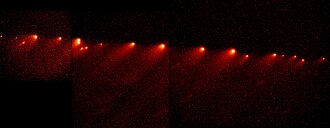
過去には、シューメーカー・レヴィ9彗星が木星の強力な潮汐力によって断片化した事例が観測されています。
潮汐ロックと加熱現象
天体が潮汐力を受けながら回転し続けると、内部摩擦によって回転エネルギーが熱に変換されます。これを潮汐加熱と呼び、木星の衛星イオで激しい火山活動が起きている主因とされています。また、このエネルギー消費が進むと、自転周期と公転周期が一致する潮汐ロック(同期自転)の状態になります。月が常に同じ面を地球に向けているのはこのためです。
極限状態:スパゲッティ化と銀河の相互作用
ブラックホールや中性子星のような超高密度天体の近くでは、潮汐力は極限まで強まります。物体が吸い込まれる際、足先と頭で受ける重力の差が絶望的に大きくなるため、物体は細長く引き伸ばされます。この現象は通称スパゲッティ化と呼ばれます。
さらに、巨大な銀河同士が接近した際にも潮汐力が働き、星々の分布を歪ませたり、ガスを剥ぎ取ったりして、最終的に銀河の合体を促進させます。
![Figure 1: Tidal interaction between the spiral galaxy NGC 169 and a smaller companion[1]](/images/fc/ea/fcea8d9b2dbf220822f15da8c4a7d895c65e8d7e858aec605594f109019428f2.png)
![Figure 7: Tidal force is responsible for the merge of galactic pair MRK 1034.[16]](/images/73/60/7360090382f289f389acb24c3153f3076738145f5bc483f435ad389d4e431ad8.jpg)
潮汐力のまとめ
| 影響を与える天体 | 影響を受ける天体 | 潮汐加速度 (m/s²) | 主な特徴 |
|---|---|---|---|
| 太陽 | 地球 | 約 0.5 × 10⁻⁷ | 距離が遠いため、月より影響が小さい |
| 月 | 地球 | 約 1.1 × 10⁻⁷ | 地球の潮汐の主因 |
| 地球 | 月 | 約 24.4 × 10⁻⁷ | 月の同期自転(潮汐ロック)を誘発 |
Key Facts
- 潮汐力の正体: 単なる重力ではなく、物体内の地点間における重力の「差(勾配)」である。
- 距離の法則: 潮汐力は距離の3乗に反比例して急激に減少する。
- 形状の変化: 物体を楕円形に引き伸ばし、両側に盛り上がり(バルジ)を作る。
- ロッシュ限界: この距離より近づくと、天体は自身の重力で形を維持できず崩壊する。
- エネルギー変換: 内部摩擦による熱(潮汐加熱)を生み、火山活動や自転速度の変化を引き起こす。
- 極端な例: ブラックホール付近では「スパゲッティ化」という極端な伸長が起こる。
Frequently Asked Questions
なぜ太陽よりも月の方が潮汐力に影響があるのですか?
重力そのものは太陽の方が遥かに強いですが、潮汐力は「距離の3乗に反比例」するという特性があります。月は地球に非常に近いため、地球の表面で受ける重力の変化率(勾配)が非常に大きく、結果として太陽よりも強い潮汐力を生み出します。
潮汐ロックとはどのような状態ですか?
天体の自転周期と公転周期が完全に一致した状態です。潮汐力による摩擦で回転エネルギーが失われることで起こります。月が常に同じ面を地球に向けているのは、地球の潮汐力によってロックされたためです。
ロッシュ限界を超えるとどうなりますか?
天体を結びつけている自身の重力よりも、外部から受ける潮汐力(引き裂く力)が強くなるため、天体は粉々に砕け散ります。これが土星の環のような構造を作る要因の一つとなります。
スパゲッティ化とは具体的に何が起きているのですか?
ブラックホールのような超高密度天体に接近した際、物体に近い側と遠い側で受ける重力の差が極端に大きくなる現象です。この強烈な差によって、物体は縦方向に激しく引き伸ばされ、横方向に圧縮されるため、細長い紐のような形状になります。
潮汐力は地球の気候に影響を与えていますか?
潮汐力は海洋循環を促進し、熱エネルギーを極地方へ運ぶことで地球全体の温度調節に寄与しています。一部の研究では、潮汐力の変動が数年周期の寒冷期や長期的な気候変動に関与している可能性が示唆されていますが、決定的な証拠はまだ見つかっていません。
References
- "Hubble Views a Cosmic Interaction". nasa.gov. NASA. February 11, 2022. Retrieved 2022-07-09.
- Matsuda, Takuya; Isaka, Hiromu; Boffin, Henri M. J. (2015), Confusion around the tidal force and the centrifugal force, :1506.04085, retrieved 2025-02-14
- arXiv, Emerging Technology from the (2019-12-14). "Tidal forces carry the mathematical signature of gravitational waves". MIT Technology Review. Retrieved 2023-11-12.
- "On the tidal force", I. N. Avsiuk, in "Soviet Astronomy Letters", vol. 3 (1977), pp. 96–99.
- See p. 509 in "Astronomy: a physical perspective", M. L. Kutner (2003).
-
R Penrose (1999). The Emperor's New Mind: Concerning Computers, Minds, and the Laws of Physics. . p. 264. .
tidal force.
- ; J -P Bibring; M Blanc (2003). The Solar System. Springer. p. 16. .
- "The Tidal Force | Neil deGrasse Tyson". www.haydenplanetarium.org. Retrieved 2016-10-10.
-
Sawicki, Mikolaj (1999). "Myths about gravity and tides". . 37 (7): 438–441. :1999PhTea..37..438S. 10.1.1.695.8981. :10.1119/1.880345. 0031-921X.
{{}}: Cite uses deprecated parameter|citeseerx=() - "2022 CODATA Value: Newtonian constant of gravitation". The NIST Reference on Constants, Units, and Uncertainty. . May 2024. Retrieved 2024-05-18.
📸 フォトギャラリー