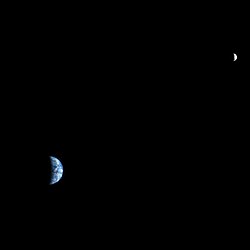
宇宙に浮かぶ天体同士は、互いの重力によって絶えず影響し合っています。特に、惑星とその衛星の間で起こる潮汐加速(Tidal Acceleration)という現象は、数百万年、数億年という長い時間をかけて、天体の回転速度や軌道半径を劇的に変化させます。地球と月の関係は、この物理現象を理解するための最も優れたモデルケースです。
簡単に言えば、潮汐加速とは、衛星が親惑星の自転方向と同じ向きに公転している場合に、衛星が徐々に外側の高い軌道へと押し出される現象を指します。これに伴い、親惑星の自転速度は低下します。この自転の鈍化は「潮汐ブレーキ」と呼ばれ、結果として1日の長さがわずかに伸びることになります。
Key Facts
- 月の後退: 月は現在、年間約38.30mmの速度で地球から遠ざかっています。
- 自転の鈍化: 潮汐ブレーキにより、地球の1日は100年ごとに約2ミリ秒ずつ長くなっています。
- エネルギー変換: 地球の回転エネルギーの多くは、海洋の摩擦などを通じて熱エネルギーとして消散しています。
- 最終的な運命: 理論上は「潮汐ロック」に向かいますが、その前に太陽の進化(赤色巨星化)によって系が破壊される可能性が高いです。
潮汐加速のメカニズムと物理的プロセス
潮汐加速が起こる根本的な理由は、重力による「潮汐バルジ(盛り上がり)」にあります。月の重力は地球の海水を引っ張り、楕円状の盛り上がりを作ります。しかし、地球の自転速度は月の公転速度よりも速いため、この盛り上がりは月の位置よりも少し前方に押し出されます。
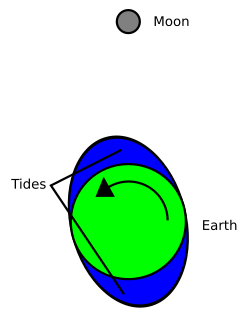
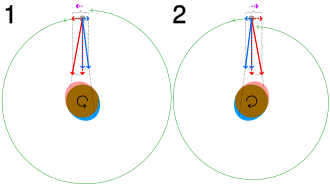
この前方にずれたバルジが月に重力的なトルク(回転させる力)を及ぼし、月を加速させてより高い軌道へと押し上げます。物理学の法則である角運動量保存の法則に基づき、月が角運動量を得る一方で、地球は自転の角運動量を失い、回転速度が低下します。
一方で、衛星の公転周期が惑星の自転周期よりも短い場合や、自転と逆向きに公転(逆行)している場合は、潮汐減速(Tidal Deceleration)が起こります。この場合、衛星は徐々に内側の軌道へと引き込まれ、最終的には惑星に衝突するか、ロシュ限界を超えて粉砕される運命にあります。
地球と月の歴史的・科学的検証
観測による証明
月が地球から遠ざかっていることは、アポロ計画などで設置された反射鏡を用いた「月レーザー測距(LLR)」によって極めて正確に測定されています。1970年から2015年のデータでは、月は1世紀あたり約25.97秒(弧秒)の角速度低下を示し、距離にして年間約38.30mm後退していることが判明しました。
地質学的・古生物学的証拠
過去の地球の回転速度は、地層に残された「潮汐リズム石」や、7000万年前の軟体動物の化石(貝殻の成長線)などの分析から推測できます。例えば、6億2000万年前の地球の1日は約21.9時間であり、1年間の日数は約400日であったと考えられています。これは、昔の地球の方が自転が速く、月が現在よりも近かったことを裏付けています。
自転速度に影響を与えるその他の要因
地球の自転速度の変化は、潮汐ブレーキだけでは説明できません。歴史的な記録(日食の観測など)を分析すると、潮汐による鈍化を一部打ち消す「加速要因」が存在することがわかっています。
その正体は、地球の形状変化です。氷河期に極地に集まった巨大な氷の質量が地殻を押し下げていましたが、氷が溶けたことで地殻がゆっくりと跳ね上がり(ポスト氷河期リバウンド)、地球がより球形に近づいています。フィギュアスケーターが腕を縮めると回転が速くなるのと同様に、質量が回転軸に近づくことで慣性モーメントが減少し、自転速度がわずかに上昇します。
潮汐現象のまとめ
| 現象 | 条件 | 衛星の挙動 | 惑星の自転 | 代表例 |
|---|---|---|---|---|
| 潮汐加速 | 順行軌道 且つ 公転 > 自転 | 軌道が上昇(遠ざかる) | 鈍化する | 地球と月 |
| 潮汐減速 | 公転 > 自転 または 逆行軌道 | 軌道が下降(近づく) | 加速(または鈍化) | 火星のフォボス |
Frequently Asked Questions
月はいつか地球から完全に離れてしまいますか?
理論上は遠ざかり続けますが、完全に離脱する前に太陽が赤色巨星へと進化し、地球と月の両方を飲み込むか破壊すると予想されています。また、10億年から15億年後には太陽放射の増加で海が蒸発し、潮汐摩擦の主因となる海洋がなくなるため、このプロセスは停止します。
「潮汐ロック」とはどのような状態ですか?
天体の自転周期と公転周期が完全に一致し、常に同じ面を相手に向ける状態です。月はすでに地球に対して潮汐ロックされており、私たちは常に月の表面の同じ側しか見ることができません。将来的には地球も月にロックされ、地球上の特定の場所からしか月が見えない状態になると考えられています。
なぜ潮汐加速なのに月の公転速度は遅くなるのですか?
これは天体力学のパラドックスです。潮汐力によってエネルギーを得て軌道が高くなると、ケプラーの第3法則により、より高い軌道を回るための平均速度は低下します。つまり、「加速」されることで「より遅い速度で回る高い軌道」へ移動するため、結果として角速度は減少します。
1日の長さが変わると、私たちの生活に影響はありますか?
100年で数ミリ秒という変化は、人間が体感できるレベルではありません。しかし、精密な原子時計(国際原子時)と地球の自転に基づく時間(世界時)との間にズレが生じるため、これを補正するために「うるう秒」が導入されてきました。
References
- "Tidal Locking". NASA Science. NASA. 6 June 2023. Retrieved 2025-05-23.
- E Halley (1695), "Some Account of the Ancient State of the City of Palmyra, with Short Remarks upon the Inscriptions Found there", Phil. Trans., vol.19 (1695–1697), pages 160–175; esp. at pages 174–175. (see also transcription using a modern font here)
- Richard Dunthorne (1749), "A Letter from the Rev. Mr. Richard Dunthorne to the Reverend Mr. Richard Mason F. R. S. and Keeper of the Wood-Wardian Museum at Cambridge, concerning the Acceleration of the Moon", Philosophical Transactions, Vol. 46 (1749–1750) #492, pp.162–172; also given in Philosophical Transactions (abridgements) (1809), vol.9 (for 1744–49), p669–675 as "On the Acceleration of the Moon, by the Rev. Richard Dunthorne".
- J de Lalande (1786): "Sur les equations seculaires du soleil et de la lune", Memoires de l'Academie Royale des Sciences, pp.390–397, at page 395.
- J D North (2008), "Cosmos: an illustrated history of astronomy and cosmology", (University of Chicago Press, 2008), chapter 14, at page 454.
- See also P Puiseux (1879), "Sur l'acceleration seculaire du mouvement de la Lune", Annales Scientifiques de l'Ecole Normale Superieure, 2nd series vol.8 (1879), pp.361–444, at pages 361–365.
- Britton, John (1992). Models and Precision: The Quality of Ptolemy's Observations and Parameters. Garland Publishing Inc. p. 157. .
- Adams, J C (1853). "On the Secular Variation of the Moon's Mean Motion". Phil. Trans. R. Soc. Lond. 143: 397–406. :10.1098/rstl.1853.0017. 186213591.
- D. E. Cartwright (2001), "Tides: a scientific history", (Cambridge University Press 2001), chapter 10, section: "Lunar acceleration, Earth retardation and tidal friction" at pages 144–146.
- Khalid, M.; Sultana, M.; Zaidi, F. (2014). "Delta: Polynomial Approximation of Time Period 1620–2013". Journal of Astrophysics. 2014: 1–4. :10.1155/2014/480964.
📸 フォトギャラリー