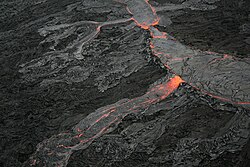
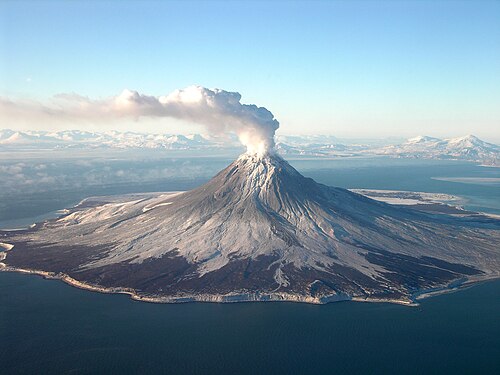
Augustine Volcano (Alaska) during its eruptive phase on January 24, 2006
← ホームへ戻る

火山のメカニズムと多様な形態地球と宇宙のダイナミズム

火山とは、惑星のような質量を持つ天体の地殻にある裂け目や噴出口を通じて、地下のマグマ溜まりから高温の溶岩、火山灰、そしてガスが地表へ放出される現象、あるいはその構造物を指します。地球上では、地殻を構成するプレートの動きが密接に関わっており、その多くは海底に位置しています。

プレートが互いに遠ざかる「発散型境界」では、比較的穏やかな噴火が起こりやすく、大西洋中央海嶺などがその代表例です。一方で、プレートが衝突・沈み込む「収束型境界」では、激しい爆発的噴火が発生しやすく、環太平洋火山帯に多く見られます。また、プレート境界から離れた場所でも、マントルの深部から上昇してくる「マントルプルーム」の影響で、ハワイのようなホットスポット火山が形成されることがあります。
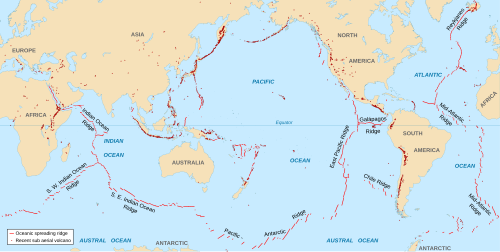
Map showing the divergent plate boundaries (oceanic spreading ridges) and recent sub-aerial volcanoes (mostly at convergent boundaries)

Key Facts

  • 発生場所: 主にプレートの境界(発散・収束)や、プレート内部のホットスポットで発生する。
  • 活動状態: 噴火の可能性や履歴に基づき、「活火山」「休火山」「死火山」に分類される。
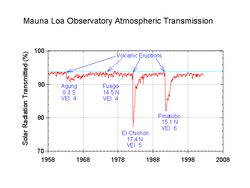
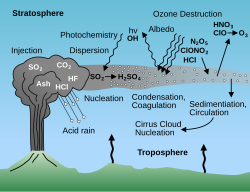
  • 気候への影響: 大規模な噴火で放出された硫酸エアロゾルなどが太陽光を遮り、地球全体の気温を低下させることがある。
  • 宇宙の火山 地球以外にも金星や火星、木星の衛星イオなどで火山活動が確認されている。

火山の種類と構造的特徴

火山はその形状や噴火様式によって、いくつかのタイプに分けられます。

盾状火山と溶岩ドーム

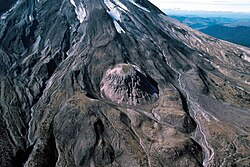
粘性の低い玄武岩質の溶岩が緩やかに流れ広がることで形成されるのが盾状火山です。その名の通り、盾のように緩やかな傾斜を持つのが特徴です。一方、粘性が非常に高い溶岩が噴出口付近で盛り上がってできたものが溶岩ドームと呼ばれます。
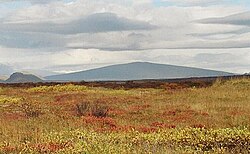
Skjaldbreiður, a shield volcano whose name means "broad shield"
East dome, a lava dome located on the lower east flank of St. Helens, part of the Sugar Bowl Eruptive Period (1800 YA).

成層火山(複合火山)

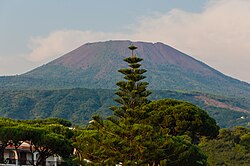
粘性の高い溶岩と火山灰が交互に積み重なって形成されるのが成層火山です。急峻な斜面を持ち、ガスが溜まりやすいため、爆発的な噴火を起こす傾向があります。これにより大量の火山灰や、高速で流下する高温のガスと固体粒子の混合物である火砕流が発生し、文明に甚大な被害をもたらしてきました。
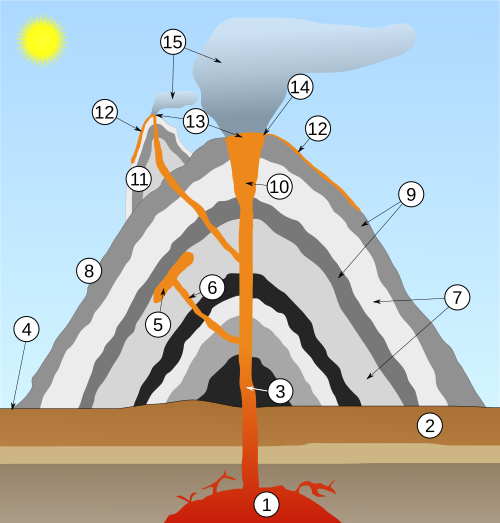
Cross-section through a stratovolcano (vertical scale is exaggerated): Large magma chamberBedrockConduit (pipe)BaseSillDikeLayers of ash emitted by the volcanoFlankLayers of lava emitted by the volcanoThroatParasitic coneLava flowsVentsCraterAsh clouds
Mt. Vesuvius, a stratovolcano, Gulf of Naples.

その他の火山形態

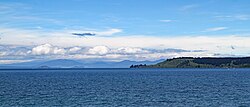
小さなスコリアや火山砕屑物が噴出口周辺に積み上がったシンダーコーンは、比較的短期間の活動で形成される円錐形の丘です。また、巨大な噴火後に地下のマグマ溜まりが崩落してできた巨大な窪地をカルデラと呼び、そこにはしばしば美しい火山湖が形成されます。
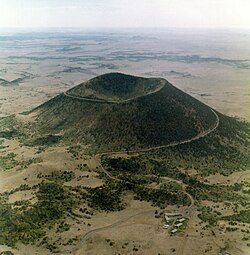
Capulin Volcano National Monument in New Mexico, US
Lake Taupō, a volcanogenic lake in the caldera of Taupō supervolcano, New Zealand.
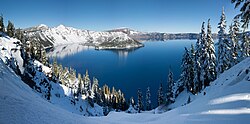
Crater Lake, a volcanic lake in Oregon

噴出物の性質と危険性

火山から放出される物質は、大きく分けて「溶岩」「テフラ(火山砕屑物)」「火山ガス」の3種類に分類されます。

火山噴出物の分類と特徴
分類 内容 主な特徴
溶岩 (Lava) 地表に流出したマグマ 組成により粘性が異なり、流れ方や形状を決定する。
テフラ (Tephra) 火山灰、火山弾などの固体粒子 爆発的噴火で空中に放出され、広範囲に降下する。
火山ガス (Gases) 水蒸気、二酸化硫黄など 成層圏に達すると地球の気温を低下させる要因となる。

特に粘性の高いフェルシックマグマはガスを閉じ込めやすいため、爆発的な噴火を引き起こします。これにより発生する火砕流は、最高850℃に達することもあり、経路上のあらゆるものを焼き尽くします。また、火山灰が大量に放出されると、太陽放射が減少して「火山性の冬」と呼ばれる寒冷化現象を招き、歴史的に深刻な飢饉の原因となりました。
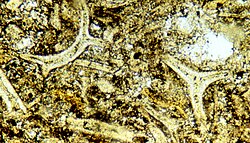
Light-microscope image of tuff as seen in thin section (long dimension is several mm): the curved shapes of altered glass shards (ash fragments) are well preserved, although the glass is partly altered. The shapes were formed around bubbles of expanding, water-rich gas.
Schematic of volcano injection of aerosols and gases
Solar radiation graph 1958–2008, showing how the radiation is reduced after major volcanic eruptions
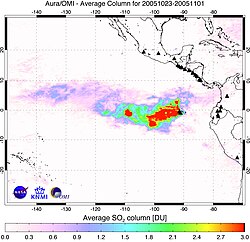
Sulfur dioxide concentration over the Sierra Negra Volcano, Galapagos Islands, during an eruption in October 2005

火山活動のモニタリングと人間社会

現代では、観測技術の向上により、噴火の予兆を捉えることが可能になっています。かつては記録がない火山を「死火山」としていましたが、実際には長い休止期間を経て再活性化することが分かっています。適切な監視と迅速な避難計画により、多くの人命が救われています。例えば、1991年のピナトゥボ山での避難作戦では、約2万人の命が救われたとされています。
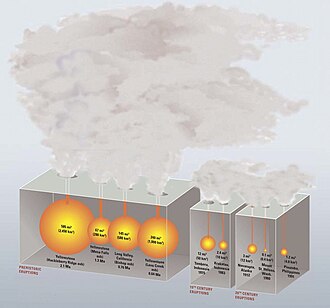
Comparison of major United States prehistoric eruptions (VEI 7 and 8) with major historical volcanic eruptions in the 19th and 20th century (VEI 5, 6 and 7). From left to right: Yellowstone 2.1 Ma, Yellowstone 1.3 Ma, Long Valley 6.26 Ma, Yellowstone 0.64 Ma . 19th century eruptions: Tambora 1815, Krakatoa 1883. 20th century eruptions: Novarupta 1912, St. Helens 1980, Pinatubo 1991.
Augustine Volcano (Alaska) during its eruptive phase on January 24, 2006
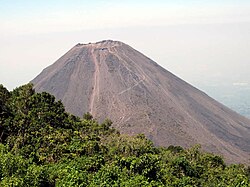
Izalco volcano, the youngest volcano in El Salvador. Izalco erupted almost continuously from 1770 (when it formed) to 1958, earning it the nickname of "Lighthouse of the Pacific".
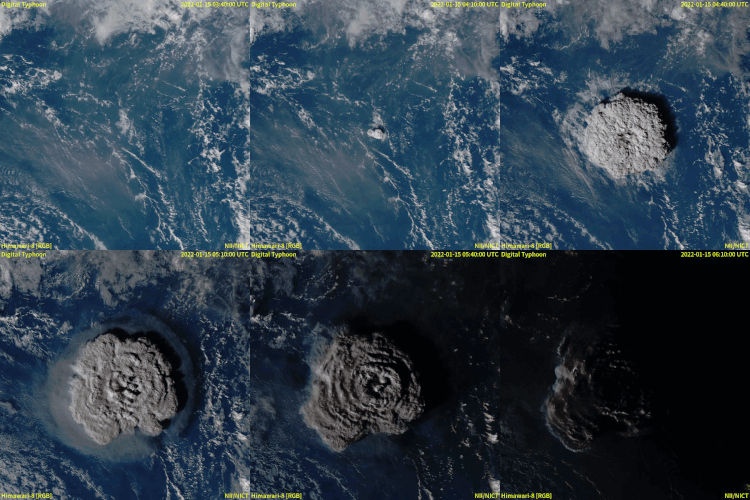
Satellite images of the January 15, 2022, eruption of Hunga Tonga-Hunga Haʻapai
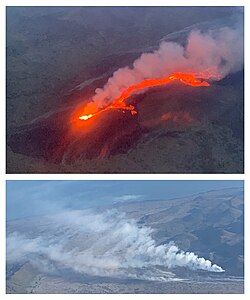
Litli-Hrútur (Fagradalsfjall) eruption 2023. View from an aeroplane
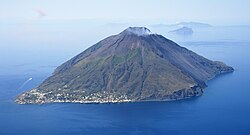
The Stromboli stratovolcano off the coast of Sicily has erupted continuously for thousands of years, giving rise to its nickname "Lighthouse of the Mediterranean".
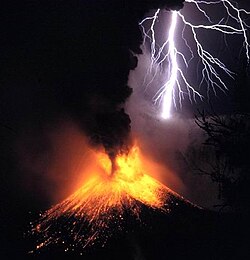
Mount Rinjani eruption in 1994, in Lombok, Indonesia
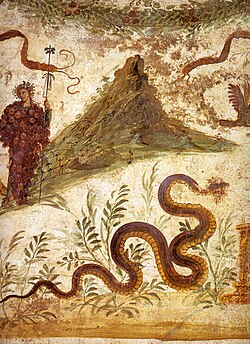
Fresco with Mount Vesuvius behind Bacchus and Agathodaemon, as seen in Pompeii's House of the Centenary
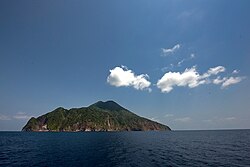
Narcondam Island, India, is classified as a dormant volcano by the Geological Survey of India.
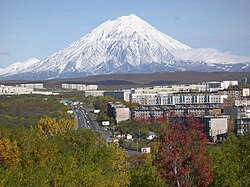
Koryaksky volcano towering over Petropavlovsk-Kamchatsky on Kamchatka Peninsula, Far Eastern Russia

特殊な火山現象

マグマではなく、泥や水、ガスが噴出する泥火山という構造も存在します。また、地下水がマグマで加熱され、間欠的に噴出する間欠泉などの熱水現象も火山のダイナミズムの一部です。
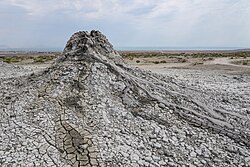
Mud volcano at Gobustan
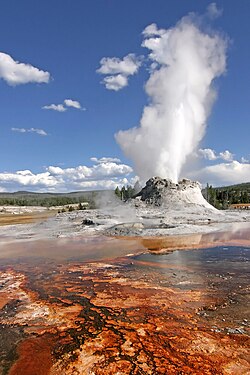
Castle geyser eruption, Yellowstone National Park

地球外の火山活動

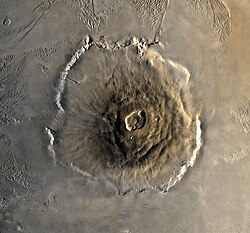
火山現象は地球特有のものではありません。金星には数多くの火山が存在し、火星には太陽系最大の山であるオリンポス山があります。また、木星の衛星イオは、木星との潮汐相互作用により太陽系で最も活発な火山活動を行っており、硫黄やケイ酸塩の溶岩を噴出しています。
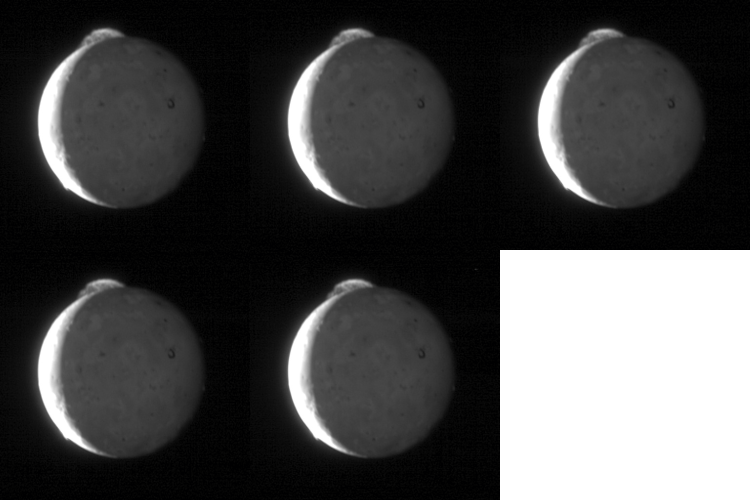
The Tvashtar volcano erupts a plume 330 km (205 mi) above the surface of Jupiter's moon Io.
Olympus Mons (Latin, "Mount Olympus"), located on the planet Mars, is the tallest known mountain in the Solar System.

さらに、極低温の天体では水やアンモニアなどがマグマの役割を果たし、氷の火山として噴出する氷火山(クライオボルカニズム)という現象も見られます。これは土星の衛星エンケラドゥスなどで確認されています。

溶岩の形態例

地球上の溶岩には、表面が滑らかに波打つパホイホイ溶岩のような特徴的な形態があり、これらはマグマの化学組成や冷却速度によって異なります。
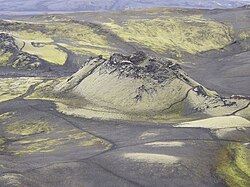
Lakagigar fissure vent in Iceland, the source of the major world climate alteration of 1783–84, has a chain of volcanic cones along its length.
Pāhoehoe lava flow on Hawaii. The picture shows overflows of a main lava channel.

Frequently Asked Questions

活火山、休火山、死火山の違いは何ですか?

活火山は過去に噴火歴があり、将来的に再び噴火する可能性が高い火山です。休火山は長い間(一般的に約12,000年前の完新世以降)噴火していませんが、再活性化の可能性があるものを指します。死火山はマグマの供給源を失い、二度と噴火しない火山のことです。

なぜ火山によって噴火の激しさが違うのですか?

主にマグマの「粘性」と「ガス含有量」によって決まります。シリカ(二酸化ケイ素)を多く含むマグマは粘性が高く、ガスが逃げにくいため、圧力が蓄積して爆発的な噴火になります。逆にシリカが少ないマグマはサラサラしており、ガスが抜けやすいため、穏やかに溶岩が流出します。

火山噴火が地球全体の気温を下げるのはなぜですか?

大規模な噴火によって大量の火山灰や二酸化硫黄が成層圏まで達すると、それが硫酸エアロゾルとなり、太陽光を反射して地表に届く量を減らすためです。これにより、一時的に地球全体の気温が低下します。

地球以外に火山がある天体はありますか?

はい、金星や火星に多くの火山が存在します。また、木星の衛星イオは非常に活発な火山活動を行っており、土星の衛星などでは水や氷を噴出する「氷火山」という特殊な活動が見られます。

火砕流とは何ですか?

火砕流は、噴火によって放出された高温の火山ガス、火山灰、岩石の破片が混ざり合い、山の斜面を猛烈な速度で流れ下る現象です。極めて高温で破壊力が強く、避難が困難なため、火山災害の中で最も危険な現象の一つとされています。

References

  1. Canon-Tapia, Edgardo; Szakács, Alexandru, eds. (2010). "1: What is a volcano?". What is a Volcano?. . p. 3.  .
  2. "geology". The Ultimate Visual Dictionary. 2012. pp. 272–293.  .
  3. Macdonald, K. C. (2001). "Mid-ocean Ridge Tectonics, Volcanism and Geomorphology" (PDF). Encyclopedia of Ocean Sciences. San Diego: Academic Press. pp. 1797–1813.
  4. "How volcanoes form – British Geological Survey". . Retrieved December 25, 2024.
  5. Poland, Michael (October 10, 2022). "Active, dormant, and extinct: Clarifying confusing classifications | U.S. Geological Survey". United States Geological Survey. Retrieved November 14, 2023.
  6. Pariona, Amber (September 19, 2019). "Difference Between an Active, Dormant, and Extinct Volcano". WorldAtlas.com. Retrieved November 27, 2020.
  7. "Volcanoes". National Geographic Society. Retrieved December 26, 2024.
  8. Rampino, M R; Self, S; Stothers, R B (May 1988). "Volcanic Winters". Annual Review of Earth and Planetary Sciences. 16 (1): 73–99. :1988AREPS..16...73R. :10.1146/annurev.ea.16.050188.000445.
  9. Hahn, Rebecca M.; Byrne, Paul K. (April 2023). "A Morphological and Spatial Analysis of Volcanoes on Venus". Journal of Geophysical Research: Planets. 128 (4) e2023JE007753. :2023JGRE..12807753H. :10.1029/2023je007753.
  10. Steigerwald, William (September 15, 2021). "NASA Confirms Thousands of Massive Ancient Volcanic Eruptions on Mars". Greenbelt, Md, United States: Goddard Space Flight Center, NASA. Retrieved November 12, 2024.

📸 フォトギャラリー

Augustine Volcano (Alaska) during its eruptive phase on January 24, 2006
Map showing the divergent plate boundaries (oceanic spreading ridges) and recent sub-aerial volcanoes (mostly at convergent boundaries)
Lakagigar fissure vent in Iceland, the source of the major world climate alteration of 1783–84, has a chain of volcanic cones along its length.
Skjaldbreiður, a shield volcano whose name means "broad shield"
East dome, a lava dome located on the lower east flank of St. Helens, part of the Sugar Bowl Eruptive Period (1800 YA).
Izalco volcano, the youngest volcano in El Salvador. Izalco erupted almost continuously from 1770 (when it formed) to 1958, earning it the nickname of "Lighthouse of the Pacific".
Cross-section through a stratovolcano (vertical scale is exaggerated): Large magma chamberBedrockConduit (pipe)BaseSillDikeLayers of ash emitted by the volcanoFlankLayers of lava emitted by the volcanoThroatParasitic coneLava flowsVentsCraterAsh clouds
Mt. Vesuvius, a stratovolcano, Gulf of Naples.
Lake Taupō, a volcanogenic lake in the caldera of Taupō supervolcano, New Zealand.
Crater Lake, a volcanic lake in Oregon
Satellite images of the January 15, 2022, eruption of Hunga Tonga-Hunga Haʻapai
Mud volcano at Gobustan
Castle geyser eruption, Yellowstone National Park
Pāhoehoe lava flow on Hawaii. The picture shows overflows of a main lava channel.
Litli-Hrútur (Fagradalsfjall) eruption 2023. View from an aeroplane
The Stromboli stratovolcano off the coast of Sicily has erupted continuously for thousands of years, giving rise to its nickname "Lighthouse of the Mediterranean".
Mount Rinjani eruption in 1994, in Lombok, Indonesia
Light-microscope image of tuff as seen in thin section (long dimension is several mm): the curved shapes of altered glass shards (ash fragments) are well preserved, although the glass is partly altered. The shapes were formed around bubbles of expanding, water-rich gas.
Schematic of volcano injection of aerosols and gases
Fresco with Mount Vesuvius behind Bacchus and Agathodaemon, as seen in Pompeii's House of the Centenary
Narcondam Island, India, is classified as a dormant volcano by the Geological Survey of India.
Capulin Volcano National Monument in New Mexico, US
Koryaksky volcano towering over Petropavlovsk-Kamchatsky on Kamchatka Peninsula, Far Eastern Russia
Solar radiation graph 1958–2008, showing how the radiation is reduced after major volcanic eruptions
Sulfur dioxide concentration over the Sierra Negra Volcano, Galapagos Islands, during an eruption in October 2005
Comparison of major United States prehistoric eruptions (VEI 7 and 8) with major historical volcanic eruptions in the 19th and 20th century (VEI 5, 6 and 7). From left to right: Yellowstone 2.1 Ma, Yellowstone 1.3 Ma, Long Valley 6.26 Ma, Yellowstone 0.64 Ma . 19th century eruptions: Tambora 1815, Krakatoa 1883. 20th century eruptions: Novarupta 1912, St. Helens 1980, Pinatubo 1991.
The Tvashtar volcano erupts a plume 330 km (205 mi) above the surface of Jupiter's moon Io.
Olympus Mons (Latin, "Mount Olympus"), located on the planet Mars, is the tallest known mountain in the Solar System.