Mars depicted to scale alongside the planetary-mass objects of the Inner Solar System. From left: Mercury, Venus, Earth, the Moon, Mars and Ceres.
← ホームへ戻る

火星の全貌赤い惑星の地質、環境、そして人類の挑戦

夜空に赤く輝く火星は、古くから人類の想像力を刺激し続けてきました。地球に似た環境を持つとされるこの惑星は、単なる天体ではなく、かつて水が存在し、生命を育んでいた可能性を秘めた「第二の地球」の候補として、現代科学の最前線で研究されています。

火星は地球よりも小さく、その表面は酸化鉄(錆)に覆われているため、特徴的な赤い色を呈しています。内惑星の中でも地球に次ぐ大きさを持ち、その地質学的構造や大気の組成は、惑星の進化を解き明かす重要な鍵を握っています。
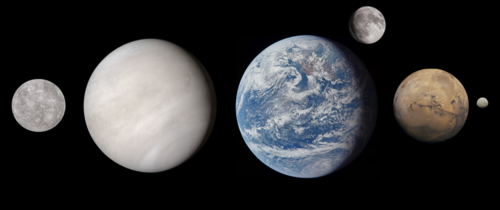
Mars depicted to scale alongside the planetary-mass objects of the Inner Solar System. From left: Mercury, Venus, Earth, the Moon, Mars and Ceres.

Key Facts

  • 直径:地球の約53%(平均半径 3,389.5km)
  • 重力:地球の約38%(3.72 m/s²)
  • 大気:主成分は二酸化炭素(約96%)で、非常に希薄
  • 衛星:フォボスとダイモスの2つの小衛星を保有
  • 最大の特徴:太陽系最大の火山「オリンポス山」と巨大峡谷「マリネリス峡谷」が存在

火星の物理的特性と内部構造

火星の内部構造は、地球のような明確な核(コア)を持たない可能性が示唆されており、地殻とマントルで構成されていると考えられています。この構造的な違いが、火星の磁場や地質活動に大きな影響を与えています。

Internal structure of Mars, assuming no inner core.[48][49]

惑星全体の形状はほぼ球体ですが、わずかに扁平しており、自転周期は地球と非常に近く、1日(1ソル)は約24時間37分です。また、地軸の傾きが約25度であるため、地球と同様に四季が存在します。
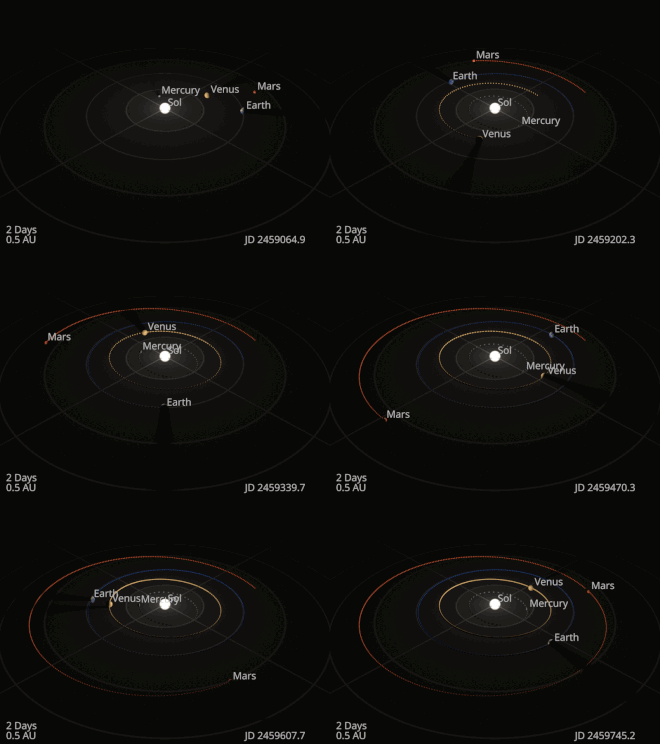
Mars circling the Sun further and slower than Earth

軌道と天文学的性質

火星は太陽から平均して約1.52天文単位(AU)の距離を公転しており、その周期は約687日です。地球から見たとき、火星が太陽の反対側に位置する「衝」のタイミングで最も明るく観測されます。
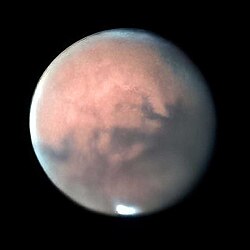
Mars seen through a 16-inch amateur telescope, at 2020 opposition
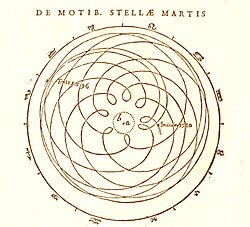
Diagram of the geocentric trajectory of Mars through several periods of apparent retrograde motion in Johannes Kepler's Astronomia Nova (1609)

ダイナミックな表面地質と地形

火星の表面は、北半球の低地と南半球の高地という極端な対比(火星の二分性)が特徴です。この地形的な差異は、惑星形成初期の巨大衝突などの影響によるものと考えられています。
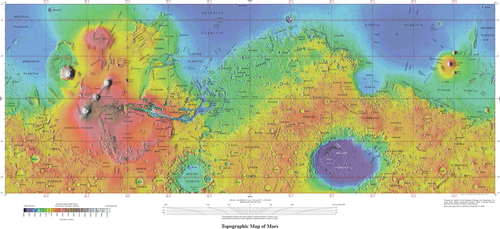
Topographical map of Mars with features labeled and the Martian dichotomy visible (northern low lying and southern highland hemispheres)
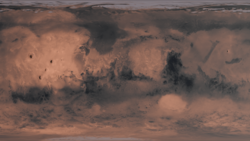
Mars surface map rendered using a color map and a heightmap from NASA

驚異的な火山と峡谷

火星には、太陽系で最も高い山であるオリンポス山が存在します。この火山は直径が約550kmに及び、エベレストを遥かに凌ぐ高度を誇ります。また、惑星を横断するように走るマリネリス峡谷は、地球上のグランドキャニオンを圧倒する規模の巨大な裂け目です。
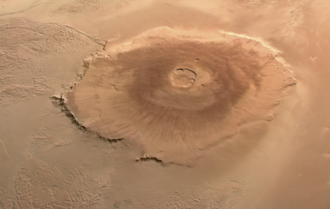
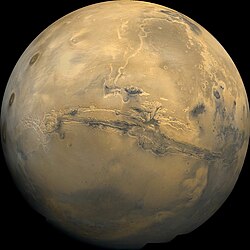
Picture of the tallest volcano on Mars, Olympus Mons. It is approximately 550 km (340 mi) across.
Valles Marineris, taken by the Viking 1 probe

その他の地質学的特徴

表面には多くの衝突クレーターが点在しており、地質学的な時代区分(ノアキス、ヘスペリス、アマゾニス)によってその密度が異なります。また、砂丘やゲイザーのような噴出孔、地下の洞窟や溶岩チューブの存在も確認されています。
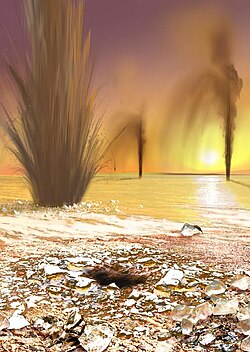
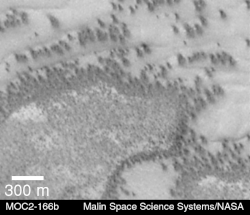
Artist concept showing sand-laden jets erupting from Martian geysers (published by NASA; artist: Ron Miller)
Dark dune spots

大気と水の謎

現在の火星の大気は極めて薄く、表面気圧は地球の1%にも満たない程度です。主成分は二酸化炭素であり、酸素や窒素、水蒸気などがごく少量含まれています。
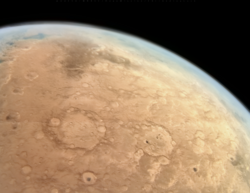
Image of Mars

大気の一部は太陽風によって宇宙空間へ流出し続けており、これが火星がかつての厚い大気を失った原因の一つとされています。

Escaping atmosphere on Mars (carbon, oxygen, and hydrogen) by MAVEN in UV[141]

気候変動と塵の嵐

火星では、惑星全体を覆い尽くすほどの巨大なダストストーム(塵の嵐)が発生することがあります。これにより、表面の視認性が著しく低下し、気候に大きな影響を与えます。
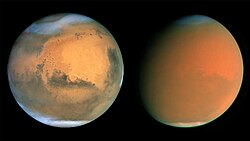
Mars without (on left) and with a global dust storm in July 2001 (on right), including different visible water ice cloud covers, as seen by the Hubble Space Telescope

水の存在と氷の極冠

火星の南北の極地には、水氷と二酸化炭素(ドライアイス)からなる極冠が存在します。季節によって二酸化炭素の氷の範囲が変動し、大気中のガス量も変化します。
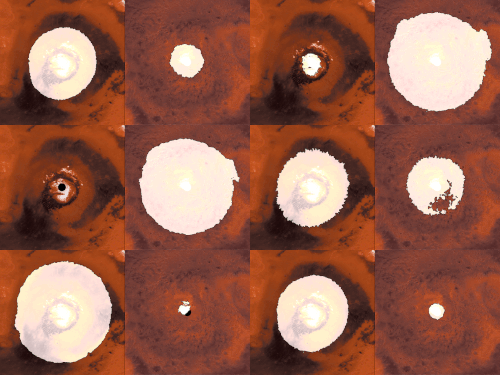
Rendering of the change of CO2 ice (not water ice) coverage on the north (left) and south (right) poles of Mars between northern and southern summer.
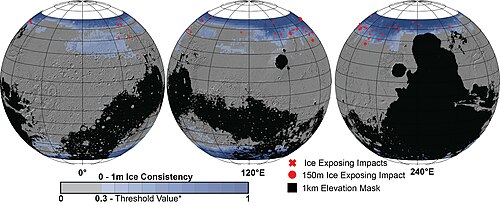
Mars contains water, though mostly as dust covered polar layers of ice, as mapped in this image.

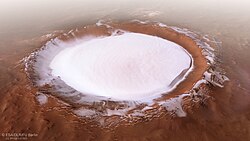
かつての火星には、液体の水が地表を流れる川や湖、あるいは広大な海が存在していた証拠が数多く見つかっています。現在でも、極地のクレーター内部などで氷が露出している場所が確認されています。
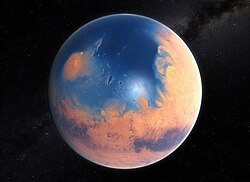
Artist's impression of Mars four billion years ago
As top surface layer water appears readily visible at some places on Mars, as in this polar crater called Korolev, seen here in 3D projection.

衛星と周囲の環境

火星には、フォボスダイモスという2つの小さな衛星があります。これらは不規則な形状をしており、捕獲された小惑星であるという説が有力です。地球の月とは異なり、非常に小さいため、火星の空では星のように小さく見えます。
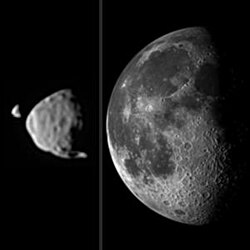
The moons of Mars Deimos and Phobos as seen from Mars, compared at apparent size to the in apparent and actual size much larger Moon as seen from Earth. If they would be as far away from Mars as the Moon from Earth, they would appear as faint star-like features in the Martian sky.
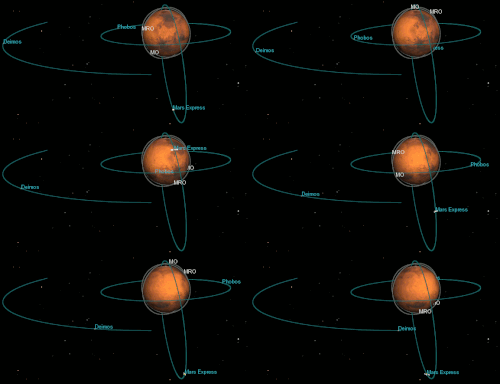
Orbits of natural and artificial satellites around Mars at scale, with the furthest (Deimos) at 23,460 km (14,580 mi)

人類による探査の歴史と未来

初期の観測では、イタリアの天文学者シアパレッリやアメリカのパーシヴァル・ローウェルによって「運河(canals)」が存在すると信じられていました。しかし、後の探査機による撮影で、それらは錯視であったことが判明しました。

First drawn record of Martian features (Manuscript K), by Christiaan Huygens, observed on 28 November 1659.[242] The feature is probably Syrtis Major Planum. Huygens calculated from the moving of the features the rotation of Mars.
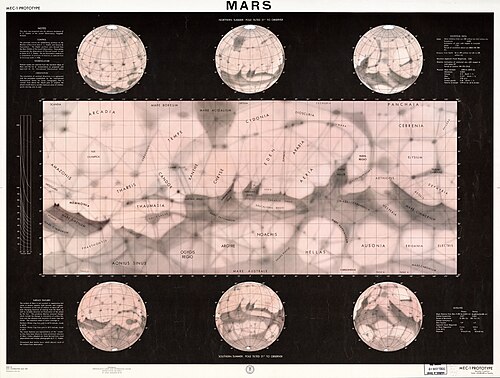
A 1962 map of Mars published by the U.S. Aeronautical Chart and Information Center, showing canals snaking through the Martian landscape. At the time, the existence of canals was still highly controversial as no close-up pictures of Mars had been taken (until Mariner 4's flyby in 1965).

1965年にマリナー4号が初めて火星の近接写真を送信し、クレーターだらけの荒涼とした姿を明らかにしました。その後、バイキング計画や近年のキュリオシティ、パーサヴィアランスといったローバーによる詳細な地表調査へと発展しました。

The very first two images from, and of, another planet (Mars), by Mariner 4,[253] the second spacecraft to reach Mars and the first to transmit data (15 July 1965). The data disproved Mars being hospitable and having canals.
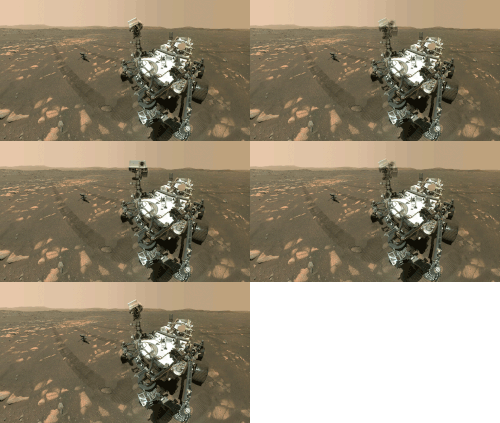
Self-portrait of Perseverance rover and Ingenuity helicopter (left) at Wright Brothers Field, 2021

生命の痕跡と資源利用

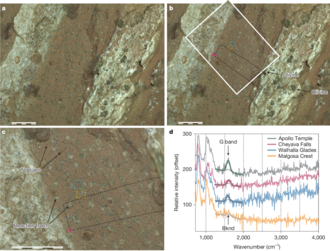
最新の探査では、古代の泥岩から有機物の検出が報告されており、生命が存在した可能性についての研究が進んでいます。また、将来の有人探査に向けて、火星の土壌からを取り出すISRU(現地資源利用)技術の開発も計画されています。

Layering, nodules, reaction fronts and organic detections marked in an image from ancient fossilized mud at Cheyava Falls, being the most promising finds potentially showing traces of remains of ancient Martian life.
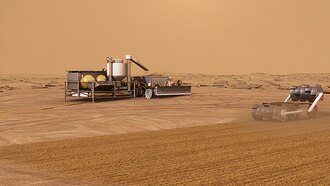
A NASA ISRU system concept for autonomous robotic excavation and processing of Mars soil to extract water for use in exploration missions.

火星はSF作品の舞台としても人気があり、H.G.ウェルズの『宇宙戦争』のように、想像力の源泉となってきました。
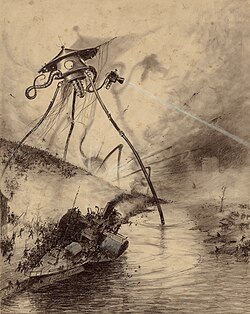
The War of the Worlds by H. G. Wells, 1897, depicts an invasion of Earth by fictional Martians.

今後は、サンプルリターン計画や、有人ミッションによる定住、さらには惑星環境を地球に近づけるテラフォーミングといった壮大な構想が議論されています。
ภาพประกอบบทความ
ภาพประกอบบทความ
ภาพประกอบบทความ
The Sun, the planets, their moons, and several trans-Neptunian objects

火星の基本データまとめ

項目 数値 / 特徴
平均半径 3,389.5 km (地球の約0.53倍)
質量 6.4171 × 10²³ kg (地球の約0.107倍)
表面重力 3.72 m/s² (地球の約38%)
公転周期 686.98 日
自転周期 約24時間37分
大気組成 二酸化炭素 (95.97%), アルゴン (1.93%), 窒素 (1.89%)
平均温度 約 -60 °C (範囲: -110 °C 〜 35 °C)

Frequently Asked Questions

なぜ火星は赤く見えるのですか?

表面の土壌や岩石に酸化鉄(いわゆる錆)が大量に含まれているためです。この酸化鉄が太陽光を反射し、私たちの目には赤く見えます。

火星に水はありますか?

現在は液体の状態で地表に安定して存在することはできませんが、極地の氷冠や地下の氷として大量に存在しています。また、過去には川や湖が存在していた地質学的証拠が見つかっています。

火星に住むことは可能ですか?

現状では、極めて薄い大気、強い放射線、極低温という過酷な環境のため、そのまま住むことは不可能です。居住には気密性の高いシェルターや放射線遮蔽、酸素供給システムなどの高度な生命維持装置が不可欠です。

火星の衛星フォボスダイモスはどうなる運命ですか?

特にフォボスは火星に非常に近い軌道を回っており、潮汐力の影響で徐々に火星に近づいています。数千万年後には火星に衝突するか、あるいはロッシュ限界を超えて破壊され、火星の周りにリング(環)を形成すると予想されています。

テラフォーミングとは何ですか?

惑星の環境を人工的に操作し、人間が呼吸できる大気や液体の水が存在する環境に変える構想のことです。火星の場合、温室効果ガスを増やして気温を上げ、氷を溶かして大気を再生させるなどの方法が議論されています。

References

  1. The light filters are 635 nm, 546 nm, and 437 nm, roughly corresponding to red, green and blue respectively
  2. Best-fit

📸 フォトギャラリー

Mars depicted to scale alongside the planetary-mass objects of the Inner Solar System. From left: Mercury, Venus, Earth, the Moon, Mars and Ceres.
Internal structure of Mars, assuming no inner core.[48][49]
Topographical map of Mars with features labeled and the Martian dichotomy visible (northern low lying and southern highland hemispheres)
Mars surface map rendered using a color map and a heightmap from NASA
Picture of the tallest volcano on Mars, Olympus Mons. It is approximately 550 km (340 mi) across.
Valles Marineris, taken by the Viking 1 probe
Artist concept showing sand-laden jets erupting from Martian geysers (published by NASA; artist: Ron Miller)
Dark dune spots
Image of Mars
Escaping atmosphere on Mars (carbon, oxygen, and hydrogen) by MAVEN in UV[141]
Mars without (on left) and with a global dust storm in July 2001 (on right), including different visible water ice cloud covers, as seen by the Hubble Space Telescope
Rendering of the change of CO2 ice (not water ice) coverage on the north (left) and south (right) poles of Mars between northern and southern summer.
Mars contains water, though mostly as dust covered polar layers of ice, as mapped in this image.
Artist's impression of Mars four billion years ago
As top surface layer water appears readily visible at some places on Mars, as in this polar crater called Korolev, seen here in 3D projection.
Mars circling the Sun further and slower than Earth
Mars seen through a 16-inch amateur telescope, at 2020 opposition
The moons of Mars Deimos and Phobos as seen from Mars, compared at apparent size to the in apparent and actual size much larger Moon as seen from Earth. If they would be as far away from Mars as the Moon from Earth, they would appear as faint star-like features in the Martian sky.
Orbits of natural and artificial satellites around Mars at scale, with the furthest (Deimos) at 23,460 km (14,580 mi)
Diagram of the geocentric trajectory of Mars through several periods of apparent retrograde motion in Johannes Kepler's Astronomia Nova (1609)
First drawn record of Martian features (Manuscript K), by Christiaan Huygens, observed on 28 November 1659.[242] The feature is probably Syrtis Major Planum. Huygens calculated from the moving of the features the rotation of Mars.
A 1962 map of Mars published by the U.S. Aeronautical Chart and Information Center, showing canals snaking through the Martian landscape. At the time, the existence of canals was still highly controversial as no close-up pictures of Mars had been taken (until Mariner 4's flyby in 1965).
The very first two images from, and of, another planet (Mars), by Mariner 4,[253] the second spacecraft to reach Mars and the first to transmit data (15 July 1965). The data disproved Mars being hospitable and having canals.
Self-portrait of Perseverance rover and Ingenuity helicopter (left) at Wright Brothers Field, 2021
Layering, nodules, reaction fronts and organic detections marked in an image from ancient fossilized mud at Cheyava Falls, being the most promising finds potentially showing traces of remains of ancient Martian life.
A NASA ISRU system concept for autonomous robotic excavation and processing of Mars soil to extract water for use in exploration missions.
The War of the Worlds by H. G. Wells, 1897, depicts an invasion of Earth by fictional Martians.
ภาพประกอบบทความ
ภาพประกอบบทความ
ภาพประกอบบทความ
The Sun, the planets, their moons, and several trans-Neptunian objects