深海の暗闇に潜む熱水噴出孔は、地球内部の熱エネルギーと化学物質が海へと放出されるダイナミックな場所です。太陽光が一切届かない極限環境でありながら、そこには独自の進化を遂げた豊かな生命コミュニティが存在しています。本記事では、この神秘的な深海現象の仕組みから、そこに息づく生命の驚異までを詳しく解説します。
Key Facts
- エネルギー源: 太陽光ではなく、化学物質を利用した化学合成が食物連鎖の基礎となっている。
- 構造物: 噴出する熱水に含まれる鉱物が沈殿し、最大60メートルに達する煙突状の構造(チムニー)を形成する。
- 多様なタイプ: 噴出物の成分や温度により、ブラックスモーカーとホワイトスモーカーに大別される。
- 分布: 中央海嶺などのプレート境界に多く分布し、世界的に11の生物地理学的区画が認められている。
- 生命の起源: 非生物的な物質から生命が誕生した「アビオジェネシス」の有力な候補地と考えられている。
熱水噴出孔の形成と物理的特性
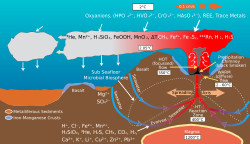
熱水噴出孔は、海水が地殻の割れ目から浸透し、マグマによる加熱を受けて再び海中へ噴出することで形成されます。この過程で海水は周囲の岩石から多くのミネラルを溶かし込み、超高温の状態になります。
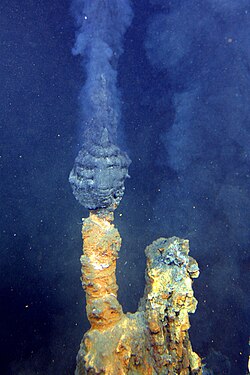
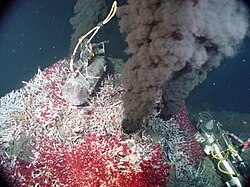
超高温の熱水が氷点に近い深海水と接触すると、溶け込んでいた鉱物が急激に冷却され、微粒子として沈殿します。これが積み重なることで、円筒形の煙突状構造物(チムニー)が構築されます。例えば、オレゴン州近海で発見された「ゴジラ」と呼ばれる構造物は、1996年に崩壊するまで高さ40メートルに達していました。
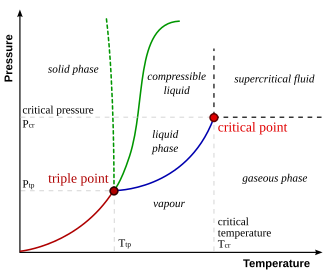
ブラックスモーカーとホワイトスモーカー
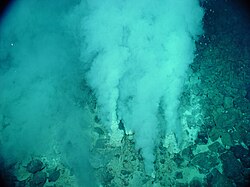
噴出孔はその外見から大きく2つのタイプに分けられます。ブラックスモーカーは、鉄や硫黄などの金属硫化物を多く含み、黒い煙のように見える熱水を放出します。一方、ホワイトスモーカーは、シリカやカルシウムなどの成分が多く、白い煙のような外見が特徴です。日本のエイフク火山付近にあるシャンパンベントでは、二酸化炭素の泡と共に白い煙が噴出する様子が観察されています。
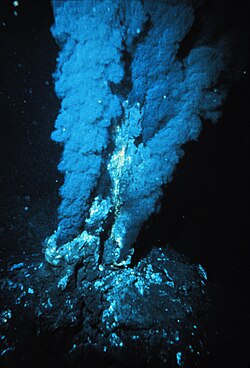
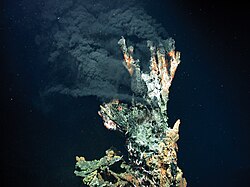
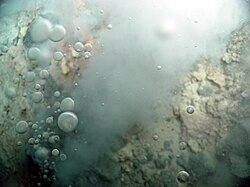
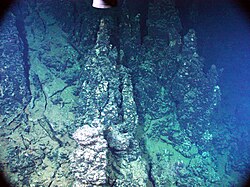
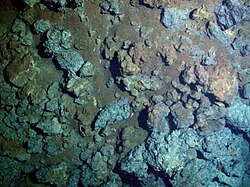
これらの噴出活動が停止すると、かつての煙突は「死滅したスモーカー」として海底に残されます。
深海の化学合成生態系
熱水噴出孔の最大の特徴は、光合成に依存しない生態系です。ここでは、熱水に含まれる硫化水素などの化学物質からエネルギーを取り出す化学合成を行う細菌が、一次生産者としての役割を担っています。
共生関係と特異な生物群
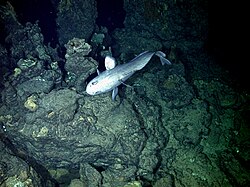
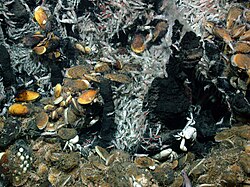
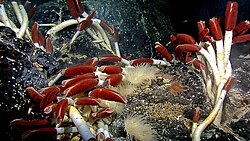
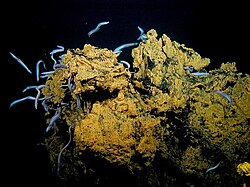
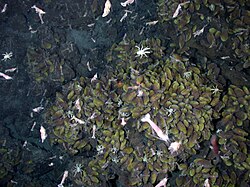
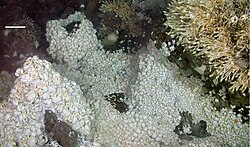
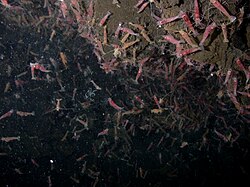
多くの深海生物は、これらの細菌と共生することで生存しています。例えば、ガラパゴス海溝に見られる巨大チューブワーム(リフティア)は、消化管を持たず、体内の細菌にエネルギー生産を委ねています。また、アルビノカリス属のエビやシンナフォブランキド科のウナギなどが密集して生息するエリアもあり、一部の地点は「イールシティ(ウナギの街)」と称されるほど高密度なコミュニティを形成しています。
探査の歴史と地球規模の分布
熱水噴出孔が初めて発見されたのは1979年、東太平洋海嶺の北緯21度付近でした。その後、潜水艇「アルビン」などの探査機によって、その詳細な構造と生物相が明らかになりました。
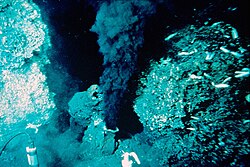
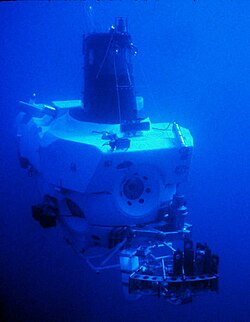
これらのシステムは世界中の海洋に分布しており、中央海嶺、東スコシア海嶺、インド洋など、地理的な特性に応じた複数の生物地理学的プロビンス(区画)に分類されています。
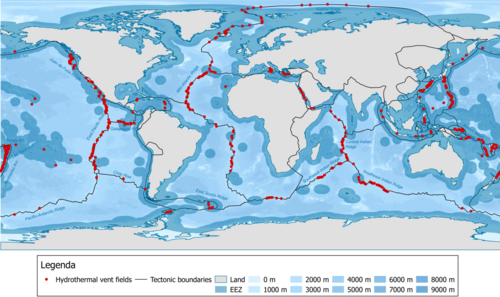
噴出される熱水は、周囲の海水と反応して堆積物を形成するだけでなく、広範囲に広がる「熱水プルーム」となって海洋全体の金属サイクルや生物地球化学的な循環に影響を与えています。
まとめ:熱水噴出孔の概要
| 項目 | ブラックスモーカー | ホワイトスモーカー |
|---|---|---|
| 主な成分 | 金属硫化物(鉄・銅など) | シリカ、カルシウム、バリウム |
| 外見 | 黒い煙状の噴出物 | 白い煙状の噴出物 |
| 温度 | 極めて高温 | 相対的に低温 |
| 主な役割 | 金属鉱床の形成 | 特異な化学環境の提供 |
Frequently Asked Questions
熱水噴出孔に太陽光が届かないのに、なぜ生物が住めるのですか?
太陽光の代わりに、地球内部から噴出する硫化水素やメタンなどの化学物質を利用してエネルギーを作り出す「化学合成細菌」が存在するためです。この細菌が食物連鎖の土台となり、他の生物を支えています。
ブラックスモーカーとホワイトスモーカーの違いは何ですか?
主に噴出される熱水の温度と含まれる鉱物成分の違いです。ブラックスモーカーは高温で金属硫化物を多く含み黒く見え、ホワイトスモーカーは比較的低温でシリカやカルシウムを多く含むため白く見えます。
熱水噴出孔は生命の起源に関係があると言われているのはなぜですか?
生命の誕生に必要なエネルギー源、有機分子の合成を促す触媒となる金属、そして保護された環境が揃っているため、非生物的な物質から最初の生命が誕生した場所であるという説が有力視されています。
熱水噴出孔のチムニーはどのようにして作られますか?
地中から噴出したミネラル豊富な超高温水が、冷たい海水と接触した瞬間に鉱物が結晶化して沈殿します。この沈殿物が積み重なることで、煙突のような構造物が成長します。
どのような生物が熱水噴出孔に生息していますか?
巨大なチューブワーム、特殊なエビやカニ、二枚貝、そしてそれらの基礎となる化学合成細菌などが生息しています。多くは細菌と共生することで過酷な環境に適応しています。
References
- Colín-García, María (2016). "Hydrothermal vents and prebiotic chemistry: a review". Boletín de la Sociedad Geológica Mexicana. 68 (3): 599–620. :2016BoSGM..68..599C. :10.18268/BSGM2016v68n3a13.
- Chang, Kenneth (13 April 2017). "Conditions for Life Detected on Saturn Moon Enceladus". . Retrieved 14 April 2017.
- "Spacecraft Data Suggest Saturn Moon's Ocean May Harbor Hydrothermal Activity". NASA. 11 March 2015. Archived from the original on 13 March 2015. Retrieved 12 March 2015.
- Paine, M. (15 May 2001). "Mars Explorers to Benefit from Australian Research". Space.com. Archived from the original on 21 February 2006.
- German, C.R.; Seyfried, W.E. (2014), "Hydrothermal Processes", Treatise on Geochemistry, Elsevier, pp. 191–233, :10.1016/b978-0-08-095975-7.00607-0, , retrieved 2024-02-08
- Garcia, Elena Guijarro; Ragnarsson, Stefán Akí; Steingrimsson, Sigmar Arnar; Nævestad, Dag; Haraldsson, Haukur; Fosså, Jan Helge; Tendal, Ole Secher; Eiríksson, Hrafnkell (2007). Bottom trawling and scallop dredging in the Arctic: Impacts of fishing on non-target species, vulnerable habitats and cultural heritage. Nordic Council of Ministers. p. 278. .
- Haase, K. M.; et al. (2007). "Young volcanism and related hydrothermal activity at 5°S on the slow-spreading southern Mid-Atlantic Ridge". Geochemistry, Geophysics, Geosystems. 8 (11) 2006GC001509: Q11002. :2007GGG.....811002H. :10.1029/2006GC001509. 53495818.
- Haase, K. M.; et al. (2009). "Fluid compositions and mineralogy of precipitates from Mid Atlantic Ridge hydrothermal vents at 4°48'S". Pangaea. :10.1594/PANGAEA.727454.
- Bischoff, James L; Rosenbauer, Robert J (1988). "Liquid-vapor relations in the critical region of the system NaCl-H2O from 380 to 415°C: A refined determination of the critical point and two-phase boundary of seawater". Geochimica et Cosmochimica Acta (Submitted manuscript). 52 (8): 2121–2126. :1988GeCoA..52.2121B. :10.1016/0016-7037(88)90192-5.
- Von Damm, K L (1990). "Seafloor Hydrothermal Activity: Black Smoker Chemistry and Chimneys". Annual Review of Earth and Planetary Sciences (Submitted manuscript). 18 (1): 173–204. :1990AREPS..18..173V. :10.1146/annurev.ea.18.050190.001133.
📸 フォトギャラリー