喉仏の下に位置し、蝶のような形をした甲状腺は、私たちの体のエネルギー代謝や成長に不可欠な役割を果たす内分泌器官です。この小さな器官が分泌するホルモンは、心血管系や神経発達など、全身の広範な機能に影響を及ぼしています。
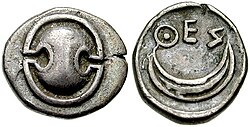
甲状腺という名称は、古代ギリシャの盾(thyreos)に形が似ていることから、17世紀に解剖学者のトーマス・ウォートンによって名付けられました。
Key Facts
- 形状と位置: 喉の前面にあり、左右の葉が峡部で結ばれた蝶のような形をしている。
- 主要ホルモン: チロキシン(T4)とトリヨードチロニン(T3)を分泌し、代謝を調節する。
- 必須栄養素: ホルモン合成にはヨウ素が不可欠であり、不足すると甲状腺腫などの疾患を招く。
- 調節メカニズム: 視床下部(TRH)と下垂体(TSH)によるフィードバック制御を受けている。
甲状腺の解剖学的構造と特徴
成人の甲状腺は平均して約25gの重量があり、左右の葉(側葉)が中央の狭い組織帯である「峡部」によって連結されています。一般的に女性の方が大きく、妊娠中にはさらにサイズが増加する傾向があります。
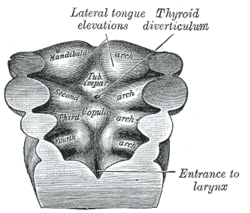
個体差による構造的な変異も見られ、峡部から上方の舌骨に向かって伸びる「錐体葉(ピラミッド葉)」を持つ人が一定数存在します。これは胎児期の甲状腺下降過程で残った甲状腺舌管の痕跡であり、報告によれば人口の18.3%から44.6%に見られる特徴です。
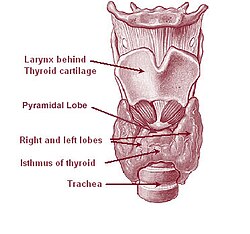
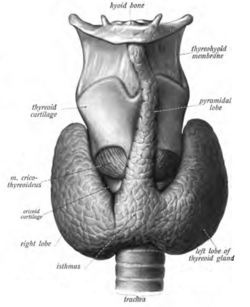
また、葉の後方には「ツッカーカンドル結節」と呼ばれる小さな突起が存在することがあり、これは外科手術において反回神経や下甲状腺動脈との位置関係から重要な指標となります。
微細構造と細胞構成
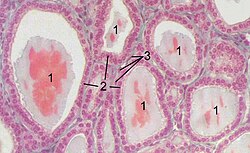
顕微鏡レベルで見ると、甲状腺は「濾胞(ろほう)」と呼ばれる小さな球状の構造が密集して構成されています。濾胞の内部はコロイドという物質で満たされており、その周囲を濾胞細胞が取り囲んでいます。また、濾胞の間にはカルシトニンを分泌する傍濾胞細胞(C細胞)が存在し、血中カルシウム濃度の調節に関与しています。
ホルモンの合成と分泌メカニズム
甲状腺ホルモンの生成は、非常に精密な化学プロセスを経て行われます。まず、血液中からヨウ素が細胞内に取り込まれ、濾胞腔のコロイドへと運ばれます。ここでチロペルオキシダーゼという酵素の働きにより、チログロブリンというタンパク質にヨウ素が結合し、T3やT4の前駆体が形成されます。
![Synthesis of the thyroid hormones, as seen on an individual thyroid follicular cell:[33] - Thyroglobulin is synthesized in the rough endoplasmic reticulum and follows the secretory pathway to enter the colloid in the lumen of the thyroid follicle by exocytosis. - Meanwhile, a sodium-iodide (Na/I) symporter pumps iodide (I−) actively into the cell, which previously has crossed the endothelium by largely unknown mechanisms. - This iodide enters the follicular lumen from the cytoplasm by the transporter pendrin, in a purportedly passive manner. - In the colloid, iodide (I−) is oxidized to iodine (I0) by an enzyme called thyroid peroxidase. - Iodine (I0) is very reactive and iodinates the thyroglobulin at tyrosyl residues in its protein chain (in total containing approximately 120 tyrosyl residues). - In conjugation, adjacent tyrosyl residues are paired together. - The entire complex re-enters the follicular cell by endocytosis. - Proteolysis by various proteases liberates thyroxine and triiodothyronine molecules, which enters the blood by largely unknown mechanisms.](/images/a7/9b/a79b6074a61b02885525635f338477f1a60c20ab9368e29164ddbcb8c4a2ea83.png)
必要に応じてこれらの物質が再び細胞内に取り込まれ、タンパク質分解を経て、活性型のT3(トリヨードチロニン)とT4(チロキシン)として血液中に放出されます。分泌されるホルモンの大部分(80〜90%)はT4であり、T3は少なめですが、末梢組織においてT4がT3に変換されることで、実際の生理活性を発揮します。
ホルモン調節のフィードバック系
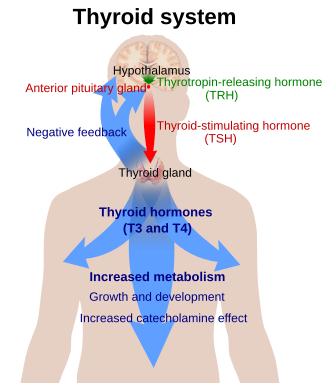
甲状腺の活動は、脳の視床下部から分泌されるTRH(甲状腺刺激ホルモン放出ホルモン)と、下垂体前葉から分泌されるTSH(甲状腺刺激ホルモン)によって制御されています。血中のT3やT4の濃度が高まると、これらの放出を抑制する「負のフィードバック」が働き、ホルモン濃度が一定に保たれます。
発生と成長における重要性
甲状腺は胎児期に形成され、妊娠11週頃からTSHが測定可能になります。18〜20週までには、胎児自身で十分な量のT4を産生できるようになります。特に、胎児の脳や神経系の正常な発達には、十分な量の甲状腺ホルモンとヨウ素が不可欠です。
母体や胎児にヨウ素が不足すると、神経発達障害や先天性甲状腺機能低下症などの深刻な問題を引き起こす可能性があります。
![Child affected by Congenital iodine deficiency syndrome, associated with a lack of iodine.[75]](/images/bd/b8/bdb86aa49d0a09171c6228906d65c2df9027ed1ae9fc66a28088fd39d1d846c9.jpg)
臨床的意義と疾患
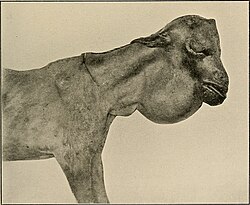
甲状腺の機能異常は、ホルモンの過剰分泌(亢進症)または不足(低下症)として現れます。代表的な疾患に、自己免疫疾患であるバセドウ病(Graves' disease)や橋本病(Hashimoto's thyroiditis)があります。また、ヨウ素欠乏による甲状腺の腫大(甲状腺腫)は、歴史的に多くの地域で報告されてきました。
診断には血液検査によるT3、T4、TSHの測定が行われます。特に、タンパク質と結合していない「遊離(free)」の状態のホルモン値が、実際の生物学的活性を反映するため重要視されます。
| 状態 | T3 / T4 レベル | TSH レベル | 主な特徴 |
|---|---|---|---|
| 甲状腺機能亢進症 | 高い | 低い | 代謝亢進、体重減少、頻脈など |
| 甲状腺機能低下症 | 低い | 高い | 代謝低下、倦怠感、浮腫など |
| 潜在的亢進症 | 正常 | 低い | 自覚症状が少ない場合がある |
Frequently Asked Questions
甲状腺ホルモンを合成するためになぜヨウ素が必要なのですか?
T3(トリヨードチロニン)とT4(チロキシン)という名称にある通り、これらのホルモン分子の構造自体にヨウ素原子が含まれているためです。ヨウ素が不足すると、ホルモンを十分に作ることができず、代償的に腺が腫れる甲状腺腫などの症状が現れます。
T3とT4の違いは何ですか?
T4は甲状腺から分泌される主成分であり、一種の貯蔵形態のような役割を果たします。一方、T3は活性が非常に強く、体内の多くの組織でT4から変換されて利用されます。生物学的な作用の多くはT3によって引き起こされます。
甲状腺の検査で「遊離(free)」の値が重視されるのはなぜですか?
血液中の甲状腺ホルモンの大部分は、輸送タンパク質(チロキシン結合グロブリンなど)と結合して運ばれています。しかし、細胞に作用して効果を発揮できるのは、タンパク質と結合していない「遊離」状態のホルモンのみであるためです。
錐体葉があることは病気なのでしょうか?
いいえ、錐体葉は解剖学的な変異の一種であり、人口の相当数に見られる正常なバリエーションです。通常、健康上の問題はありませんが、外科的な手術を行う際には医師が考慮すべき構造的特徴となります。
甲状腺ホルモンが不足すると体にどのような影響がありますか?
代謝が低下するため、強い倦怠感、体重増加、寒がりになるといった症状が現れます。また、胎児期や乳幼児期に不足すると、脳の発達に深刻な影響を及ぼし、知的障害などの神経発達障害につながる恐れがあります。
References
- , p. 907.
- Boron WF, Boulpaep EL (2012). Medical Physiology (2nd ed.). Philadelphia: Saunders. p. 1052. .
- ↑ Harrison's 2011, pp. 2913, 2918.
- 1 2 3 4 5 6 7 8 9 10 11 12 13 14 15 16 17 18 19 20 21 Gray's Anatomy 2008, pp. 462–4.
- 1 2 3 4 5 6 7 8 9 10 11 Elsevier's 2007, p. 342.
- ↑ Elsevier's 2007, pp. 342–3.
- Ellis H, Standring S, Gray HD (2005). Gray's anatomy: the anatomical basis of clinical practice. St. Louis, Mo: Elsevier Churchill Livingstone. pp. 538–539. .
- Netter FH (2014). Atlas of Human Anatomy Including Student Consult Interactive Ancillaries and Guides (6th ed.). Philadelphia, Penn.: W B Saunders Co. p. 27. .
- Page C, Cuvelier P, Biet A, Boute P, Laude M, Strunski V (July 2009). "Thyroid tubercle of Zuckerkandl: anatomical and surgical experience from 79 thyroidectomies". The Journal of Laryngology and Otology. 123 (7): 768–71. :10.1017/s0022215108004003. 19000342. 22063700.
- 1 2 3 Elsevier's 2007, p. 343.
📸 フォトギャラリー