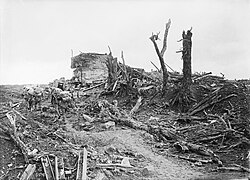
A group of soldiers walk across wooden duckboards that have been constructed over a waterlogged and muddy field. Shattered trees dot the landscape, with a low-lying haze in the background.
← ホームへ戻る

第一次世界大戦におけるオーストラリアの軍事活動と歴史的役割

1914年、イギリスがドイツに宣戦布告した際、オーストラリアは大英帝国の構成国として強い熱意を持って参戦を決めました。この紛争への参加は、単なる軍事的な支援にとどまらず、国家としてのアイデンティティを形成する重要な転換点となりました。オーストラリアは迅速に軍備を整え、太平洋からヨーロッパ、中東に至るまで、地球規模で展開される戦いへと兵力を投入しました。

Key Facts

  • 初期展開: 1914年9月、オーストラリア海軍・陸軍遠征軍がドイツ領ニューギニアを占領。
  • ANZACの誕生: 1915年4月25日、オーストラリア・ニュージーランド軍団(ANZAC)がガリポリ半島に上陸。
  • 主要戦域: エジプト、パレスチナ、およびフランスを中心とする西部戦線で激戦を展開。
  • 多角的な軍事力: 陸軍(AIF)だけでなく、海軍(RAN)や航空隊(AFC)も世界各地で活動。

戦端の開いた太平洋と初期の展開

オーストラリアが最初に取り組んだのは、近隣の太平洋地域におけるドイツ勢力の排除でした。急遽編成された「オーストラリア海軍・陸軍遠征軍」が派遣され、ドイツ領ニューギニアの領有権を確保しました。
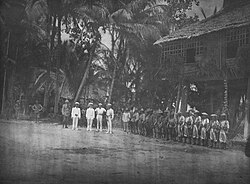
A line of soldiers in tropical uniforms stand in front of a hut in a jungle clearing. In front of them stand a group of five men facing towards the camera.

同時に、海外派遣を目的とした大規模な軍事組織であるオーストラリア帝国軍(AIF: Australian Imperial Force)が設立されました。当初2万人規模で編成されたこの部隊は、1914年11月にオーストラリアを出発し、まずはエジプトへと向かいました。そこでは戦略的要衝であるスエズ運河の防衛任務に就きました。

ガリポリ戦役ANZACの精神

1915年初頭、連合国はオスマン帝国に対する新たな戦線を構築し、ダーダネルス海峡の通行権を確保するため、ガリポリ半島への上陸作戦を計画しました。ここでオーストラリア軍とニュージーランド軍は統合され、ANZAC(アンザック)として知られる軍団を形成しました。
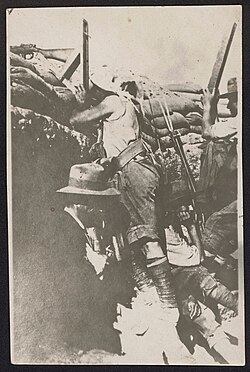
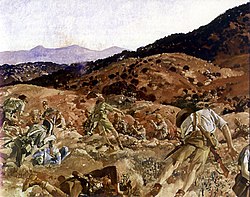
In the Front Line, Anzac Cove 1915 H84.356/33 State Library Victoria

4月25日の上陸以降、彼らは過酷な環境下で8ヶ月にわたり激しい戦闘を繰り広げましたが、最終的に作戦は失敗に終わり、1915年12月に撤退しました。この戦いは、多くの犠牲を出したものの、後のオーストラリアにおける国民的誇りと団結力の象徴となりました。

中東およびパレスチナでの作戦

ガリポリからの撤退後、AIFは再びエジプトに戻り、組織の再編が行われました。歩兵師団がヨーロッパへ転属する一方で、ライトホース(軽騎兵)部隊の多くは中東に残り、オスマン帝国軍との戦いを継続しました。
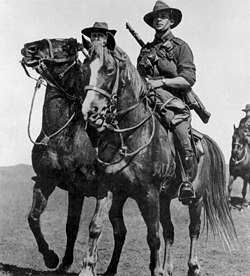
Soldiers mounted on horses with rifles slung

彼らはエジプトやパレスチナにおいて、機動力を活かした作戦を展開し、ガザ周辺の戦闘やエルサレムへの進撃、そして決定的な勝利を収めたベエルシェバの戦いなどで重要な役割を果たしました。
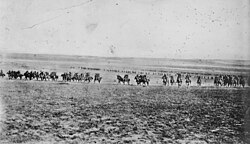
A line of men on horses charge across an open field towards the camera.

西部戦線での激闘

1916年以降、オーストラリアの歩兵師団はフランスの西部戦線へと投入されました。ここでは、第一次世界大戦特有の凄惨な塹壕戦が展開され、オーストラリア軍は以下のような主要な戦いに参加しました。

  • ソンムの戦い(1916年): 甚大な損害を出しながらも、連合国の攻勢を支えました。
  • メッシーヌの戦いおよびイープルの戦い: 戦術的な勝利を収め、ドイツ軍に打撃を与えました。
  • 1918年の春季攻勢と百日攻勢: ドイツ軍の最後の反撃を阻止し、最終的な連合国の勝利へと導きました。
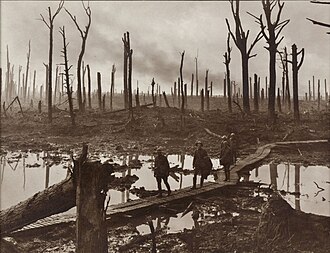
A group of soldiers walk across wooden duckboards that have been constructed over a waterlogged and muddy field. Shattered trees dot the landscape, with a low-lying haze in the background.

海軍と航空隊の貢献

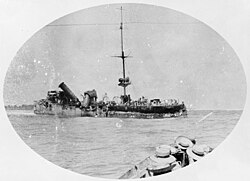
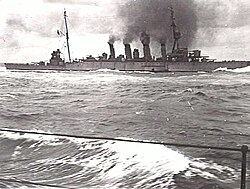
地上戦だけでなく、海軍と空軍も広範囲で活動しました。王立オーストラリア海軍(RAN)は、太平洋やインド洋だけでなく、大西洋や北海、黒海に至るまで展開し、ドイツの巡洋艦エムデンを撃破するなど、海上封鎖と哨戒任務を遂行しました。
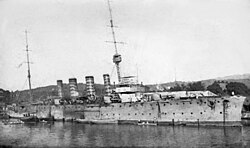
A four-funnelled warship lies at anchor in a harbour.

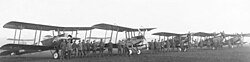
また、オーストラリア航空隊(AFC)は、中東および西部戦線において偵察や攻撃任務に従事し、近代戦における航空戦力の重要性を実証しました。
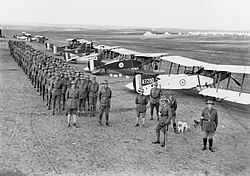
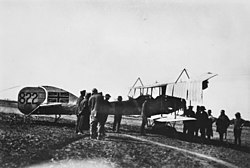
Men standing in files behind biplanes. They are wearing slouch hats, service jackets and breeches.

戦時下の国内状況と戦後の影響

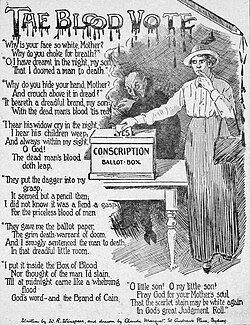
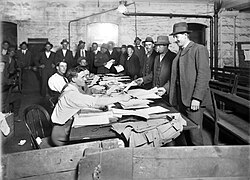
国内では、兵員補充を巡る徴兵制の是非について激しい論争が巻き起こり、国民を二分する社会問題となりました。また、検閲の導入や経済構造の変化など、戦争は社会のあらゆる側面に影響を及ぼしました。

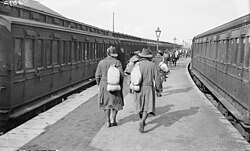
戦争終結後、兵士たちの帰還(復員)と社会復帰が大きな課題となりました。この経験は、オーストラリアがイギリスからの自立性を強め、独自の国家意識を持つきっかけとなりました。

戦域 主な部隊 主な任務・戦い
太平洋(ニューギニア) 海軍・陸軍遠征軍 ドイツ領の占領と確保
ガリポリ半島 ANZAC(オーストラリア・ニュージーランド軍団) ダーダネルス海峡確保のための上陸作戦
中東・パレスチナ ライトホース(軽騎兵) オスマン帝国軍との機動戦、ベエルシェバの戦い
西部戦線(フランス・ベルギー) AIF(オーストラリア帝国軍)歩兵師団 ソンムの戦い、塹壕戦、百日攻勢
世界各海域 王立オーストラリア海軍(RAN) 海上哨戒、ドイツ巡洋艦の撃破

Frequently Asked Questions

ANZACとは何を指しますか?

ANZAC(アンザック)は、Australian and New Zealand Army Corpsの略称で、第一次世界大戦中にガリポリ戦役などで共に戦ったオーストラリア軍とニュージーランド軍の連合部隊を指します。

オーストラリア軍が最初に参加した戦いはどこですか?

1914年9月に派遣されたオーストラリア海軍・陸軍遠征軍による、ドイツ領ニューギニアの占領作戦が最初となります。

ライトホース(軽騎兵)はどのような役割を果たしましたか?

主に中東(エジプトやパレスチナ)で活動し、その高い機動力を用いてオスマン帝国軍に対する作戦を遂行しました。特にベエルシェバの戦いでの活躍が有名です。

西部戦線でオーストラリア軍はどのような戦い方をしましたか?

フランスやベルギーにおいて、主に塹壕戦に従事しました。ソンムの戦いやメッシーヌの戦いなど、激しい消耗戦の中で連合国の攻勢を支える重要な役割を担いました。

国内ではどのような社会的な対立がありましたか?

特に徴兵制の導入を巡って激しい論争が起こり、国民の間で意見が真っ二つに分かれるなど、深刻な社会的分断が生じました。

References

  1. The AIF raised for World War I service has subsequently been called the First AIF to distinguish it from the Second AIF which was raised during World War II.
  2. A further 142 casualties were suffered by the Australian 15th Brigade who launched a diversionary attack; there were also 176 casualties among the 10 companies of Americans that were also involved in the operation.
  3. The battle is cited as an early example of the destructive potential of airpower and involved seven British squadrons (including No.1 Squadron AFC). The Turkish Seventh Army was caught in Wadi Fara and was unable to escape due to the steep hills and cliffs which forced them to use the road. The attack began at 6:30 am and continued non-stop until 12:00, No. 1 Squadron alone dropping three tonnes of bombs and expending nearly 24,000 rounds. When British ground forces reached the area the following day they found 87 artillery pieces and nearly 1,000 vehicles abandoned or destroyed. Casualties among the estimated 7,000 Turkish troops caught in the attacks were not established but were believed to have been high.
  4. Between 1914 and 1919 the number of Australian workers who were members of trade unions rose by 104,314.
  5. Such notions remain common in Australian society today, although their impact upon the formulation of defence policy may have been limited by the development of a standing, professional force after World War II. provides a discussion of the impact of the conflict between traditional Australian notions of social nationalism and military professionalism, as well as the way in which the ideals of ANZAC have led to Australian strategic complacency.
  6. These casualties can be broken down as follows: 53,993 battle-related deaths; 7,727 non-battle related deaths; 137,013 wounded in action; 16,496 gassed; 3,647 prisoners of war and 109 prisoner of war deaths.

📸 フォトギャラリー
A group of soldiers walk across wooden duckboards that have been constructed over a waterlogged and muddy field. Shattered trees dot the landscape, with a low-lying haze in the background.
Men in suits and hats file past other men sitting at a long table, handing over paperwork.
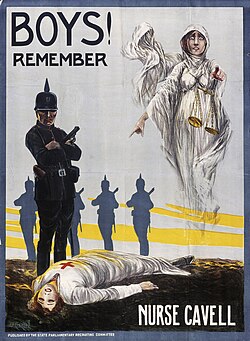
Australian government recruiting poster 1915 (using Edith Cavell's "martyrdom")
A line of soldiers in tropical uniforms stand in front of a hut in a jungle clearing. In front of them stand a group of five men facing towards the camera.
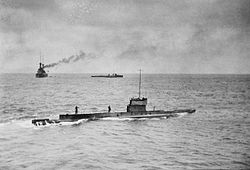
A submarine moves across the surface of the ocean, and two warships can be seen in the background.
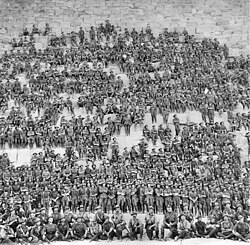
A large group of men in military uniform sit on the side of a large stone edifice.
A four-funnelled warship lies at anchor in a harbour.
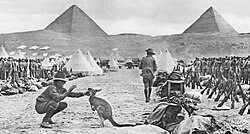
A soldier plays with a kangaroo, while in the middle distance other soldiers are formed up in ranks in front of tents. Two large pyramids are partially obscured by a large hill in the background.
In the Front Line, Anzac Cove 1915 H84.356/33 State Library Victoria
A reproduction image of a painting in which a battle scene is depicted. The terrain is rocky and undulating and men in shorts and shirts carrying rifles are falling to the ground as they are shot down from defenders standing in another trench.
Soldiers mounted on horses with rifles slung
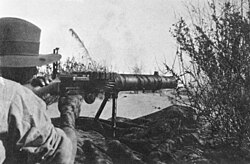
A soldier lies among the grass in the prone position behind a machine gun which he is holding in the shoulder.
A line of men on horses charge across an open field towards the camera.
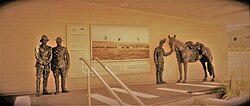
The Be'er Sheva Anzac Memorial Centre, Israel
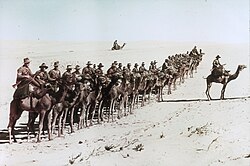
Australian camel company, January 1918
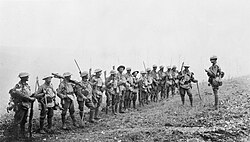
A line of soldiers in battle equipment face another soldier who is addressing them on a gentle slope. Behind them smoke or fog obscures the rest of the terrain.
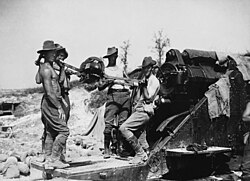
Bare-chested men in slouch hats and breeches stand by a large artillery piece, ready to load a shell.
Heavily laden soldiers trudge through mud past the shattered remains of a concrete structure. Around them broken trees, steel beams and other pieces of debris have been strewn.
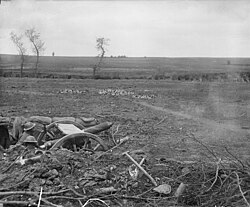
Two soldiers operate a field gun from a dug-in position in an open field and reinforced with sandbags. Entrenching tools, spoil and broken vegetation lie around the emplacement, while some defoliated trees stand in the middle distance.
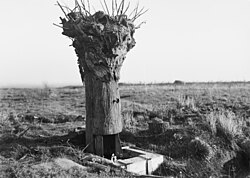
A large stubby object resembling a tree trunk stands in a grassy field, devoid of leaves and branches. At the base is a door-like opening and some wooden form-work.
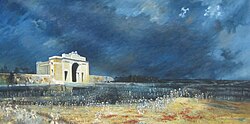
Colour painting of a large illuminated sandstone arch under a darkened night sky. In the foreground the ghost-like figures of hundreds of soldiers stand in an empty field.
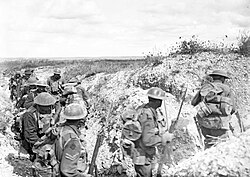
Heavy laden soldiers move through a communication trench during the daytime.
A group of men gather around a biplane. The Union Jack has been painted on to the tail of the aircraft.
Men standing in files behind biplanes. They are wearing slouch hats, service jackets and breeches.
Different models of biplane fighters with their crews standing by
A badly damaged ship sits in the water, while in the foreground sailors in another vessel watch on.
A large four-stacked warship billowing thick black smoke and moving through moderate seas
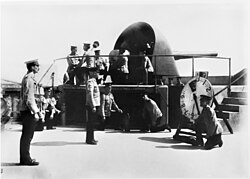
A large gun encased in an open backed metal turret atop a fort
A poster titled "The Blood Vote" depicts a woman pondering how she should vote on the issue of conscription, while the Australian prime minister, William Hughes, depicted as a vampire stands behind her. There is a poem included also.
The Australian Honour Flag, awarded to subscribers of the Australian Government's 7th War Loan in 1918
Soldiers walk down a station platform, while on either side of the platform are two trains. The men are wearing slouch hats and are carrying bags over their shoulders.