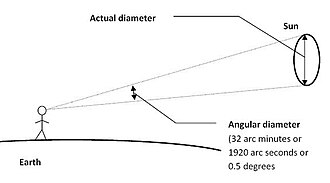
私たちが空を見上げたとき、月や太陽、あるいは遠くの惑星がどのくらいの大きさに見えるかは、その物体の実際のサイズだけでなく、観測地点からの距離によって決まります。このように、ある視点から見た物体が占める角度のことを視直径(または視角、見かけの大きさ)と呼びます。
視覚科学の分野では「視角」と呼ばれ、光学の世界ではレンズの「開口角」として扱われます。簡単に言えば、視直径とは、視線を物体の片端から反対側へ動かすために必要な回転角度のことです。
Key Facts
- 視直径は、物体の物理的な大きさと距離に基づいた「見かけ上の角度」である。
- 人間の目の解像限界は、理論上は約1分角(1/60度)とされる。
- 天文学では非常に小さな角度を扱うため、「秒角(arcsecond)」という単位が多用される。
- 物体の距離が直径に比べて十分に遠い場合、単純な割り算(直径 ÷ 距離)で近似計算が可能である。
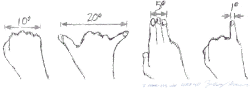
- 手のひらや指を腕を伸ばして掲げることで、空にある物体の視直径を概算できる。
視直径を算出する計算メカニズム
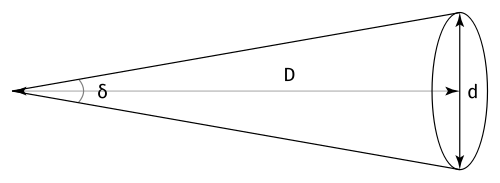
視直径を求める方法は、対象が平面的な円であるか、立体的な球体であるかによって異なります。
平面的な円の場合
観測者に対して垂直な円の場合、視直径(δ)は、物体の実際の直径(d)と距離(D)を用いて、正接関数(arctan)を用いて計算されます。数式では δ = 2 arctan(d / 2D) と表されます。ただし、物体が非常に遠くにある(D ≫ d)場合は、δ ≈ d / D という簡略化した式で近似でき、このときの結果はラジアン単位となります。
球体の場合
惑星のような球体の場合、見かけの端は球の接点となるため、中心までの距離よりも観測者に近くなります。そのため、正弦関数(arcsin)を用いた δ = 2 arcsin(d / 2D) という式が適用されます。視直径が小さい場合は平面の式とほぼ同じ結果になりますが、視直径が大きい物体ほど、この計算方法の差が顕著に現れます。
日常生活での視直径の推定方法
特別な器具がなくても、腕をまっすぐ伸ばして手を掲げることで、空にある物体の大きさを大まかに測ることができます。例えば、伸ばした手の幅や指の幅が、それぞれ特定の角度に対応しています。
天文学における視直径の活用
宇宙の天体はあまりに巨大ですが、地球からは極めて遠いため、実際のサイズよりも視直径で表記されることが一般的です。ここで使われるのが秒角(")という単位で、1度は60分、1分は60秒に分割されており、1秒角は1度の3600分の1という極めて微小な角度を指します。
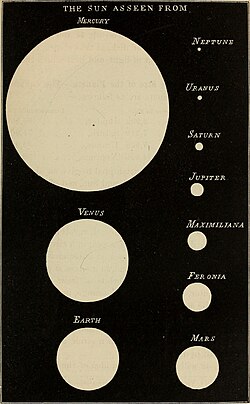
例えば、1パーセク(pc)離れた場所にある1天文単位(AU)の物体は、地球から見るとちょうど2秒角の視直径を持ちます。また、太陽を1光年離れた場所から見ると、その視直径はわずか0.03秒角となり、これは地球の直径分だけ離れた場所から見た人間の身体の大きさに相当します。
視直径の概念は、天体までの距離を割り出す際にも利用されます。物体の実際の物理的サイズが既知であれば、観測された視直径から逆算して、その天体までの距離(視直径距離)を求めることができるためです。
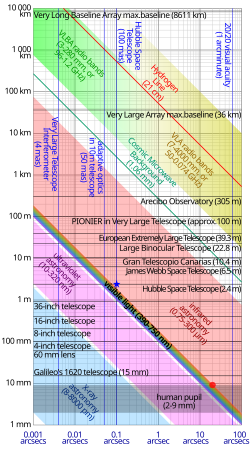
主要な天体の視直径一覧
地球から見たときの代表的な天体の見かけの大きさをまとめました。
| 天体名 | 視直径(角度) | 備考・比較 |
|---|---|---|
| 天の川銀河 | 約30°(幅) | 腕を伸ばした手のひらの幅程度 |
| アンドロメダ銀河 | 約3°10′ | 月や太陽の約6倍の大きさ |
| 太陽 | 約31′ 〜 32′ | 月とほぼ同等 |
| 月 | 約29′ 〜 34′ | 地球から見た標準的な基準 |
| 木星 | 約30″ 〜 50″ | 惑星の中で最大級の見かけの大きさ |
| 火星 | 約3.5″ 〜 25″ | 距離によって変動が激しい |
| ベテルギウス | 約0.05″ 〜 0.06″ | 視直径が測定可能な数少ない恒星の一つ |
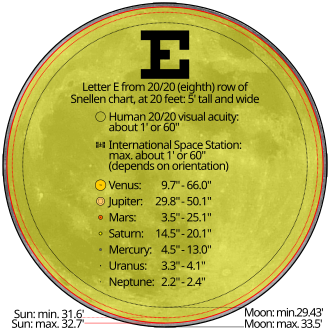
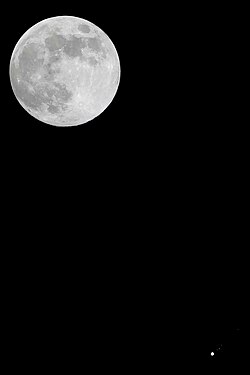
このように、月や太陽は「分」単位で捉えられますが、惑星や恒星になると「秒」単位の極めて精密な測定が必要になります。例えば、木星とその衛星を比較すると、月ほどの大きさはないものの、十分な倍率の望遠鏡があれば円盤状に観察することが可能です。
特殊なケースと視覚的影響
非円形物体の扱い
銀河や星雲のように形が円ではない天体の場合、単一の直径ではなく「長軸」と「短軸」の2つの値を併記して、その広がりを表現します。
照明欠損(Defect of illumination)
天体が完全に照らされていない場合、見えない部分の最大角度を「照明欠損」と呼びます。例えば、視直径40秒角の天体が75%だけ照らされている場合、残りの10秒角分が照明欠損となります。
地平線効果(Horizon effect)
巨大で不透明な物体を至近距離で見る場合、物体の端が視界から隠れるため、実際の物理的な幅すべてを一度に視認できない現象が起こります。
Frequently Asked Questions
視直径と実際の大きさはどう違うのですか?
実際の大きさ(物理的直径)は物体そのものの寸法(kmやm)を指しますが、視直径は「観測者から見てどれくらいの角度を占めているか」という見かけ上の大きさを指します。そのため、小さな物体でも距離が近ければ視直径は大きくなります。
人間が裸眼で見分けられる最小の角度はどれくらいですか?
一般的に、人間の目は約1分角(0.017度)程度の視直径を持つ物体を識別できるとされています。これは、1km先にある30cmの物体を認識できる能力に相当します。
なぜ天文学では「度」ではなく「秒角」を使うのですか?
宇宙の天体は地球からあまりに遠いため、度単位では数値が小さくなりすぎて扱いづらいためです。1度を3600分割した「秒角」を用いることで、惑星や恒星のわずかなサイズ変化を精密に表現できます。
視直径を使って距離を測ることはできますか?
はい、可能です。天体の実際の物理的サイズが分かっている場合、観測された視直径を数式に当てはめることで、その天体までの距離を逆算することができます。
太陽と月の視直径がほぼ同じなのはなぜですか?
偶然のバランスによるものです。太陽は月に比べて約400倍大きいですが、地球からの距離も約400倍遠いため、結果として地球から見たときに見かけの大きさがほぼ同じになります。
References
- Yanoff, Myron; Duker, Jay S. (2009). Ophthalmology 3rd Edition. MOSBY Elsevier. p. 54. .
- This can be derived using the formula for the length of a chord found at "Circular Segment". Archived from the original on 2014-12-21. Retrieved 2015-01-23.
- "Angular Diameter | Wolfram Formula Repository". resources.wolframcloud.com. Retrieved 2024-04-10.
- "7A Notes: Angular Size/Distance and Areas" (PDF).
- "A Taylor series for the functionarctan" (PDF). Archived from the original (PDF) on 2015-02-18. Retrieved 2015-01-23.
- "Coordinate Systems". Archived from the original on 2015-01-21. Retrieved 2015-01-21.
- "Photographing Satellites". 8 June 2013. Archived from the original on 21 January 2015.
- Wikiversity: Physics and Astronomy Labs/Angular size
- Michael A. Seeds; Dana E. Backman (2010). Stars and Galaxies (7 ed.). Brooks Cole. p. 39. .
- O'Meara, Stephen James (2019-08-06). "The coalsacks of Cygnus". Astronomy.com. Retrieved 2023-02-10.
📸 フォトギャラリー