Venus imaged in different wavelengths
← ホームへ戻る

金星地球の双子と呼ばれる過酷な惑星の正体

太陽系で2番目の惑星である金星は、大きさと質量が地球に非常に近いため、しばしば「地球の双子」と称されます。しかし、その実態は想像を絶するほど過酷な環境に包まれた世界です。厚い雲に覆われ、地表は灼熱の温度に達しており、生命が存在できる条件とは程遠い環境となっています。

地球から見ると、金星は夜空で最も明るく輝く天体の一つであり、古くから人類を魅了してきました。昼間でも視認できることがあるほど強い光を放ち、その美しさは多くの文化や神話に影響を与えています。
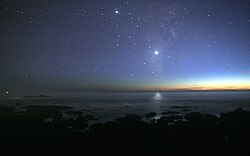
A photograph of the night sky taken from the seashore. A glimmer of sunlight is on the horizon. There are many stars visible. Venus is at the centre, much brighter than any of the stars, and its light can be seen reflected in the ocean.

主要な事実(Key Facts)

  • 表面温度: 平均約464℃に達し、太陽系で最も高温な惑星である。
  • 大気: 二酸化炭素が約96.5%を占め、強力な温室効果を引き起こしている。
  • 自転: 非常にゆっくりと、かつ地球とは逆方向(逆行)に自転している。
  • 地表: 火山活動による地形が支配的で、厚い雲のため光学的な観測が困難。
  • 衛星: 固有の衛星および環を持たない。

金星の物理的特性と構造

金星の半径は約6,052kmで、地球の約95%の大きさを持ちます。質量は地球の約81.5%であり、平均密度は5.243g/cm³と地球に近い値を示しています。内部構造は地球と同様に分化した構造を持っていると考えられています。
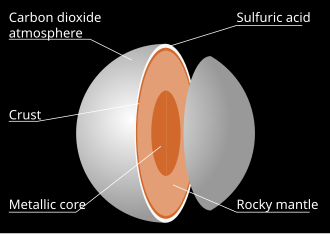
Spherical cross-section of Venus showing the different layers

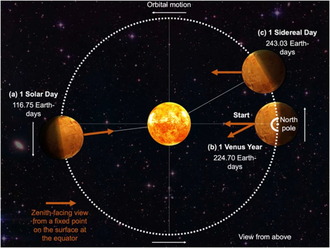
特筆すべきは、その特異な自転と公転のサイクルです。金星は太陽を約224.7日で一周しますが、自転軸が大きく傾いており、自転方向が他の惑星と逆である「逆行自転」を行っています。そのため、金星の一日は非常に長く、自転周期(約243日)が公転周期よりも長いという珍しい特性を持っています。
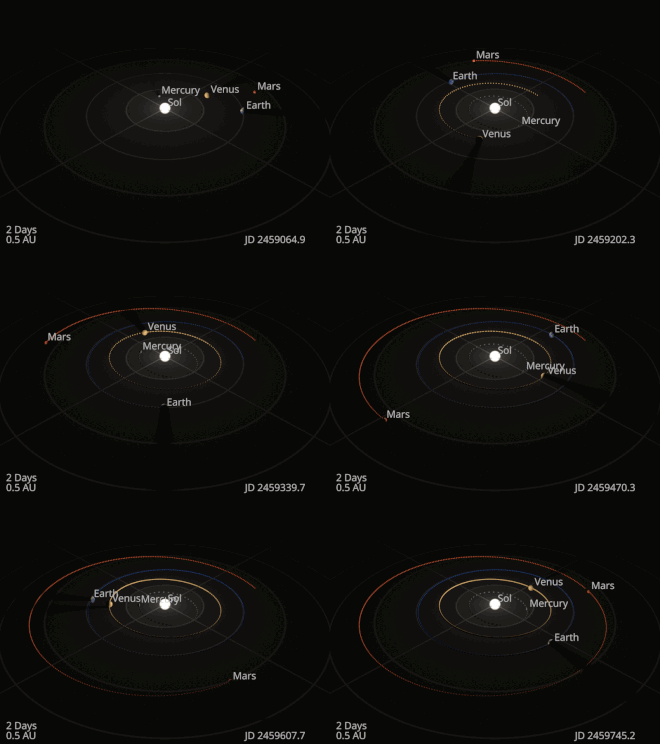
Mars circling the Sun further and slower than Earth
Venus and its rotation in respect to its revolution

軌道と地球からの観測

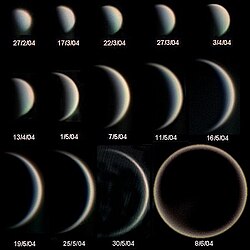
金星は地球に最も接近する惑星であり、その軌道はほぼ円形に近い形をしています。地球から見た金星は、月のように満ち欠け(位相)を繰り返し、時折、太陽面を横切る「金星の日面通過」という現象を引き起こします。
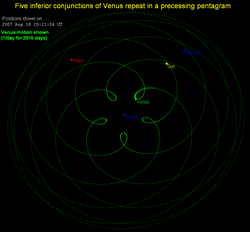
A complex, spiral, floral pattern with five loops encircling the middle
Diagram illustrating the phases of Venus
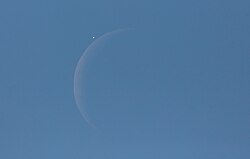
venus next to a crescent moon in the blue daytime sky
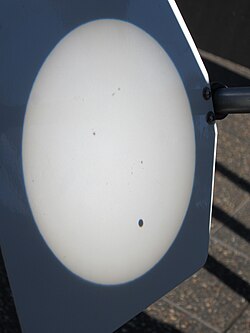
White disk with a small black dot projected on a screen

また、金星の縁に見えるかすかな光「灰色の光(ashen light)」は、近年では大気中のナイトグロウ(夜光)である可能性が高いと考えられています。

Nightglow is since 2022 considered the most likely candidate for the ashen light. In this visible light near-infrared image it is most discernable as a bright line along the limb of Venus.[192] The surface and its features, like the visible dark patch in this image, the Ovda Regio plateau of Aphrodite Terra, is much less discernable by the human eye, though reportedly seen by some people, possibly due to higher sensitivity in the spectrum that the surface glows.[193]

地獄のような大気と気候

金星の環境を決定づけているのが、極めて濃密な大気です。地表の気圧は約93バール(地球の約92倍)に達し、これは地球の海深約900メートルに相当する凄まじい圧力です。大気の主成分は二酸化炭素であり、これが熱を閉じ込める強力な温室効果を生み出し、地表温度を平均464℃まで押し上げています。
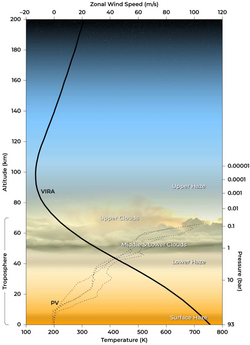
Atmospheric profile by altitude (left scale): cloud layers, temperature change (VIRA thick line and bottom scale), pressure change (right scale) and wind speed (PV dotted lines and top scale)

上空には硫酸の雲が広がっており、これが太陽光の多くを反射するため、金星は非常に高いアルベド(反射率)を持っています。紫外線画像では、この雲の複雑な構造を観察することができます。
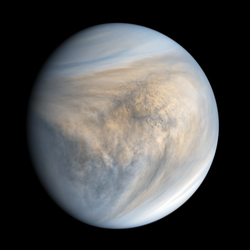
The atmosphere of Venus appears darker and lined with shadows. The shadows trace the prevailing wind direction.

また、金星は地球のような固有の磁場を持ちませんが、太陽風との相互作用によって「誘導磁気圏」を形成しています。
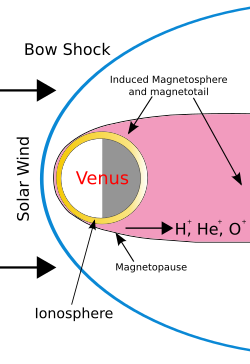
Venus interacts with the solar wind. Components of the induced magnetosphere are shown.

地表の地質と火山活動

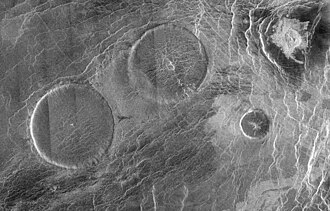
厚い雲に遮られているため、金星の地表を直接見ることは困難ですが、レーダー観測によってその全貌が明らかになりました。地表は広大な平原と、火山活動によって形成された山々や台地で構成されています。特に「パンケーキドーム」と呼ばれる平らな円盤状の火山地形が特徴的です。
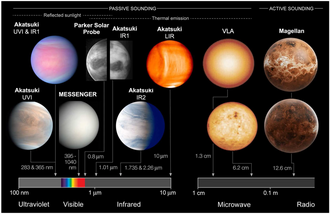
Venus imaged in different wavelengths
Radar mosaic of two pancake domes in Venus's Eistla region—both 65 km (40 mi) wide and less than 1 km (0.62 mi) high

地表には衝突クレーターも存在しますが、地球や月ほど多くはありません。これは、過去に大規模な火山活動によって地表が塗り替えられたためであると考えられています。最新の研究では、現在も火山活動が継続している可能性が示唆されています。
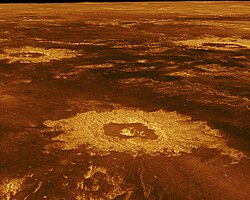
The plains of Venus

かつてのソ連によるベネラ計画などの着陸機は、地表の岩石が黒いスレート状であることを捉え、極限環境のデータを地球に送信しました。
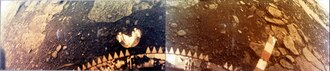
Colourized photo of the immediate surface around the lander of Venera 13
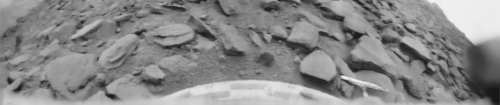
First view of Venus's surface as well as any other planet than Earth (1975, Soviet Venera 9 lander). Black-and-white 180-degree panorama of barren, black, slate-like rocks against a flat sky. The ground and the probe are the focus.

探査の歴史と未来への展望

人類による金星探査は、1960年代のマリナー2号による初のフライバイ成功から始まりました。その後、ソ連のベネラ計画や米国のパイオニア・ヴィーナス、マゼランなどのミッションを通じて、大気組成や地表の地図が作成されました。
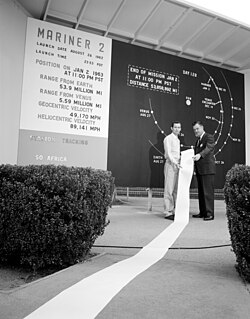
Mariner 2's fly-by was the first time data was successfully returned from Venus, which was presented at JPL with a print-out (1963)
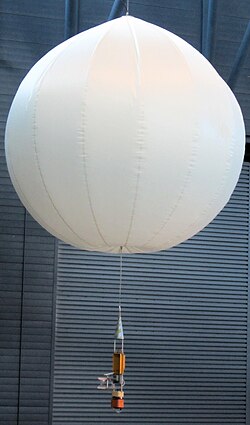
Vega balloon probe on display at the Udvar-Hazy Center of the Smithsonian Institution

近年では、パーカー・ソーラー・プローブが夜側の金星を可視光で撮影し、雲の隙間から熱く光る地表(アフロディーテ高地など)を捉えることに成功しています。

WISPR of the Parker Solar Probe took this visible light footage of the nightside in 2021, showing the hot faintly glowing surface, and its Aphrodite Terra as large dark patch, through the clouds, which prohibit such observations on the dayside when they are illuminated.[231][232]
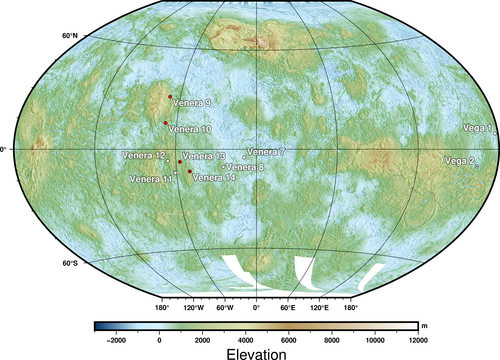
Global topographic map of Venus, with all probe landing sites marked (red: images returned; black dot: samples taken and on-site analysed)

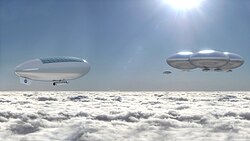
今後の探査では、かつて金星に海が存在した可能性や、上層大気における微生物のような生命の存在可能性について、より詳細な調査が行われる予定です。また、将来的な有人探査のコンセプトとして、過酷な地表ではなく、気圧と温度が地球に近い上空に浮かぶ「浮遊基地」の構想も提案されています。
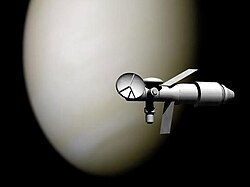
In the 1970s the United States and the Soviet Union both designed crewed Venus missions, like the Apollo program derived Manned Venus Flyby design, or the depicted, the proposed Soviet TMK-MAVR craft on a Venus flyby
Artist's rendering of a NASA High Altitude Venus Operational Concept (HAVOC) crewed floating outpost on Venus

金星の基本データまとめ

金星の物理的・軌道特性
項目 数値・詳細
平均半径 6,051.8 km
質量 4.867 × 1024 kg (地球の0.815倍)
表面温度 (平均) 約 464 °C
表面気圧 約 93 bar
主成分ガス 二酸化炭素 (96.5%)
公転周期 約 224.7 日
自転周期 約 -243.0 日 (逆行)

文化的な影響と歴史

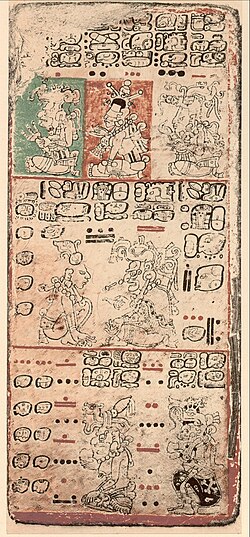
金星はその輝きから、古代バビロニアの「アミサドゥカの粘土板」やマヤ文明の「ドレスデン写本」など、世界各地の古い記録にその位置や周期が記されてきました。また、芸術の世界でもゴッホの「星月夜」に描かれるなど、多くの表現者にインスピレーションを与え続けています。
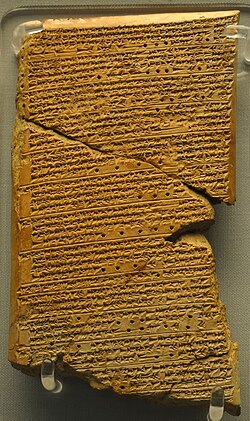
Oldest known recording of Venus positions, on the Babylonian Venus tablet of Ammisaduqa (1600 BC)
The Pre-Columbian Mayan Dresden Codex, which calculates appearances of Venus
Twentieth century painting of Jeremiah Horrocks observing the 1639 transit of Venus.
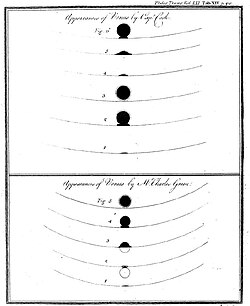
A hand-drawn sequence of images showing Venus passing over the edge of the Sun's disk, leaving an illusory drop of shadow behind
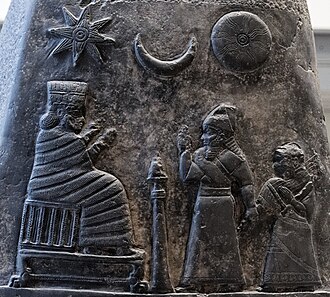
The eight-pointed star is a symbol used in some cultures to represent Venus, sometimes combined into a star and crescent arrangement. Here, the eight pointed star is the Star of Ishtar, the Babylonian Venus goddess, alongside the solar disk of her brother Shamash and the crescent moon of their father Sin on a boundary stone of Meli-Shipak II, dating to the 12th century BC.
Venus is portrayed just to the right of the large cypress tree in Vincent van Gogh's 1889 painting The Starry Night.[278][279]
ภาพประกอบบทความ
The Sun, the planets, their moons, and several trans-Neptunian objects

Frequently Asked Questions

なぜ金星は地球より太陽から遠い火星より暑いのですか?

金星の大気のほとんどが二酸化炭素で構成されており、非常に強力な温室効果が発生しているためです。太陽からの熱を逃がさず地表に閉じ込めるため、太陽からの距離に関わらず極めて高温になります。

金星に生命は存在する可能性がありますか?

地表はあまりに高温で乾燥しているため困難ですが、高度50km付近の雲の中は温度と気圧が地球に近く、そこに微生物のような生命が存在する可能性について研究が進められています。

金星の「1日」はどれくらいの長さですか?

自転周期は約243地球日で、これは公転周期(約225日)よりも長いため、自転1回にかかる時間は非常にゆっくりです。ただし、太陽が昇ってから次に昇るまでの「太陽日」は約116.75日となります。

金星にはなぜ月がないのでしょうか?

明確な結論は出ていませんが、形成初期に大きな天体同士の衝突が起こり、その影響で衛星が形成されなかった、あるいは弾き飛ばされたという説などが提唱されています。

金星の地表に降り立つことは可能ですか?

現在の技術では非常に困難です。約93気圧の圧力と460度を超える高温により、ほとんどの探査機は短時間で破壊されてしまいます。そのため、将来的な有人探査では上空に浮かぶ基地が検討されています。

References

  1. Defining the rotation as retrograde, as done by NASA space missions and the USGS, puts in the northern hemisphere and makes the axial tilt 2.64°. Following the for prograde rotation puts Ishtar Terra in the negative hemisphere and makes the axial tilt 177.36°.

📸 フォトギャラリー

Venus imaged in different wavelengths
Colourized photo of the immediate surface around the lander of Venera 13
Radar mosaic of two pancake domes in Venus's Eistla region—both 65 km (40 mi) wide and less than 1 km (0.62 mi) high
The plains of Venus
Spherical cross-section of Venus showing the different layers
Venus interacts with the solar wind. Components of the induced magnetosphere are shown.
The atmosphere of Venus appears darker and lined with shadows. The shadows trace the prevailing wind direction.
Atmospheric profile by altitude (left scale): cloud layers, temperature change (VIRA thick line and bottom scale), pressure change (right scale) and wind speed (PV dotted lines and top scale)
Mars circling the Sun further and slower than Earth
Venus and its rotation in respect to its revolution
A complex, spiral, floral pattern with five loops encircling the middle
A photograph of the night sky taken from the seashore. A glimmer of sunlight is on the horizon. There are many stars visible. Venus is at the centre, much brighter than any of the stars, and its light can be seen reflected in the ocean.
Diagram illustrating the phases of Venus
venus next to a crescent moon in the blue daytime sky
White disk with a small black dot projected on a screen
Nightglow is since 2022 considered the most likely candidate for the ashen light. In this visible light near-infrared image it is most discernable as a bright line along the limb of Venus.[192] The surface and its features, like the visible dark patch in this image, the Ovda Regio plateau of Aphrodite Terra, is much less discernable by the human eye, though reportedly seen by some people, possibly due to higher sensitivity in the spectrum that the surface glows.[193]
Oldest known recording of Venus positions, on the Babylonian Venus tablet of Ammisaduqa (1600 BC)
The Pre-Columbian Mayan Dresden Codex, which calculates appearances of Venus
Twentieth century painting of Jeremiah Horrocks observing the 1639 transit of Venus.
A hand-drawn sequence of images showing Venus passing over the edge of the Sun's disk, leaving an illusory drop of shadow behind
Mariner 2's fly-by was the first time data was successfully returned from Venus, which was presented at JPL with a print-out (1963)
First view of Venus's surface as well as any other planet than Earth (1975, Soviet Venera 9 lander). Black-and-white 180-degree panorama of barren, black, slate-like rocks against a flat sky. The ground and the probe are the focus.
Vega balloon probe on display at the Udvar-Hazy Center of the Smithsonian Institution
WISPR of the Parker Solar Probe took this visible light footage of the nightside in 2021, showing the hot faintly glowing surface, and its Aphrodite Terra as large dark patch, through the clouds, which prohibit such observations on the dayside when they are illuminated.[231][232]
Global topographic map of Venus, with all probe landing sites marked (red: images returned; black dot: samples taken and on-site analysed)
In the 1970s the United States and the Soviet Union both designed crewed Venus missions, like the Apollo program derived Manned Venus Flyby design, or the depicted, the proposed Soviet TMK-MAVR craft on a Venus flyby
Artist's rendering of a NASA High Altitude Venus Operational Concept (HAVOC) crewed floating outpost on Venus
The eight-pointed star is a symbol used in some cultures to represent Venus, sometimes combined into a star and crescent arrangement. Here, the eight pointed star is the Star of Ishtar, the Babylonian Venus goddess, alongside the solar disk of her brother Shamash and the crescent moon of their father Sin on a boundary stone of Meli-Shipak II, dating to the 12th century BC.
Venus is portrayed just to the right of the large cypress tree in Vincent van Gogh's 1889 painting The Starry Night.[278][279]
ภาพประกอบบทความ
The Sun, the planets, their moons, and several trans-Neptunian objects