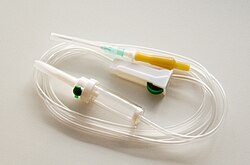
静脈内療法(IV療法)とは、薬剤や水分、栄養素などを直接静脈に注入する医療処置のことです。経口摂取が困難な患者への栄養補給や、迅速な薬効が求められる治療において不可欠な手法であり、現代医療の根幹を支える技術の一つとなっています。
この療法は、単なる水分補給(再水合)だけでなく、電解質バランスの調整や血液製剤の投与、さらには画像診断のための造影剤注入など、多岐にわたる目的で利用されています。
Key Facts
- 直接投与: 消化管を介さず直接血流に届くため、吸収効率が極めて高く、即効性がある。
- 多様な用途: 水分補給、薬剤投与、栄養管理(TPN)、血液製剤の投与などに使用される。
- アクセスの使い分け: 投与期間や目的により、末梢ラインと中心ラインを使い分ける。
- 厳格な管理: 感染症や血管外漏出などのリスクがあるため、専門的な管理が必要。
静脈内療法の主な目的と用途
医療的な治療と管理
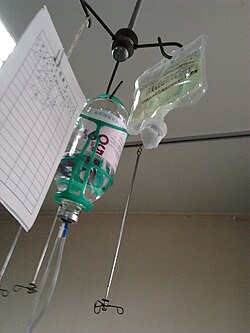
最も一般的な用途は、脱水症状の改善や、意識障害などで口から水分・食事が摂れない患者への水分・栄養補給です。また、抗生物質などの薬剤を迅速に全身に届けたい場合や、電解質異常を速やかに修正する場合にも用いられます。
特殊な投与と診断
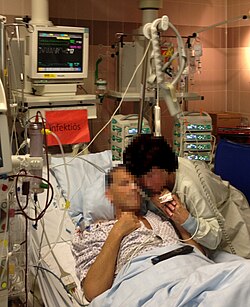
輸血などの血液製剤の投与や、CT・MRI検査における造影剤の注入にも静脈ラインが利用されます。また、重症患者においては、タンパク質、脂質、糖質をすべて静脈から補う「完全静脈栄養(TPN)」が行われることがあります。
スポーツやウェルネスにおける利用
一部では、二日酔い解消や健康増進を目的とした「ビタミン点滴(マイヤーズカクテルなど)」が提供されています。しかし、スポーツの世界では、世界アンチ・ドーピング機構(WADA)が12時間あたり100mLを超える静脈注射を原則禁止しており、検査結果の操作や禁止薬物の投与に利用されるリスクが警戒されています。
IVアクセスの種類と設備
末梢ライン(Peripheral Lines)
腕などの末梢静脈に針を挿入する方法です。針の太さはバーミンガムゲージ(G)で表記され、用途に応じて選択されます。例えば、救急現場で大量の輸液が必要な場合は12〜14Gの太い針(トラウマライン)が使われ、小児には22Gなどの細い針が用いられます。
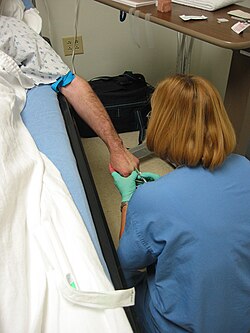
挿入時は、血管への適切な進入を確保するため、通常は約25度の角度で針を刺入します。
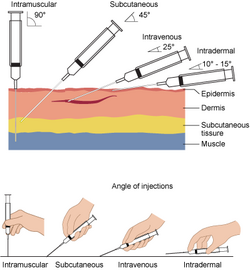
また、子供の処置や手・足、肘窩(ちゅうか)への穿刺の際は、肢を固定するためのアームボードが推奨されます。
![An arm board is recommended for immobilizing the extremity for cannulation of the hand, the foot or the antecubital fossa in children.[34]](/images/d6/f4/d6f4bf864810ac9944972c6c92d06f580eb5cb62ad4b451d20c4f2e31d21cdfb.jpg)
中心ライン(Central Lines)
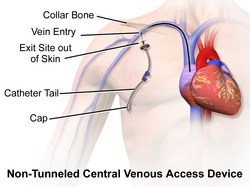
太い静脈(中心静脈)にカテーテルを留置する方法です。長期的な投与や、刺激の強い薬剤を使用する場合に適しています。非トンネル式、皮膚の下を通すトンネル式(ヒックマンカテーテルなど)、あるいは皮膚の下に埋め込むインプランタブルポートなどがあります。
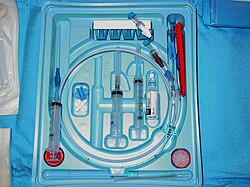
中心ラインの設置には専用のキットが使用され、厳格な無菌操作が行われます。
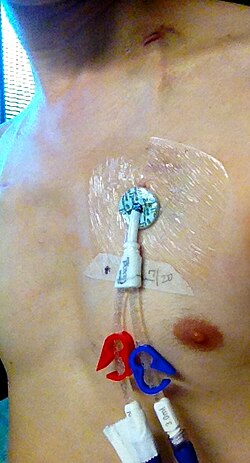
トンネル式カテーテルの例として、胸部から皮膚の下を通って頸静脈に到達するヒックマンラインが挙げられます。
投与制御デバイス
点滴の速度を精密に制御するために、点滴筒(ドリップチャンバー)による目視確認や、自動で注入量を管理する輸液ポンプが活用されています。
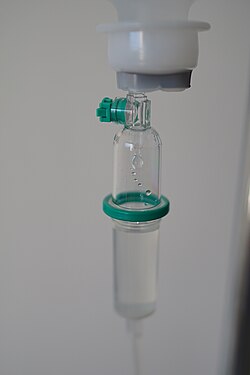
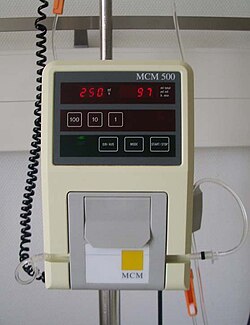
静脈内療法の歴史的変遷
静脈への注入という試みは古く、1492年の教皇インノケンティウス8世への血液投与記録(真偽には議論がある)にまで遡ります。17世紀にはクリストファー・レンやロバート・ボイルが動物を用いた実験を行い、その後リチャード・ロウアーらが動物から人間への異種輸血を試みました。
19世紀に入ると、トーマス・ラッタがコレラ治療に輸液を用いたことで実用的な発展を遂げました。当初は生理食塩水のような単純な溶液から始まり、その後、乳や蜂蜜などが試された時期もありました。また、ジェームズ・ブランデルは分娩後の大量出血に対する輸血を試みています。
20世紀に入り、1950年代には現代的なIV療法が普及しました。それ以前は直腸から水分を吸収させる「マーフィー・ドリップ」などの手法が一般的でしたが、徐々に静脈内療法に取って代わられました。1975年には脂質乳剤やビタミンの導入により、完全静脈栄養(TPN)が確立されました。
まとめ:静脈内療法の概要
| 項目 | 末梢ライン (Peripheral) | 中心ライン (Central) |
|---|---|---|
| 挿入部位 | 手や腕の細い静脈 | 頸静脈や鎖骨下静脈などの太い静脈 |
| 主な用途 | 短期間の投与、一般的な輸液 | 長期投与、高濃度栄養剤、刺激性薬剤 |
| メリット | 処置が簡便で低リスク | 大量・高濃度の投与が可能 |
| 主なリスク | 血管炎、漏出 | 血栓症、深刻な感染症 |
Frequently Asked Questions
IV療法で起こりうる副作用やリスクは何ですか?
主なリスクとして、挿入部位の痛みや炎症(静脈炎)、細菌感染、そして薬剤が血管外に漏れ出す「浸潤」や「漏出」が挙げられます。特に刺激の強い薬剤が漏れた場合、組織損傷を引き起こす可能性があります。
針の太さ(ゲージ)はどうやって決めるのですか?
投与する液体の量、粘度、および投与速度によって決定します。大量の輸液を急ぐ救急時は太いゲージ(14Gなど)を使い、小児や維持投与の場合は細いゲージ(22Gなど)を選択します。
中心静脈カテーテルと末梢ラインの決定的な違いは何ですか?
最大の違いはカテーテルの先端が到達する場所です。中心ラインは心臓に近い太い静脈に到達するため、血流による希釈が速く、末梢静脈では耐えられないような高濃度の栄養剤や刺激性の強い薬剤を安全に投与できます。
スポーツ選手がIV療法を制限されるのはなぜですか?
水分量を変えることで血液検査の結果(ヘマトクリット値など)を操作したり、尿を希釈して禁止薬物を検出されにくくしたりするなどの不正利用を防ぐためです。
完全静脈栄養(TPN)とは具体的に何を投与するものですか?
タンパク質(アミノ酸)、脂質、糖質(デキストロース)、および必須ビタミンやミネラルをすべて含んだ溶液を投与し、口から一切食事が摂れない状態でも生命を維持し、栄養状態を改善させる療法です。
References
- Noonpradej S, Akaraborworn O (3 August 2020). "Intravenous Fluid of Choice in Major Abdominal Surgery: A Systematic Review". Critical Care Research and Practice. 2020: 1–19. :10.1155/2020/2170828. 7421038. 32832150.
- Martin GS. "An Update on Intravenous Fluids". Medscape. WebMD. Retrieved 25 August 2020.
- Fujii T, Udy A, Licari E, Romero L, Bellomo R (June 2019). "Sodium bicarbonate therapy for critically ill patients with metabolic acidosis: A scoping and a systematic review". Journal of Critical Care. 51: 184–191. :10.1016/j.jcrc.2019.02.027. 30852347. 73725286.
- Flynn E (2007). "Pharmacokinetic Parameters". xPharm: The Comprehensive Pharmacology Reference. Elsevier. pp. 1–3. :10.1016/b978-008055232-3.60034-0. .
- "What is an IV Vitamin Therapy? A Complete Guide by Nepenthe". Retrieved 2022-09-02.
- Peacock WF, Hilleman DE, Levy PD, Rhoney DH, Varon J (July 2012). "A systematic review of nicardipine vs labetalol for the management of hypertensive crises". The American Journal of Emergency Medicine. 30 (6): 981–993. :10.1016/j.ajem.2011.06.040. 21908132.
- Vardas PE, Kochiadakis GE (September 2003). "Amiodarone for the Restoration of Sinus Rhythm in Patients with Atrial Fibrillation". Cardiac Electrophysiology Review. 7 (3): 297–299. :10.1023/B:CEPR.0000012400.34597.00. 14739732.
- Álvarez R, López Cortés LE, Molina J, Cisneros JM, Pachón J (May 2016). "Optimizing the Clinical Use of Vancomycin". Antimicrobial Agents and Chemotherapy. 60 (5): 2601–2609. :10.1128/AAC.03147-14. 4862470. 26856841. 9560849.
- Doyle GR, McCutcheon JA (13 November 2015). "7.5". Clinical Procedures for Safer Patient Care. Victoria, BC: BCcampus.
- "IV Fluids". Cleveland Clinic. Retrieved 2023-09-30.
📸 フォトギャラリー