タグ

輸送現象

6 件の記事

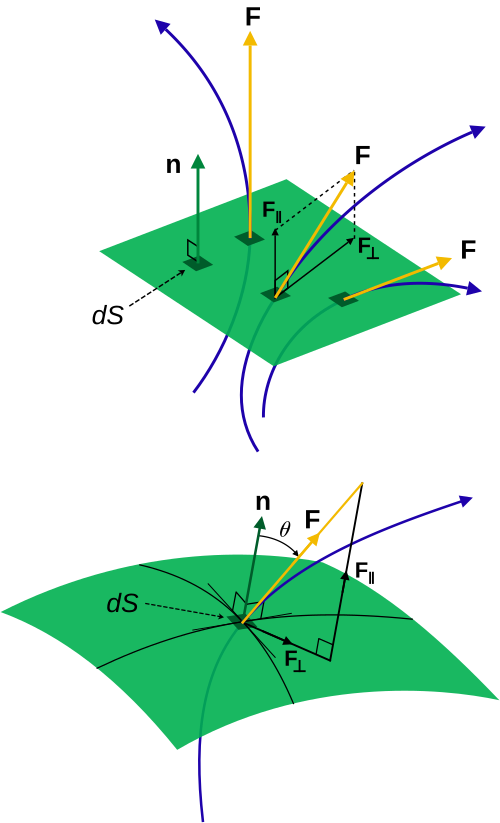
The field lines of a vector field F through surfaces with unit normal n, the angle from n to F is θ. Flux is a measure of how much of the field passes through a given surface. F is decomposed into components perpendicular (⊥) and parallel ( ‖ ) to n. Only the parallel component contributes to flux because it is the maximum extent of the field passing through the surface at a point, the perpendicular component does not contribute. Top: Three field lines through a plane surface, one normal to the surface, one parallel, and one intermediate. Bottom: Field line through a curved surface, showing the setup of the unit normal and surface element to calculate flux.

フラックス(束)の概念と物理学・数学における応用

フラックスベクトル場表面積分
📖

構成方程式物質の物理的応答を定義する数学的関係式

構成方程式物理学材料力学応力
ภาพประกอบบทความ

輸送現象の基礎物質・熱・運動量の移動メカニズムと工学的応用

輸送現象化学工学物質移動熱伝達
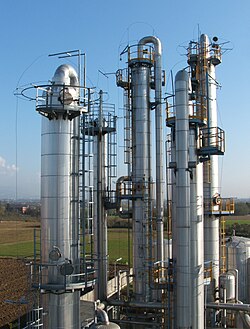
Chemical engineers design, construct, and operate process plants, such as these fractionating columns.

化学工学の基礎と進化原材料を価値ある製品へ変える技術

化学工学プロセス設計単位操作輸送現象
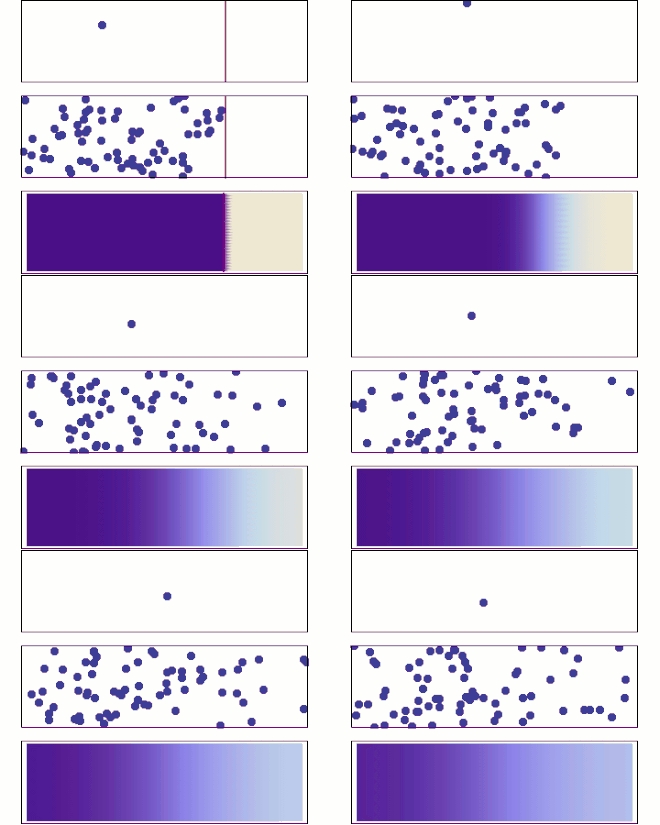
Diffusion from a microscopic and macroscopic point of view. Initially, there are solute molecules on the left side of a barrier (purple line) and none on the right. The barrier is removed, and the solute diffuses to fill the whole container. Top: A single molecule moves around randomly. Middle: With more molecules, there is a clear trend where the solute fills the container more and more uniformly. Bottom: With an enormous number of solute molecules, all randomness is gone: The solute appears to move smoothly and systematically from high-concentration areas to low-concentration areas, following Fick's laws.

分子拡散のメカニズム物質が均一に広がる物理的原理と応用

分子拡散フィックの法則化学ポテンシャル自己拡散
ภาพประกอบบทความ

物質移動のメカニズムと産業・宇宙への応用

物質移動化学工学拡散対流