Paris Métro Line 2
Jump to content


| Line 2 | |
|---|---|
  | |
 | |
| Overview | |
| Locale | Paris |
| Termini | Porte Dauphine Nation |
| Connecting lines |                        |
| Stations | 25 |
| Service | |
| System | Paris Métro |
| Operator(s) | RATP |
| Rolling stock | MF 01 (45 trains as of 22 March 2011) |
| Ridership | 88 million(2022) (avg. per year) |
| History | |
| Opened | 13 December 1900 |
| Technical | |
| Line length | 12.4 km (7.7 mi) |
| Track gauge | 1,435 mm (4 ft 8+1⁄2 in) |
| Electrification | 750 V DC third rail |
| Conduction system | Conductor (PA) |
| Average inter-station distance | 513 m (1,683 ft) |


Paris Métro Line 2 (French: Ligne 2 du métro de Paris) is one of the sixteen currently open lines of the Paris Métro. Situated almost entirely above the former customs barrier around the capital (Boulevards extérieurs), it runs in a semicircle in the north of Paris.
As its name suggests, Line 2 was the second line of the Métro network to open, with the first section put into service on 13 December 1900, as a branch of the Line 1. It adopted its current configuration on 2 April 1903, running between Porte Dauphine and Nation. There have been no changes in its layout since then.
At 12.3 km (7.6 mi) in length,[1]: 12 it is the ninth-busiest line of the system, with 105.2 million riders in 2017. Slightly over 2 km (1.2 mi) of the line is built on an elevated viaduct with four aerial stations. In 1903, it was the location of the worst incident in the history of the Paris Métro, the fire at Couronnes.
History
[edit]Chronology
[edit]- 13 December 1900: The first portion of Line 2 Nord was opened between Porte Dauphine and Étoile.[1]: 12
- 7 October 1902: The line was extended from Étoile to Anvers.
- 31 January 1903: The line was extended from Anvers to Bagnolet.
- 2 April 1903: The line was extended from Bagnolet to Nation.
- 10 August 1903: A short circuit on a train caused a disastrous fire that killed 84 people at Couronnes and Ménilmontant stations, leading to the adoption of massive safety improvements such as separation of power and lighting circuits within the tunnels, as well as a mandatory minimum of two passenger exits per station across the entire network.
- 14 October 1907: Line 2 Nord was renamed Line 2.[1]: 17
Works
[edit]On 30 March 1898 a déclaration d'utilité publique was published, recognizing the public benefit of the first six planned lines of the Paris Métro. In response, the city began rapidly constructing the first line in hopes of opening it in time for the 1900 World's Fair. During the first stage of development, three lines designated A, B, and C were planned for construction:
- A: from Porte de Vincennes to Porte Dauphine.
- B: circular route along the old city walls.
- C: from Porte Maillot to Menilmontant, using line B tracks from Étoile to Batignolles.
However, after a detailed traffic study was conducted, changes were proposed to the tracks lying west of Étoile: the segment from Étoile to Porte Maillot of Line C would be integrated into Line A; Line C would pick up the segment from Étoile to Porte Dauphine. This change allowed trains on Line B to stop at Porte Dauphine. Porte Dauphine was thus designated the terminus and origin of Line B.
Shortly thereafter, Line B was split into two lines in hopes of simplifying its use. The section from Porte Dauphine to Nation was designated as Line 2 North, while the remaining section from Nation to Étoile was designated as Line 2 South. Line 2 South would eventually become a part of Line 5, then of Line 6.
The first 1,600 metres (0.99 mi) section of Line 2 was constructed at the same time as Line 1, opening only a little later on 3 December 1900. This section consisted of three stations (Porte Dauphine, Victor Hugo and Étoile) and was circulated by rolling stock consisting of three cars each. At Étoile, trains reversed direction via a track transfer (due to it serving as only a temporary terminus), while at Porte Dauphine and Nation direction was reversed using a turnaround loop : A particularity only Lines 2 and 6 still use today.
Line 2 is also the only line of the network to employ a level crossing, despite it not being present on the passenger section of the route : at the entrance of its depot at Charonne.
Map and stations
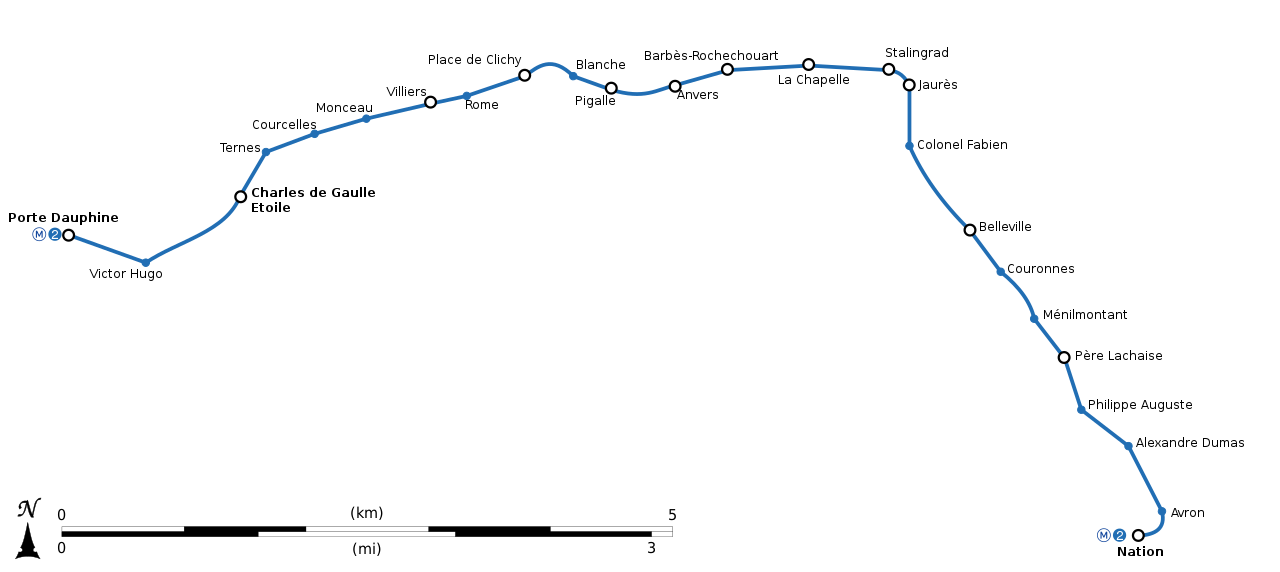
[edit]Line 2 has 25 stations.


Renamed stations
[edit]| Date | Old name | New name |
|---|---|---|
| 15 October 1907 | Boulevard Barbès | Barbès – Rochechouart |
| 1 August 1914 | Rue d'Allemagne | Jaurès |
| 6 October 1942 | Aubervilliers | Aubervilliers – Boulevard de la Villette |
| 19 August 1945 | Combat | Colonel Fabien |
| 10 February 1946 | Aubervilliers – Boulevard de la Villette | Stalingrad |
| 1970 | Étoile | Charles de Gaulle – Étoile |
| 13 September 1970 | Bagnolet | Alexandre Dumas |
Tourism
[edit]Metro line 2 passes near several places of interest :
- Bois de Boulogne at Porte Dauphine
- Avenue Foch, the largest avenue in Paris, and the Arc de Triomphe at Étoile station.
- Parc Monceau.
- Pigalle and the Moulin Rouge.
- Montmartre district at Pigalle and Anvers stations
- The elevated portion of the line between Barbès – Rochechouart and Jaurès stations offers views of Paris.
- Barbès and Belleville and their African and Asian influences.
- Père Lachaise Cemetery.
- Place de la Nation.
Gallery
[edit]- New MF 2000 train used on the route
- Interior of an MF 2000
- Dynamic destination display
- MF 67 leaving Charles De Gaulle–Étoile
- A metro car departing from Jaurès along the Boulevard de la Villette


See also
[edit]


References
[edit]- ^ a b c Hardy, Brian (1993). Paris Metro Handbook. Capital Transport Publishing. ISBN 978-1-85414-154-5. Retrieved 6 June 2025.
External links
[edit]

English
[edit]- RATP English website
- Interactive Map of the RER (from RATP's website)
- Interactive Map of the Paris métro (from RATP's website)
French
[edit]- RATP official website
- Mobidf website, dedicated to the RER (unofficial)[permanent dead link]
- Metro-Pole website, dedicated to Paris public transports (unofficial)
| Métro | |
|---|---|
| RER | |
| Transilien | |
| Tramway | |
 Bus Bus | |
| Others |
|
| Projects | |
| Administration | |
| Finance | |
| Stations |
|


| Stations | |
|---|---|
| National | |
|---|---|
| Geographic | |


| Line 2 | |||||||||||||||||||||||||||||||||||||||||||||||||||||||||||||||||||||||||||||||||||||||||||||||||||||||||||||||||||||||||||||||||||||||||||||||||||||||||||||||||||||||||||||||||||||||||||||||||||||||||||||||||||||||||||||||
|---|---|---|---|---|---|---|---|---|---|---|---|---|---|---|---|---|---|---|---|---|---|---|---|---|---|---|---|---|---|---|---|---|---|---|---|---|---|---|---|---|---|---|---|---|---|---|---|---|---|---|---|---|---|---|---|---|---|---|---|---|---|---|---|---|---|---|---|---|---|---|---|---|---|---|---|---|---|---|---|---|---|---|---|---|---|---|---|---|---|---|---|---|---|---|---|---|---|---|---|---|---|---|---|---|---|---|---|---|---|---|---|---|---|---|---|---|---|---|---|---|---|---|---|---|---|---|---|---|---|---|---|---|---|---|---|---|---|---|---|---|---|---|---|---|---|---|---|---|---|---|---|---|---|---|---|---|---|---|---|---|---|---|---|---|---|---|---|---|---|---|---|---|---|---|---|---|---|---|---|---|---|---|---|---|---|---|---|---|---|---|---|---|---|---|---|---|---|---|---|---|---|---|---|---|---|---|---|---|---|---|---|---|---|---|---|---|---|---|---|---|---|---|---|
  | |||||||||||||||||||||||||||||||||||||||||||||||||||||||||||||||||||||||||||||||||||||||||||||||||||||||||||||||||||||||||||||||||||||||||||||||||||||||||||||||||||||||||||||||||||||||||||||||||||||||||||||||||||||||||||||||
| Overview | |||||||||||||||||||||||||||||||||||||||||||||||||||||||||||||||||||||||||||||||||||||||||||||||||||||||||||||||||||||||||||||||||||||||||||||||||||||||||||||||||||||||||||||||||||||||||||||||||||||||||||||||||||||||||||||||
| Locale | Paris | ||||||||||||||||||||||||||||||||||||||||||||||||||||||||||||||||||||||||||||||||||||||||||||||||||||||||||||||||||||||||||||||||||||||||||||||||||||||||||||||||||||||||||||||||||||||||||||||||||||||||||||||||||||||||||||||
| Termini | Porte Dauphine Nation | ||||||||||||||||||||||||||||||||||||||||||||||||||||||||||||||||||||||||||||||||||||||||||||||||||||||||||||||||||||||||||||||||||||||||||||||||||||||||||||||||||||||||||||||||||||||||||||||||||||||||||||||||||||||||||||||
| Connecting lines |                        | ||||||||||||||||||||||||||||||||||||||||||||||||||||||||||||||||||||||||||||||||||||||||||||||||||||||||||||||||||||||||||||||||||||||||||||||||||||||||||||||||||||||||||||||||||||||||||||||||||||||||||||||||||||||||||||||
| Stations | 25 | ||||||||||||||||||||||||||||||||||||||||||||||||||||||||||||||||||||||||||||||||||||||||||||||||||||||||||||||||||||||||||||||||||||||||||||||||||||||||||||||||||||||||||||||||||||||||||||||||||||||||||||||||||||||||||||||
| Service | |||||||||||||||||||||||||||||||||||||||||||||||||||||||||||||||||||||||||||||||||||||||||||||||||||||||||||||||||||||||||||||||||||||||||||||||||||||||||||||||||||||||||||||||||||||||||||||||||||||||||||||||||||||||||||||||
| System | Paris Métro | ||||||||||||||||||||||||||||||||||||||||||||||||||||||||||||||||||||||||||||||||||||||||||||||||||||||||||||||||||||||||||||||||||||||||||||||||||||||||||||||||||||||||||||||||||||||||||||||||||||||||||||||||||||||||||||||
| Operator(s) | RATP | ||||||||||||||||||||||||||||||||||||||||||||||||||||||||||||||||||||||||||||||||||||||||||||||||||||||||||||||||||||||||||||||||||||||||||||||||||||||||||||||||||||||||||||||||||||||||||||||||||||||||||||||||||||||||||||||
| Rolling stock | MF 01 (45 trains as of 22 March 2011) | ||||||||||||||||||||||||||||||||||||||||||||||||||||||||||||||||||||||||||||||||||||||||||||||||||||||||||||||||||||||||||||||||||||||||||||||||||||||||||||||||||||||||||||||||||||||||||||||||||||||||||||||||||||||||||||||
| Ridership | 88 million(2022) (avg. per year) | ||||||||||||||||||||||||||||||||||||||||||||||||||||||||||||||||||||||||||||||||||||||||||||||||||||||||||||||||||||||||||||||||||||||||||||||||||||||||||||||||||||||||||||||||||||||||||||||||||||||||||||||||||||||||||||||
| History | |||||||||||||||||||||||||||||||||||||||||||||||||||||||||||||||||||||||||||||||||||||||||||||||||||||||||||||||||||||||||||||||||||||||||||||||||||||||||||||||||||||||||||||||||||||||||||||||||||||||||||||||||||||||||||||||
| Opened | 13 December 1900 | ||||||||||||||||||||||||||||||||||||||||||||||||||||||||||||||||||||||||||||||||||||||||||||||||||||||||||||||||||||||||||||||||||||||||||||||||||||||||||||||||||||||||||||||||||||||||||||||||||||||||||||||||||||||||||||||
| Technical | |||||||||||||||||||||||||||||||||||||||||||||||||||||||||||||||||||||||||||||||||||||||||||||||||||||||||||||||||||||||||||||||||||||||||||||||||||||||||||||||||||||||||||||||||||||||||||||||||||||||||||||||||||||||||||||||
| Line length | 12.4 km (7.7 mi) | ||||||||||||||||||||||||||||||||||||||||||||||||||||||||||||||||||||||||||||||||||||||||||||||||||||||||||||||||||||||||||||||||||||||||||||||||||||||||||||||||||||||||||||||||||||||||||||||||||||||||||||||||||||||||||||||
| Track gauge | 1,435 mm (4 ft 8+1⁄2 in) | ||||||||||||||||||||||||||||||||||||||||||||||||||||||||||||||||||||||||||||||||||||||||||||||||||||||||||||||||||||||||||||||||||||||||||||||||||||||||||||||||||||||||||||||||||||||||||||||||||||||||||||||||||||||||||||||
| Electrification | 750 V DC third rail | ||||||||||||||||||||||||||||||||||||||||||||||||||||||||||||||||||||||||||||||||||||||||||||||||||||||||||||||||||||||||||||||||||||||||||||||||||||||||||||||||||||||||||||||||||||||||||||||||||||||||||||||||||||||||||||||
| Conduction system | Conductor (PA) | ||||||||||||||||||||||||||||||||||||||||||||||||||||||||||||||||||||||||||||||||||||||||||||||||||||||||||||||||||||||||||||||||||||||||||||||||||||||||||||||||||||||||||||||||||||||||||||||||||||||||||||||||||||||||||||||
| Average inter-station distance | 513 m (1,683 ft) | ||||||||||||||||||||||||||||||||||||||||||||||||||||||||||||||||||||||||||||||||||||||||||||||||||||||||||||||||||||||||||||||||||||||||||||||||||||||||||||||||||||||||||||||||||||||||||||||||||||||||||||||||||||||||||||||
| |||||||||||||||||||||||||||||||||||||||||||||||||||||||||||||||||||||||||||||||||||||||||||||||||||||||||||||||||||||||||||||||||||||||||||||||||||||||||||||||||||||||||||||||||||||||||||||||||||||||||||||||||||||||||||||||


Paris Métro Line 2 (French: Ligne 2 du métro de Paris) is one of the sixteen currently open lines of the Paris Métro. Situated almost entirely above the former customs barrier around the capital (Boulevards extérieurs), it runs in a semicircle in the north of Paris.
As its name suggests, Line 2 was the second line of the Métro network to open, with the first section put into service on 13 December 1900, as a branch of the Line 1. It adopted its current configuration on 2 April 1903, running between Porte Dauphine and Nation. There have been no changes in its layout since then.
At 12.3 km (7.6 mi) in length,[1]: 12 it is the ninth-busiest line of the system, with 105.2 million riders in 2017. Slightly over 2 km (1.2 mi) of the line is built on an elevated viaduct with four aerial stations. In 1903, it was the location of the worst incident in the history of the Paris Métro, the fire at Couronnes.
History
Chronology
- 13 December 1900: The first portion of Line 2 Nord was opened between Porte Dauphine and Étoile.[1]: 12
- 7 October 1902: The line was extended from Étoile to Anvers.
- 31 January 1903: The line was extended from Anvers to Bagnolet.
- 2 April 1903: The line was extended from Bagnolet to Nation.
- 10 August 1903: A short circuit on a train caused a disastrous fire that killed 84 people at Couronnes and Ménilmontant stations, leading to the adoption of massive safety improvements such as separation of power and lighting circuits within the tunnels, as well as a mandatory minimum of two passenger exits per station across the entire network.
- 14 October 1907: Line 2 Nord was renamed Line 2.[1]: 17
Works
On 30 March 1898 a déclaration d'utilité publique was published, recognizing the public benefit of the first six planned lines of the Paris Métro. In response, the city began rapidly constructing the first line in hopes of opening it in time for the 1900 World's Fair. During the first stage of development, three lines designated A, B, and C were planned for construction:
- A: from Porte de Vincennes to Porte Dauphine.
- B: circular route along the old city walls.
- C: from Porte Maillot to Menilmontant, using line B tracks from Étoile to Batignolles.
However, after a detailed traffic study was conducted, changes were proposed to the tracks lying west of Étoile: the segment from Étoile to Porte Maillot of Line C would be integrated into Line A; Line C would pick up the segment from Étoile to Porte Dauphine. This change allowed trains on Line B to stop at Porte Dauphine. Porte Dauphine was thus designated the terminus and origin of Line B.
Shortly thereafter, Line B was split into two lines in hopes of simplifying its use. The section from Porte Dauphine to Nation was designated as Line 2 North, while the remaining section from Nation to Étoile was designated as Line 2 South. Line 2 South would eventually become a part of Line 5, then of Line 6.
The first 1,600 metres (0.99 mi) section of Line 2 was constructed at the same time as Line 1, opening only a little later on 3 December 1900. This section consisted of three stations (Porte Dauphine, Victor Hugo and Étoile) and was circulated by rolling stock consisting of three cars each. At Étoile, trains reversed direction via a track transfer (due to it serving as only a temporary terminus), while at Porte Dauphine and Nation direction was reversed using a turnaround loop : A particularity only Lines 2 and 6 still use today.
Line 2 is also the only line of the network to employ a level crossing, despite it not being present on the passenger section of the route : at the entrance of its depot at Charonne.
Map and stations
Line 2 has 25 stations.

Renamed stations
| Date | Old name | New name |
|---|---|---|
| 15 October 1907 | Boulevard Barbès | Barbès – Rochechouart |
| 1 August 1914 | Rue d'Allemagne | Jaurès |
| 6 October 1942 | Aubervilliers | Aubervilliers – Boulevard de la Villette |
| 19 August 1945 | Combat | Colonel Fabien |
| 10 February 1946 | Aubervilliers – Boulevard de la Villette | Stalingrad |
| 1970 | Étoile | Charles de Gaulle – Étoile |
| 13 September 1970 | Bagnolet | Alexandre Dumas |
Tourism
Metro line 2 passes near several places of interest :
- Bois de Boulogne at Porte Dauphine
- Avenue Foch, the largest avenue in Paris, and the Arc de Triomphe at Étoile station.
- Parc Monceau.
- Pigalle and the Moulin Rouge.
- Montmartre district at Pigalle and Anvers stations
- The elevated portion of the line between Barbès – Rochechouart and Jaurès stations offers views of Paris.
- Barbès and Belleville and their African and Asian influences.
- Père Lachaise Cemetery.
- Place de la Nation.
Gallery
- New MF 2000 train used on the route
- Interior of an MF 2000
- Dynamic destination display
- MF 67 leaving Charles De Gaulle–Étoile
- A metro car departing from Jaurès along the Boulevard de la Villette
See also



References
- ^ a b c Hardy, Brian (1993). Paris Metro Handbook. Capital Transport Publishing. ISBN 978-1-85414-154-5. Retrieved 6 June 2025.
External links


English
- RATP English website
- Interactive Map of the RER (from RATP's website)
- Interactive Map of the Paris métro (from RATP's website)
French
- RATP official website
- Mobidf website, dedicated to the RER (unofficial)[permanent dead link]
- Metro-Pole website, dedicated to Paris public transports (unofficial)
| Métro | |
|---|---|
| RER | |
| Transilien | |
| Tramway | |
 Bus Bus | |
| Others |
|
| Projects | |
| Administration | |
| Finance | |
| Stations |
|


