Federal Senate (Brazil)
Jump to content


Federal Senate Senado Federal | |
|---|---|
| 57th Legislature of the National Congress | |
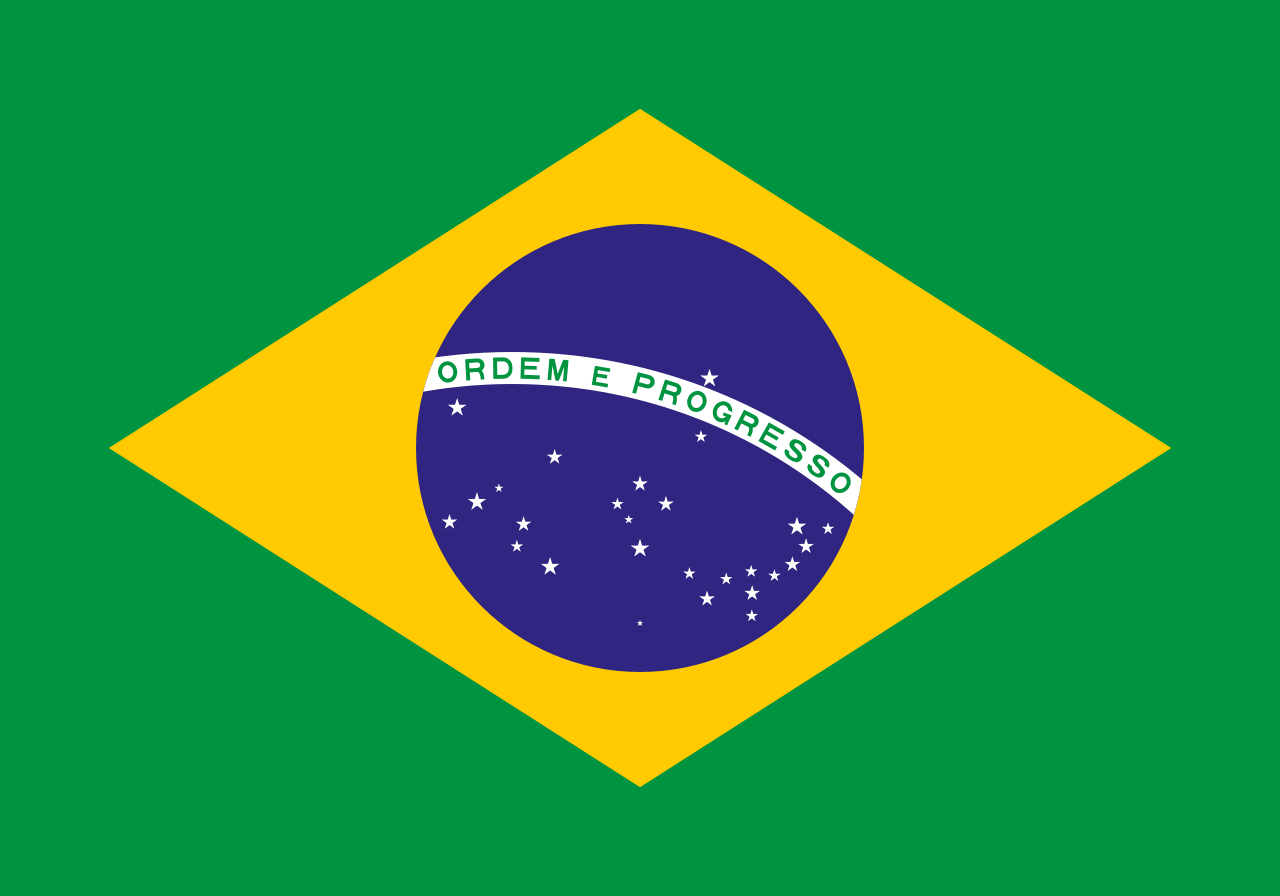
 Flag of the Federal Senate | |
| Type | |
| Type | |
Term limits | None |
| History | |
| Founded | 6 May 1826 |
New session started | 1 February 2025 |
| Leadership | |
Government Leader | |
Majority Leader | |
Opposition Leader | |
Minority Leader | |
Female Caucus Leader | |
| Structure | |
| Seats | 81 |
 | |
Political groups | Government (41) PSD (13) MDB (12) PT (9) PSB (4) PDT (3) Opposition (23) PL (15) Podemos (4) PSDB (3) Independent (17)
Republicans (4) |
Length of term | 8 years |
| Salary | R$ 33,763.00 (and benefits)[1] |
| Elections | |
| Plurality voting, alternating every four years between single-member elections (FPTP) and dual-member elections (block voting) | |
Last election | 2 October 2022 |
Next election | 4 October 2026 |
| Meeting place | |
.jpg/1280px-Plen%C3%A1rio_do_Congresso_(35268270365).jpg) | |
| Senate plenary chamber National Congress Palace Brasília, Federal District, Brazil | |
| Website | |
| www | |
| This article is part of a series on the |
| Politics of Brazil |
|---|
 |
|


The Federal Senate (Portuguese: Senado Federal) is the upper house of the National Congress of Brazil. When created under the Imperial Constitution in 1824, it was based on the House of Lords of the British Parliament, but since the Proclamation of the Republic in 1889 and under the first republican Constitution the Federal Senate has resembled the United States Senate.
The current president of the Federal Senate is Davi Alcolumbre, a member of UNIÃO from Amapá. He was re-elected in February 2025 for his two-year non-consecutive term, as he had already led the Senate between 2019-21 during Bolsonaro's government.
Membership
[edit]The Senate has 81 members, serving an eight-year term of office. There are three senators from each of the country's 27 federative units, the Federal District and the 26 states. Elections are staggered so that either one-third or two-thirds of senators in each federative unit are up for election every four years. The most recent election took place in 2022, where one-third of the Senate was elected.
Elections are held under the first-past-the-post and block voting systems. In years when a third of members are up for election, voters can cast only one vote and the candidate who receives a plurality of votes within their state is elected. In years when two-thirds of members are up for election, voters can cast two votes. People can not vote for the same candidate twice, but each party can field up to two candidates in each state. The two highest-placed candidates in each state are elected.
History
[edit]The Federal Senate of Brazil was established as the Imperial Senate by the Constitution of 1824, first enacted after the Declaration of Independence. It was modelled on the House of Lords of the British Parliament.[2]
Following independence, in 1822, Emperor Pedro I ordered the convocation of a Assembleia Geral Constituinte e Legislativa (Legislative and Constituent General Assembly) to draft the country's first Constitution. Following several disagreements with the elected deputies (which included representatives from present-day Uruguay, then part of the Brazilian Empire under the name of Província Cisplatina), the Emperor dissolved the Assembly. In 1824, Pedro I implemented the first Constitution which established a legislative branch with the Chamber of Deputies as the lower house, and the Senate as an upper house.
The first configuration of the Senate was a consulting body to the Emperor. Membership was for life and it was a place of great prestige, to which only a small part of the population could aspire. The original Senate had 50 members, representing all of the Empire's provinces, each with a number of senators proportional to its population. In addition to these elected senators, daughters and sons of the Emperor aged at least 25 were senators by right.
The elected members of the Senate had to be at least 40 years old and have an annual income of 800,000 contos-de-réis, which limited candidates to wealthy citizens. Voters also faced an income qualification. Voting in an election for the Senate was limited to male citizens with an annual income of at least 200,000 contos-de-réis. Those who qualified for this did not vote directly for senators; instead, they voted for candidates to be Senate electors. To be a Senate elector required an annual income of 400,000 contos-de-réis. Once elected, these electors would then vote for senator. The election itself would not result in a winner automatically. The three candidates receiving the most votes would make up what was called a triple list, from which the Emperor would select one individual that would be considered elected. The Emperor usually chose the candidate with the most votes, but it was within his discretion to select whichever of the three individuals listed.
Following the adoption of the 1824 Constitution, the first session of the Senate took place in May 1826. The Emperor had repeatedly delayed calling the first election, which had led to accusations that he would attempt to establish an absolutist government.
The Proclamation of the Republic in 1889 ended the Brazilian Empire in favor of the First Republic. The 1891 Constitution was then adopted, transforming Brazil's provinces into states and the Senate into an elected body. This was retained under later constitutions, including the current 1988 Constitution. Now known as the Federal Senate, it resembles the United States Senate in that each state has the same number of senators.
- Palácio Conde dos Arcos, seat of the Imperial Senate in Rio de Janeiro, then Brazil's capital.
 The Imperial Senate in session, 1888
- Palácio Monroe, second seat of the Senate.
- The Federal Senate in the National Congress building in Brasília, capital city of Brazil since 1960.
- Exterior view of the Senate chamber.


.jpg/1280px-Pal%C3%A1cio_Monroe_(cart%C3%A3o-postal_2).jpg)
.jpg/1280px-Plen%C3%A1rio_do_Congresso_(14651661588).jpg)

Presiding Board
[edit]The current composition of the Mesa Diretora (Presiding Board) of the Federal Senate is as follows:
| Office | Name | Party | State |
|---|---|---|---|
| President | Davi Alcolumbre | UNIÃO | Amapá |
| 1st Vice-President | Eduardo Gomes | PL | Tocantins |
| 2nd Vice-President | Humberto Costa | PT | Pernambuco |
| 1st Secretary | Daniella Ribeiro | PP | Paraíba |
| 2nd Secretary | Confúcio Moura | MDB | Rondônia |
| 3rd Secretary | Ana Paula Lobato | PDT | Maranhão |
| 4th Secretary | Laercio Oliveira | PP | Sergipe |
| 1st Substitute | Chico Rodrigues | PSB | Roraima |
| 2nd Substitute | Mecias de Jesus | Republicans | Roraima |
| 3rd Substitute | Styvenson Valentim | PSDB | Rio Grande do Norte |
| 4th Substitute | Soraya Thronicke | Podemos | Mato Grosso do Sul |
Composition
[edit]The current composition[3] of the Senate (57th Legislature) is as follows:
| Party | Floor leader | Seats | |
|---|---|---|---|
| Liberal Party | Carlos Portinho | 14 | |
| Social Democratic Party | Omar Aziz | 14 | |
| Brazilian Democratic Movement | Eduardo Braga | 11 | |
| Workers' Party | Rogério Carvalho | 9 | |
| Brazil Union | Efraim Filho | 7 | |
| Progressistas | Tereza Cristina | 7 | |
| Brazilian Socialist Party | Cid Gomes | 4 | |
| Podemos | Carlos Viana | 4 | |
| Republicans | Mecias de Jesus | 4 | |
| Brazilian Social Democracy Party | Plínio Valério | 3 | |
| Democratic Labour Party | Weverton Rocha | 3 | |
| New Party | Eduardo Girão | 1 | |
| Total | 81 | ||
Current senators
[edit]Standing committees
[edit]| Committee | Chair |
|---|---|
| Agriculture and Agrarian Reform | Zequinha Marinho (PODE-PA) |
| Communication and Digital Law | TBA |
| Constitution, Justice and Citizenship | Otto Alencar (PSD-BA) |
| Defense of Democracy | TBA |
| Economic Affairs | Renan Calheiros (MDB-AL) |
| Education and Culture | Teresa Leitao (PT-PE) |
| Environment | Fabiano Contarato (PT-ES) |
| Ethics and Parliamentary Decorum | TBA |
| External Relations and National Defence | Nelson Trad Filho (PSD-MS) |
| Human Rights and Participative Legislation | Damares Alves (Republicans-DF) |
| Infrastructure Services | Marcos Rogério (PL-RO) |
| Public Security | Flávio Bolsonaro (PL-RJ) |
| Regional Development and Tourism | Dorinha Seabra (UNIÃO-TO) |
| Science, Technology, Innovation and Computing | Flávio Arns (PSB-PR) |
| Social Affairs | Marcelo Castro (MDB-PI) |
| Sports | Leila Barros (PDT-DF) |
| Transparency, Governance, Inspection and Control and Consumer Defence | Hiran Gonçalves (PP-RR) |
See also
[edit]Notes
[edit]References
[edit]- ^ Santos, Larissa (11 January 2021). "Saiba quanto ganham os presidentes do Senado e da Câmara". CNN Brasil (in Brazilian Portuguese). Retrieved 28 January 2022.
- ^ "Senado Federal completa hoje 185 anos". R7 (in Portuguese). 6 May 2011. Retrieved 22 May 2012.
O Senado Federal foi criado com a primeira Constituição do Império, outorgada em 1824, inspirado, primeiramente, na Câmara dos Lordes da Grã-Bretanha. Sua primeira reunião ocorreu em 6 de maio de 1826.
. - ^ "Lideranças Parlamentares" (in Brazilian Portuguese). Senado Federal. Retrieved 17 March 2017.
External links
[edit]- Official website of the Brazilian Senate (archived 15 June 2014)
- (in Portuguese) Photos 360° of the Brazilian Senate
- List of all Brazilian senators (1826–2011) (in Portuguese)
| International | |
|---|---|
| National | |

Federal Senate Senado Federal | |
|---|---|
| 57th Legislature of the National Congress | |
 Flag of the Federal Senate | |
| Type | |
| Type | |
Term limits | None |
| History | |
| Founded | 6 May 1826 |
New session started | 1 February 2025 |
| Leadership | |
Government Leader | |
Majority Leader | |
Opposition Leader | |
Minority Leader | |
Female Caucus Leader | |
| Structure | |
| Seats | 81 |
 | |
Political groups | Government (41) PSD (13) MDB (12) PT (9) PSB (4) PDT (3) Opposition (23) PL (15) Podemos (4) PSDB (3) Independent (17)
Republicans (4) |
Length of term | 8 years |
| Salary | R$ 33,763.00 (and benefits)[1] |
| Elections | |
| Plurality voting, alternating every four years between single-member elections (FPTP) and dual-member elections (block voting) | |
Last election | 2 October 2022 |
Next election | 4 October 2026 |
| Meeting place | |
| |
| Senate plenary chamber National Congress Palace Brasília, Federal District, Brazil | |
| Website | |
| www.senado.leg.br | |
| This article is part of a series on the |
| Politics of Brazil |
|---|
 |
|


The Federal Senate (Portuguese: Senado Federal) is the upper house of the National Congress of Brazil. When created under the Imperial Constitution in 1824, it was based on the House of Lords of the British Parliament, but since the Proclamation of the Republic in 1889 and under the first republican Constitution the Federal Senate has resembled the United States Senate.
The current president of the Federal Senate is Davi Alcolumbre, a member of UNIÃO from Amapá. He was re-elected in February 2025 for his two-year non-consecutive term, as he had already led the Senate between 2019-21 during Bolsonaro's government.
Membership
The Senate has 81 members, serving an eight-year term of office. There are three senators from each of the country's 27 federative units, the Federal District and the 26 states. Elections are staggered so that either one-third or two-thirds of senators in each federative unit are up for election every four years. The most recent election took place in 2022, where one-third of the Senate was elected.
Elections are held under the first-past-the-post and block voting systems. In years when a third of members are up for election, voters can cast only one vote and the candidate who receives a plurality of votes within their state is elected. In years when two-thirds of members are up for election, voters can cast two votes. People can not vote for the same candidate twice, but each party can field up to two candidates in each state. The two highest-placed candidates in each state are elected.
History
The Federal Senate of Brazil was established as the Imperial Senate by the Constitution of 1824, first enacted after the Declaration of Independence. It was modelled on the House of Lords of the British Parliament.[2]
Following independence, in 1822, Emperor Pedro I ordered the convocation of a Assembleia Geral Constituinte e Legislativa (Legislative and Constituent General Assembly) to draft the country's first Constitution. Following several disagreements with the elected deputies (which included representatives from present-day Uruguay, then part of the Brazilian Empire under the name of Província Cisplatina), the Emperor dissolved the Assembly. In 1824, Pedro I implemented the first Constitution which established a legislative branch with the Chamber of Deputies as the lower house, and the Senate as an upper house.
The first configuration of the Senate was a consulting body to the Emperor. Membership was for life and it was a place of great prestige, to which only a small part of the population could aspire. The original Senate had 50 members, representing all of the Empire's provinces, each with a number of senators proportional to its population. In addition to these elected senators, daughters and sons of the Emperor aged at least 25 were senators by right.
The elected members of the Senate had to be at least 40 years old and have an annual income of 800,000 contos-de-réis, which limited candidates to wealthy citizens. Voters also faced an income qualification. Voting in an election for the Senate was limited to male citizens with an annual income of at least 200,000 contos-de-réis. Those who qualified for this did not vote directly for senators; instead, they voted for candidates to be Senate electors. To be a Senate elector required an annual income of 400,000 contos-de-réis. Once elected, these electors would then vote for senator. The election itself would not result in a winner automatically. The three candidates receiving the most votes would make up what was called a triple list, from which the Emperor would select one individual that would be considered elected. The Emperor usually chose the candidate with the most votes, but it was within his discretion to select whichever of the three individuals listed.
Following the adoption of the 1824 Constitution, the first session of the Senate took place in May 1826. The Emperor had repeatedly delayed calling the first election, which had led to accusations that he would attempt to establish an absolutist government.
The Proclamation of the Republic in 1889 ended the Brazilian Empire in favor of the First Republic. The 1891 Constitution was then adopted, transforming Brazil's provinces into states and the Senate into an elected body. This was retained under later constitutions, including the current 1988 Constitution. Now known as the Federal Senate, it resembles the United States Senate in that each state has the same number of senators.
- Palácio Conde dos Arcos, seat of the Imperial Senate in Rio de Janeiro, then Brazil's capital.
- The Imperial Senate in session, 1888
- Palácio Monroe, second seat of the Senate.
- The Federal Senate in the National Congress building in Brasília, capital city of Brazil since 1960.
- Exterior view of the Senate chamber.

.jpg)

.jpg)
.jpg)

Presiding Board
The current composition of the Mesa Diretora (Presiding Board) of the Federal Senate is as follows:
| Office | Name | Party | State |
|---|---|---|---|
| President | Davi Alcolumbre | UNIÃO | Amapá |
| 1st Vice-President | Eduardo Gomes | PL | Tocantins |
| 2nd Vice-President | Humberto Costa | PT | Pernambuco |
| 1st Secretary | Daniella Ribeiro | PP | Paraíba |
| 2nd Secretary | Confúcio Moura | MDB | Rondônia |
| 3rd Secretary | Ana Paula Lobato | PDT | Maranhão |
| 4th Secretary | Laercio Oliveira | PP | Sergipe |
| 1st Substitute | Chico Rodrigues | PSB | Roraima |
| 2nd Substitute | Mecias de Jesus | Republicans | Roraima |
| 3rd Substitute | Styvenson Valentim | PSDB | Rio Grande do Norte |
| 4th Substitute | Soraya Thronicke | Podemos | Mato Grosso do Sul |
Composition
The current composition[3] of the Senate (57th Legislature) is as follows:
| Party | Floor leader | Seats | |
|---|---|---|---|
| Liberal Party | Carlos Portinho | 14 | |
| Social Democratic Party | Omar Aziz | 14 | |
| Brazilian Democratic Movement | Eduardo Braga | 11 | |
| Workers' Party | Rogério Carvalho | 9 | |
| Brazil Union | Efraim Filho | 7 | |
| Progressistas | Tereza Cristina | 7 | |
| Brazilian Socialist Party | Cid Gomes | 4 | |
| Podemos | Carlos Viana | 4 | |
| Republicans | Mecias de Jesus | 4 | |
| Brazilian Social Democracy Party | Plínio Valério | 3 | |
| Democratic Labour Party | Weverton Rocha | 3 | |
| New Party | Eduardo Girão | 1 | |
| Total | 81 | ||
Current senators
Standing committees
| Committee | Chair |
|---|---|
| Agriculture and Agrarian Reform | Zequinha Marinho (PODE-PA) |
| Communication and Digital Law | TBA |
| Constitution, Justice and Citizenship | Otto Alencar (PSD-BA) |
| Defense of Democracy | TBA |
| Economic Affairs | Renan Calheiros (MDB-AL) |
| Education and Culture | Teresa Leitao (PT-PE) |
| Environment | Fabiano Contarato (PT-ES) |
| Ethics and Parliamentary Decorum | TBA |
| External Relations and National Defence | Nelson Trad Filho (PSD-MS) |
| Human Rights and Participative Legislation | Damares Alves (Republicans-DF) |
| Infrastructure Services | Marcos Rogério (PL-RO) |
| Public Security | Flávio Bolsonaro (PL-RJ) |
| Regional Development and Tourism | Dorinha Seabra (UNIÃO-TO) |
| Science, Technology, Innovation and Computing | Flávio Arns (PSB-PR) |
| Social Affairs | Marcelo Castro (MDB-PI) |
| Sports | Leila Barros (PDT-DF) |
| Transparency, Governance, Inspection and Control and Consumer Defence | Hiran Gonçalves (PP-RR) |
See also
Notes
References
- ^ Santos, Larissa (11 January 2021). "Saiba quanto ganham os presidentes do Senado e da Câmara". CNN Brasil (in Brazilian Portuguese). Retrieved 28 January 2022.
- ^ "Senado Federal completa hoje 185 anos". R7 (in Portuguese). 6 May 2011. Retrieved 22 May 2012.
O Senado Federal foi criado com a primeira Constituição do Império, outorgada em 1824, inspirado, primeiramente, na Câmara dos Lordes da Grã-Bretanha. Sua primeira reunião ocorreu em 6 de maio de 1826.
. - ^ "Lideranças Parlamentares" (in Brazilian Portuguese). Senado Federal. Retrieved 17 March 2017.
External links
- Official website of the Brazilian Senate (archived 15 June 2014)
- (in Portuguese) Photos 360° of the Brazilian Senate
- List of all Brazilian senators (1826–2011) (in Portuguese)
15°47′59″S 47°51′51″W / 15.79972°S 47.86417°W / -15.79972; -47.86417