土星の衛星の一つであるエンケラドゥスは、太陽系の中でも特に注目を集める天体です。一見するとただの白い氷の塊に見えますが、その内部には広大な海が隠されており、地球外生命が存在しうる条件を備えていると考えられています。
主要な事実(Key Facts)
- 発見: 1789年にウィリアム・ハーシェルによって発見されました。
- 特徴: 表面が非常に明るい氷で覆われており、高い反射率(アルベド)を持ちます。
- 内部構造: 氷の殻の下に、全球的な液体の水による海洋が存在します。
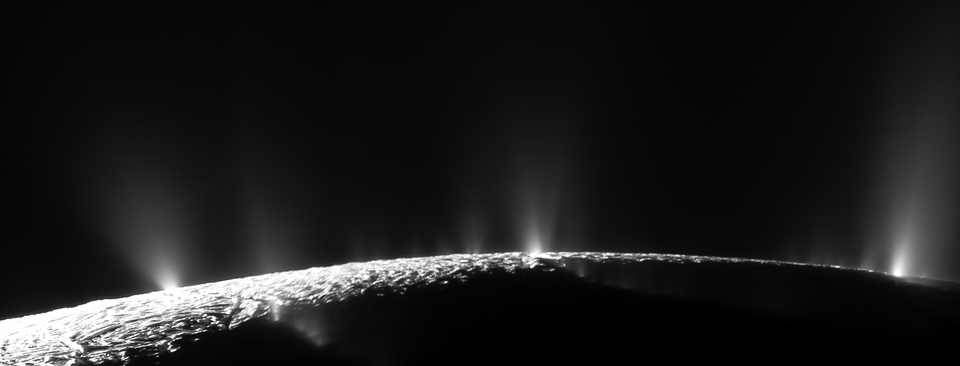
- 活動: 南極付近から水蒸気や氷の粒子が宇宙空間へ噴出しています。
- 生命の可能性: 熱水噴出孔の存在が示唆されており、エネルギー源と有機物が揃っています。
発見の歴史と名称の由来
この小さな衛星を最初に捉えたのは、1789年8月28日のウィリアム・ハーシェルでした。

その後、土星の衛星にギリシャ神話のティタンや巨人の名を付けることを提案したジョン・ハーシェルにより、現在の「エンケラドゥス」という名が定着しました。

物理的特性と軌道
エンケラドゥスは半径約252kmという小規模な衛星ですが、その密度(約1.61 g/cm³)から、岩石の核と氷の層で構成されていることが分かっています。土星の赤道面に近いほぼ円形の軌道を周回しており、その周期は約1.37日です。
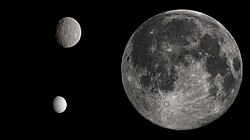
サイズを比較すると、地球の月や小惑星セレスよりも遥かに小さいことが分かります。
内部海とエネルギー源
カッシーニ探査機の観測により、氷の地殻の下に液体状の水で満たされた内部海が存在することが確実視されています。この海は衛星全体に広がっており、岩石質の核と直接接していると考えられています。
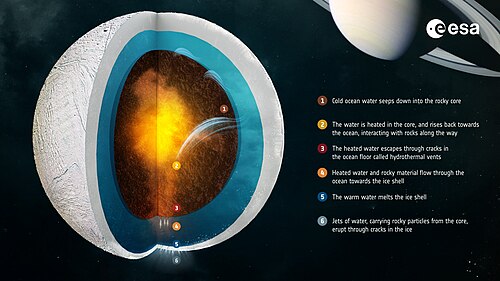
この海を液体に保っているのは、土星の強力な重力によって衛星が歪められることで発生する「潮汐加熱」や、内部の放射性崩壊による熱であると推測されています。特に海底では、地球の深海に見られるような熱水活動が起きている可能性が高く、これが生命維持に必要な化学エネルギーを供給していると考えられています。
![An artist's impression of possible hydrothermal activity on Enceladus's ocean floor[33]](/images/91/59/915951c2b5dd9633f28ca61ba3cb48deabcbbe854f31ab138cade8017f8f75b2.jpg)
ダイナミックな表面地質と噴出 plume
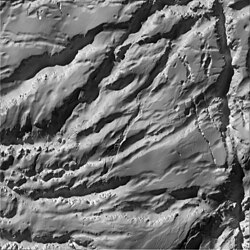
エンケラドゥスの表面は、非常に高い反射率を持つ新鮮な雪のような氷で覆われています。特に南極地域には「タイガーストライプ」と呼ばれる特徴的な平行な裂け目(断層)が集中しています。
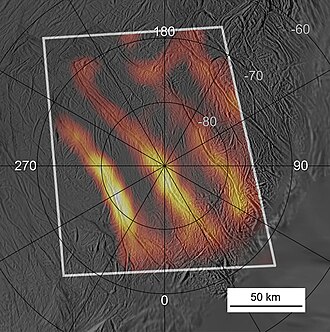
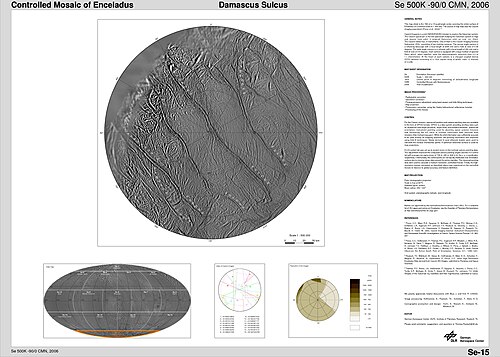
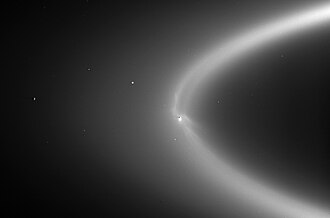
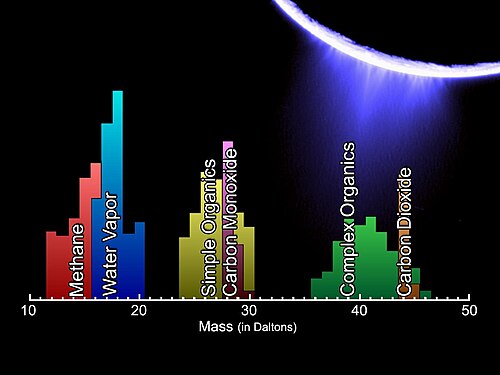
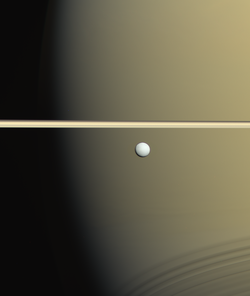
これらの裂け目からは、水蒸気、氷の粒子、そして有機化合物を含む巨大な噴煙(プルーム)が絶えず宇宙へ放出されています。この物質の一部は土星のE環を形成する供給源となっています。
表面には、滑らかな平原や、衝突によってできたクレーターも点在しています。例えば、アル=ハッダールやシャハラザードといったクレーターが詳細に観測されています。
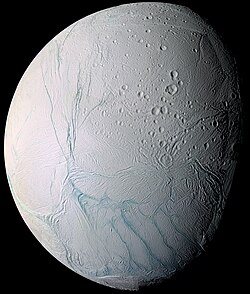
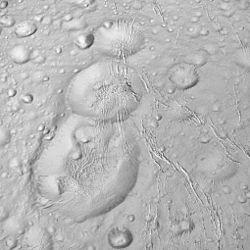
また、地殻の変動を示す複雑な尾根状の構造も確認されており、内部の活動が表面にまで影響を与えていることが分かります。
探査の歩みと今後の展望
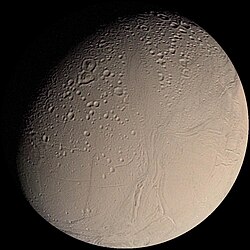
初期のボイジャー計画による断片的な観測から始まり、2004年以降のカッシーニ探査機による詳細な調査で、エンケラドゥスの正体が「海洋世界」であることが明らかになりました。
現在、NASAやESA(欧州宇宙機関)を含む多くの機関が、生命の痕跡を直接探るための着陸機や周回機のミッションを検討しています。特に、噴出するプルームを直接サンプリングすることで、内部海に生命が存在するかを検証することが期待されています。
| 項目 | 数値・詳細 |
|---|---|
| 平均半径 | 約 252.1 km |
| 平均密度 | 1.6097 g/cm³ |
| 表面温度(平均) | 約 −198 °C (75 K) |
| 主な構成成分 | 水氷、岩石、有機物 |
| 大気組成 | 水蒸気 (91%)、窒素 (4%)、二酸化炭素 (3.2%) など |
Frequently Asked Questions
エンケラドゥスに生命がいると言われる理由は?
液体の水、生命に必要な有機物、そして熱水活動によるエネルギー源という、生命存在の3大条件が揃っている可能性が非常に高いためです。
「タイガーストライプ」とは何ですか?
南極地域に見られる4本の巨大な平行な裂け目のことで、ここから内部海の水が宇宙空間へ噴出しています。
表面の温度はどのくらいですか?
極めて低温で、平均は約−198℃です。しかし、内部では潮汐加熱によって水が液体状態で維持されています。
カッシーニ探査機は何を発見しましたか?
南極からの水蒸気プルームの発見、およびその下に全球的な内部海が存在することを科学的に裏付けました。
土星の環とどのような関係がありますか?
エンケラドゥスから噴出した氷の粒子が、土星の最も外側の環である「E環」の主要な材料となっていると考えられています。
References
- Photograph of Enceladus, taken by the narrow-angle camera of the aboard , during the spacecraft's October 28, 2015, flyby. It shows the younger terrain of and , populated with many grooves () and depressions (). Older, cratered terrain can be seen towards Enceladus's north pole. The prominent feature visible near the south pole is Cashmere Sulci.
- Without samples to provide absolute age determinations, crater counting is currently the only method for determining surface age on most planetary surfaces. Unfortunately, there is currently disagreement in the scientific community regarding the flux of impactors in the outer Solar System. These competing models can significantly alter the age estimate even with the same crater counts. For the sake of completeness, both age estimates from are provided.
📸 フォトギャラリー