This harpsichord is the work of two celebrated makers: originally constructed by Andreas Ruckers in Antwerp (1646), it was later remodeled and expanded in a process called grand ravalement by Pascal Taskin in Paris (1780).
← ホームへ戻る

チェンバロの歴史と構造撥弦鍵盤楽器の魅力とメカニズム

チェンバロは、鍵盤を押すことで内部の弦を「弾く(撥弦)」ことで音を出す鍵盤楽器です。ピアノのようにハンマーで弦を叩くのではなく、小さなピック(プレクトラム)で弦を弾くため、独特の鋭く澄んだ音色が特徴です。ルネサンス期からバロック期にかけて、独奏楽器としてだけでなく、アンサンブルの土台となる通奏低音の中心的役割を担いました。

18世紀後半になると、音量の強弱を自在に操れるピアノ(フォルテピアノ)の普及により、次第に舞台から姿を消しましたが、20世紀に入ると古楽の復興や現代音楽への導入により、再び注目を集めるようになりました。

Key Facts

  • 発音原理: 鍵盤操作でジャックを押し上げ、プレクトラムで弦を弾く撥弦方式。
  • 音量特性: 鍵盤を叩く強さに関わらず、音量は一定である。
  • 主要な時代: ルネサンスからバロック時代に全盛を極めた。
  • 多様な形式: 小型なヴィージナルやスピネット、垂直型のクラヴィシテリウムなどの派生形がある。
  • 現代の傾向: 18世紀の伝統的な製作手法に基づいた「歴史的復元」モデルが主流。

チェンバロの構造と発音メカニズム

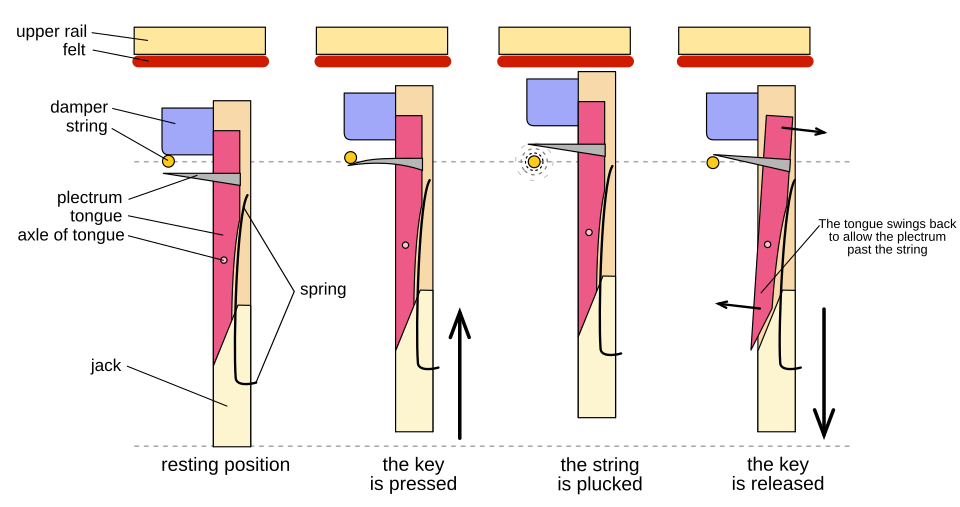
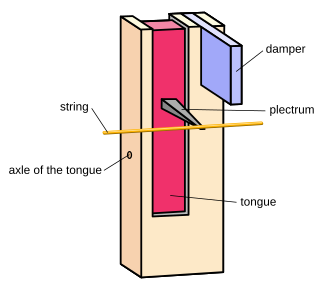
チェンバロの心臓部は、鍵盤と連動して上下するジャックと呼ばれる木製の細い部品です。このジャックの先端には、かつては鳥の羽(クイル)で作られ、現在はプラスチック製が一般的であるプレクトラムが取り付けられています。鍵盤を押すとジャックが上昇し、プレクトラムが弦を弾いて振動させます。
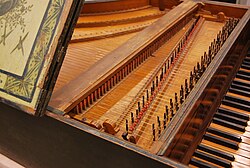
Harpsichord by Christian Zell, at Museu de la Música de Barcelona. From upper left to lower right: a bridge (supporting the far ends of the strings), the jack rail with the action (jacks) underneath, two nuts (supporting the closer ends of the strings), interleaved with two rows of tuning pins, and finally the keyboard. As with all harpsichords, the action itself is mostly hidden by the jack rail when the instrument is being played; only by removing the jack rail (or indeed, by extracting a jack) can the details of the action be observed.
Figure 2: upper part of a jack
Figure 3: how the harpsichord action works

弦の振動は、木製のケースに固定された響板(サウンドボード)に伝わり、増幅されることで豊かな音となって響き渡ります。この響板の設計や材質が、楽器全体の音色を決定づける重要な要素となります。
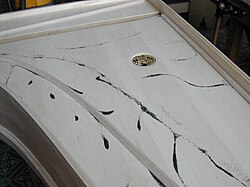
Sound board of a harpsichord with Chladni patterns
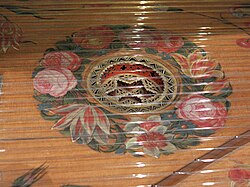
Detail of the harpsichord by Karl Conrad Fleischer; Hamburg, 1720 in Museu de la Música de Barcelona. A decorative rose descends below the soundboard in which it is mounted; the soundboard itself is adorned with floral painting around the rose. The bridge is at lower right.

複数の弦セット(合唱)とマニュアル

多くのチェンバロには、異なる音域や音色を持つ複数の弦のセット(合唱/choir)が備わっています。例えば、標準的な音高の「8フィート(8')」、1オクターブ高い「4フィート(4')」などがあり、これらをレジスターと呼ばれる切り替え装置で選択します。
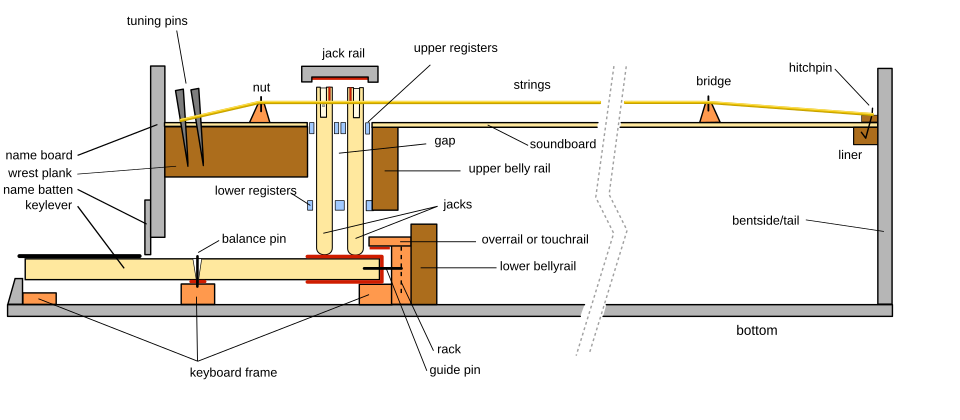
Figure 1: schematic view of a 2 × 8' single manual harpsichord

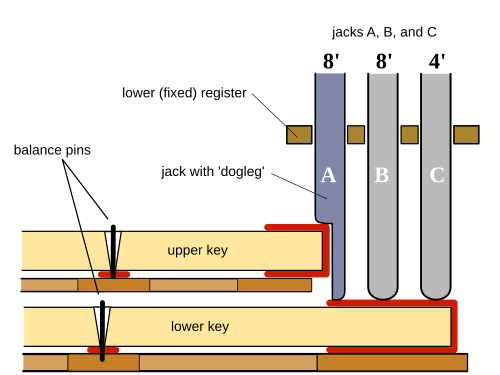
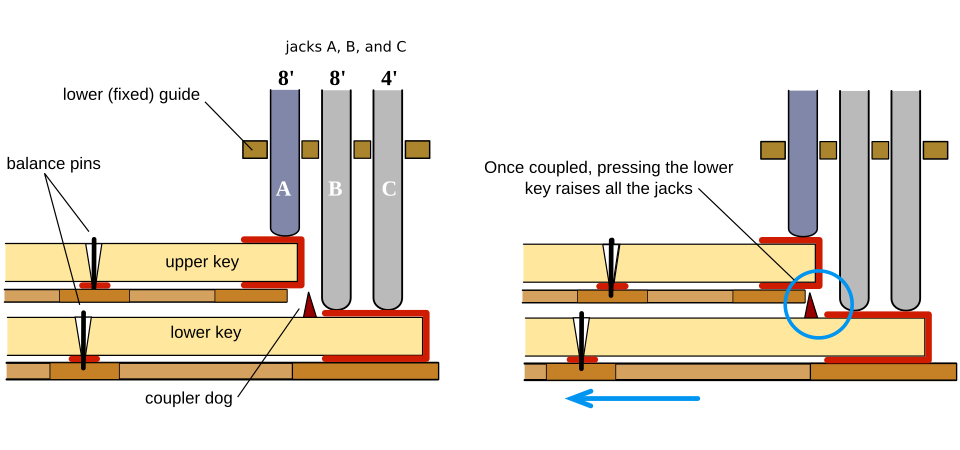
さらに高度な楽器では、2段の鍵盤(マニュアル)が搭載されています。これにより、異なる弦セットを同時に使い分けたり、カプラーという機構を用いて上の鍵盤で下の鍵盤の弦も同時に鳴らしたりすることが可能です。フランス式の「プッシュ・カプラー」やイギリス式の「ドッグレッグ・ジャック」など、地域によって異なる洗練された機構が開発されました。
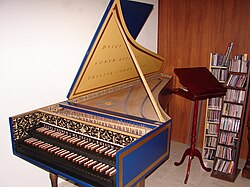
A two-manual harpsichord
Figure 4. French shove coupler. To the left: uncoupled keyboards. The depressed upper key lifts the jack A upwards. The depressed lower key lifts jacks B and C. To the right: The upper keyboard is coupled to the lower one by pulling the latter. The depressed upper key lifts the jack A upwards. The depressed lower key lifts jacks A, B and C.
Figure 5. Dogleg jack, English coupler system. When depressed, the upper key lifts the "dogleg" jack (jack A) upwards. The lower key lifts all three jacks A, B, and C.

歴史的変遷と地域的な発展

チェンバロは14世紀後半に誕生したと考えられています。初期のイタリア製は、薄いケースと低張力の真鍮弦を用いた軽量な設計が特徴でした。一方、16世紀後半のフランドル地方(現在のベルギー・オランダ)では、ルッカーズ家を中心に、より堅牢な構造と高張力の鋼弦を用いた、パワフルな音色の楽器が開発されました。
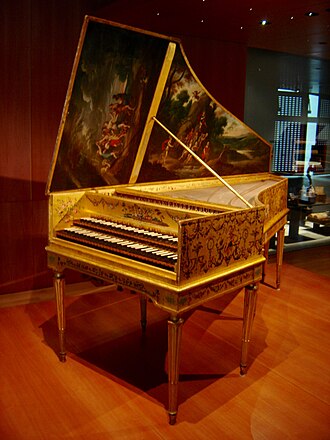
This harpsichord is the work of two celebrated makers: originally constructed by Andreas Ruckers in Antwerp (1646), it was later remodeled and expanded in a process called grand ravalement by Pascal Taskin in Paris (1780).

このフランドル様式は後のヨーロッパ全土に影響を与えました。フランスでは表現力を高めた「エクスプレッシブ・ダブル」が発展し、イギリスではキルマンやシュディといったメーカーが豊かな響きを持つ楽器を製作しました。ドイツでは、さらに低音域(16フィート)や高音域(2フィート)を追加し、音域を拡張させる試みが行われました。

1700年頃にクリストフォリがピアノを発明すると、奏者の意図で音量を変えられる表現力が重視されるようになり、チェンバロは次第にピアノに取って代わられました。しかし、オペラのレチタティーヴォ伴奏などでは、19世紀まで使い続けられた例もあります。

ภาพประกอบบทความ

多様なバリエーションと形態

チェンバロの家族には、用途や形状に応じてさまざまな派生楽器が存在します。

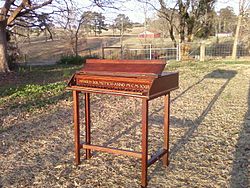
  • ヴィージナル: 弦が鍵盤と平行に張られた小型の長方形楽器。
  • スピネット: 弦が鍵盤に対して斜めに張られた形式。
  • クラヴィシテリウム: 現代のアップライトピアノのように、弦と響板が垂直に配置された省スペース型。
  • オッタヴィーノ: 4フィート(1オクターブ高い)音高を持つ小型楽器。
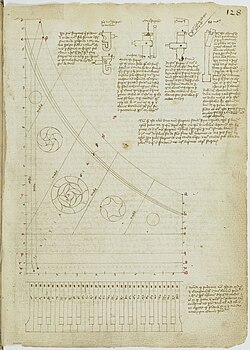
An early diagram of a vertical harpsichord (clavicytherium) by Arnault de Zwolle, c. 1430
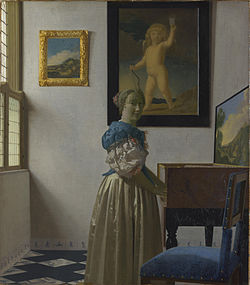
Jan Vermeer's painting Lady Standing at a Virginal shows a characteristic practice of his time, with the instrument mounted on a table and the player standing.
An ottavino built by Arnold Dolmetsch in 1923, and modeled after a 1698 instrument by Joannes Carcassi

また、足で操作するペダル鍵盤を備えた「ペダル・チェンバロ」や、特殊な調律に対応するための「アーチチェンバロ」など、実験的なモデルも存在しました。
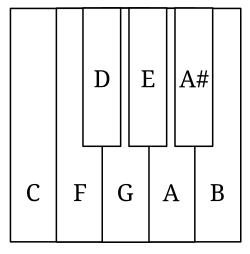
Some early harpsichords and organs had a short octave in the lowest register. It replaced rarely used bass notes with more widely used notes.
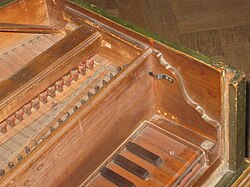
A false inner–outer harpsichord from the Deutsches Museum in Munich. The false inner case begins to the right of the keyboard, and continues backward only far enough to provide a slot to support the jack rail.

外装と装飾の美学

チェンバロは単なる楽器ではなく、豪華な家具としても扱われました。フランスでは鮮やかな色彩の塗装が、イギリスでは精巧な突き板(ベニヤ)が好まれました。響板には花や動物の絵が描かれ、鍵盤の色が現代のピアノとは逆に「白鍵が黒く、黒鍵が白い」配色が採用されることも多くありました。
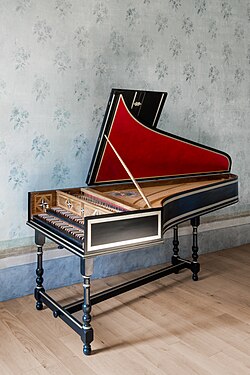
Modern harpsichord (Alberto Colzani, 2021). Like most modern harpsichords, it is built on historical principles, and indeed is directly modeled on an 18th century instrument by Christian Zelle.

音楽的レパートリー

チェンバロの黄金時代であるルネサンスからバロック期にかけて、膨大な作品が書き残されました。イギリスのヴィージナル楽派(ウィリアム・バードなど)に始まり、フランスのフランソワ・クープラン、スペインで活躍したドメニコ・スカルラッティなどが代表的です。

特にJ.S.バッハは、『平均律クラヴィーア曲集』や『ゴールドベルク変奏曲』などの傑作を残し、チェンバロ協奏曲の先駆者となりました。古典派のハイドンやモーツァルトも、キャリアの初期にはチェンバロ作品を書いていますが、1770年代後半からはピアノへと移行していきました。

チェンバロとその派生楽器の比較
楽器名 弦の配置 主な特徴
チェンバロ 鍵盤に対して直角 標準的な形式。複数段の鍵盤を持つモデルがある。
ヴィージナル 鍵盤に対して平行 小型でシンプル。1音につき1本の弦。
スピネット 鍵盤に対して斜め コンパクトな設計。弦がペアで配置されている。
クラヴィシテリウム 垂直配置 省スペース。ジャックが水平に動作する複雑な機構。

Frequently Asked Questions

チェンバロとピアノの最大の違いは何ですか?

最大の違いは「音出しの方法」です。ピアノはハンマーで弦を「叩く(打弦)」ため、叩く強さで音量を変えられますが、チェンバロはプレクトラムで弦を「弾く(撥弦)」ため、鍵盤を強く押しても音量は変わりません。

なぜ鍵盤が2段ある楽器があるのですか?

元々は異なる調に転調して演奏するためでしたが、後に異なる弦セット(8フィートと4フィートなど)を使い分けることで、音色や音域に変化をつけるための表現手段として発展しました。

「8フィート」や「4フィート」とはどういう意味ですか?

これはパイプオルガンの用語を借用したもので、弦の長さに由来します。8フィートは標準的な音高、4フィートは1オクターブ高い音高を指します。

現代でもチェンバロは作られているのですか?

はい。20世紀半ば以降、バロック時代の伝統的な製作手法を研究し、当時の設計を忠実に再現した歴史的復元モデルが世界中で製作されています。

チェンバロの調律は現代のピアノと同じですか?

異なります。現代の標準的なピッチ(A=440Hz)よりも低いA=415Hzや、フランス・バロック様式のA=392Hzなどが用いられることが多く、また平均律以外の調律法が使われることも一般的です。

References

    • : clavicembalo[]
    • : clavecin[]
    • : Cembalo[]
    • : clavecín[]
    • : cravo[]
    • : клавеси́н, klavesín[]
    • : klavecimbel[]
    • : klawesyn[]
  1. In virtually all instances, "more than one" means two. For the one known three-manual instrument, see . For forged three-manual instruments, see .

📸 フォトギャラリー

This harpsichord is the work of two celebrated makers: originally constructed by Andreas Ruckers in Antwerp (1646), it was later remodeled and expanded in a process called grand ravalement by Pascal Taskin in Paris (1780).
An early diagram of a vertical harpsichord (clavicytherium) by Arnault de Zwolle, c. 1430
ภาพประกอบบทความ
Harpsichord by Christian Zell, at Museu de la Música de Barcelona. From upper left to lower right: a bridge (supporting the far ends of the strings), the jack rail with the action (jacks) underneath, two nuts (supporting the closer ends of the strings), interleaved with two rows of tuning pins, and finally the keyboard. As with all harpsichords, the action itself is mostly hidden by the jack rail when the instrument is being played; only by removing the jack rail (or indeed, by extracting a jack) can the details of the action be observed.
Figure 1: schematic view of a 2 × 8' single manual harpsichord
Figure 2: upper part of a jack
Figure 3: how the harpsichord action works
Sound board of a harpsichord with Chladni patterns
Detail of the harpsichord by Karl Conrad Fleischer; Hamburg, 1720 in Museu de la Música de Barcelona. A decorative rose descends below the soundboard in which it is mounted; the soundboard itself is adorned with floral painting around the rose. The bridge is at lower right.
A two-manual harpsichord
Figure 4. French shove coupler. To the left: uncoupled keyboards. The depressed upper key lifts the jack A upwards. The depressed lower key lifts jacks B and C. To the right: The upper keyboard is coupled to the lower one by pulling the latter. The depressed upper key lifts the jack A upwards. The depressed lower key lifts jacks A, B and C.
Figure 5. Dogleg jack, English coupler system. When depressed, the upper key lifts the "dogleg" jack (jack A) upwards. The lower key lifts all three jacks A, B, and C.
Some early harpsichords and organs had a short octave in the lowest register. It replaced rarely used bass notes with more widely used notes.
A false inner–outer harpsichord from the Deutsches Museum in Munich. The false inner case begins to the right of the keyboard, and continues backward only far enough to provide a slot to support the jack rail.
Jan Vermeer's painting Lady Standing at a Virginal shows a characteristic practice of his time, with the instrument mounted on a table and the player standing.
An ottavino built by Arnold Dolmetsch in 1923, and modeled after a 1698 instrument by Joannes Carcassi
Modern harpsichord (Alberto Colzani, 2021). Like most modern harpsichords, it is built on historical principles, and indeed is directly modeled on an 18th century instrument by Christian Zelle.