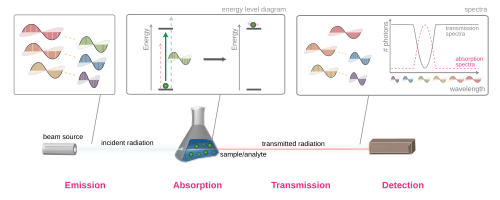
私たちは、目に見えない物質の成分や構造をどのようにして特定しているのでしょうか。その鍵を握るのが吸収分光法です。この技術は、物質が特定の周波数の電磁波(光)を吸収する性質を利用して、その物質が何であるか、あるいはどれくらいの量含まれているかを分析する手法です。
物質に光を照射すると、その物質を構成する原子や分子が、自身のエネルギー状態に適合する特定の波長の光だけを取り込みます。このとき、透過した光を分析することで、吸収された「光の指紋」とも言える吸収スペクトルを得ることができます。
Key Facts
- 原理:物質が量子状態間のエネルギー差に一致する電磁波(光子)を吸収する現象を利用する。
- 用途:化学分析における成分特定、定量分析、天体観測、物理学的な分子構造の解明など。
- 分析範囲:X線から電波まで、電磁スペクトルの広範囲にわたる波長帯で実施される。
- 定量化:Beer-Lambert法を用いることで、吸収強度から物質の濃度を算出できる。
- 非接触性:リモートセンシング技術により、サンプルに直接触れずに遠隔地から分析が可能。
吸収スペクトルのメカニズムと理論
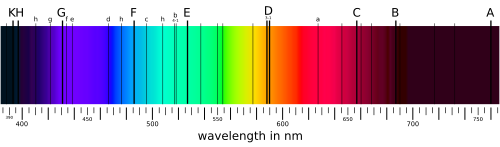
物質が光を吸収するのは、分子や原子が持つ「量子状態」というエネルギーの階段があるためです。光のエネルギーが、ある状態から別の状態へ飛び上がるために必要なエネルギー差とちょうど一致したとき、その光は吸収されます。この現象によって現れる鋭い吸収のピークを吸収線と呼びます。
エネルギー変化による分類
吸収される光の波長によって、物質内部でどのような変化が起きたかが分かります。
- 回転遷移:分子の回転状態が変化する場合。主にマイクロ波領域で観測されます。
- 振動遷移:分子の振動状態が変化する場合。主に赤外線領域で観測されます。
- 電子遷移:原子や分子の電子状態が変化する場合。可視光線や紫外線の領域で観測されます。
- 内殻電子励起:原子の深い層にある電子が励起される場合。X線領域で観測されます。
これらの遷移は単独で起こるだけでなく、回転と振動が同時に起こるなど組み合わさることもあり、より複雑なスペクトルを形成します。
スペクトルの形状を左右する要因
吸収線の位置(周波数)は物質の構造で決まりますが、その幅や形状は環境に影響されます。例えば、気体状態よりも液体や固体状態の方が、隣接する分子同士の相互作用が強いため、吸収線は広がる傾向にあります。また、温度や圧力の上昇、あるいは測定機器自体の分解能によっても、観測される線の太さが変わります。
電磁波の波長別・分光法一覧
利用する電磁波の種類によって、得られる情報と分析手法が異なります。
| 電磁波の種類 | 分光法の名称 |
|---|---|
| X線 | X線吸収分光法 |
| 紫外・可視光 | UV-vis吸収分光法 |
| 赤外線 | IR(赤外)吸収分光法 |
| マイクロ波 | マイクロ波吸収分光法 |
| 電波 | 電子スピン共鳴 (ESR) / 核磁気共鳴 (NMR) 分光法 |
多様な応用分野
化学分析と定量評価
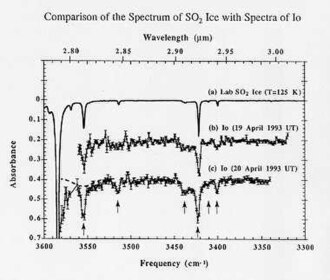
吸収分光法は、混合物の中から特定の化合物を識別する能力に長けています。例えば、赤外線ガス分析計を用いれば、空気中の窒素や酸素などの主要成分から、微量な汚染物質だけを抽出して検出することが可能です。また、既知の参照スペクトルライブラリと比較することで、未知のサンプルを同定できます。
さらに、Beer-Lambert法を適用することで、吸収された光の量から物質の絶対濃度を導き出す定量分析が行われています。
リモートセンシングと天文学
この技術の最大の利点の一つは、サンプルに接触せずに測定できる「非接触性」です。これにより、有害物質の分析や、地球上の遠隔地からの観測が可能になります。ただし、サンプルと検出器の間にある空気などの影響(背景干渉)を排除する必要があり、微分光吸収分光法などの高度な手法が用いられます。
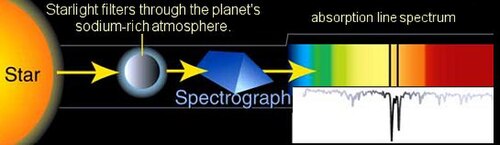
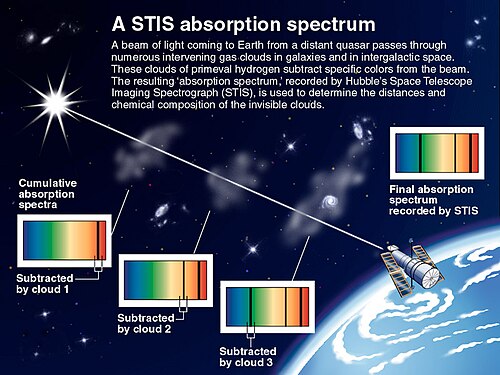
特に天文学において、分光法は不可欠なツールです。遠く離れた星や惑星から届く光を分析することで、その組成や温度、圧力を知ることができます。例えば、系外惑星が主星の前を通過する際の光を分析することで、その惑星の大気成分を特定することが可能です。

物理学への貢献
量子力学的なモデルを用いることで、吸収スペクトルから分子の結合角や結合距離、電子構造などの物理的特性を精密に決定できます。また、理論的な予測と実際の測定値を比較することで、量子電磁力学の発展に寄与した「ラムシフト」の発見のように、新しい物理法則の解明につながることもあります。
実験的なアプローチと手法
一般的な測定手順は、まず光源から光を出し、サンプルがない状態の「参照スペクトル」を測定します。その後、サンプルを配置して「サンプルスペクトル」を測定し、両者を比較することで、純粋にサンプルによって吸収された成分のみを抽出します。これにより、光源の特性や検出器の感度ムラといった誤差を排除できます。
光源には、広帯域な光を出す黒体放射源や水銀ランプ、あるいは波長を精密に制御できるレーザーなどが使い分けられます。検出器には、波長に応じてフォトダイオードやボロメータなどが採用され、分光器やフーリエ変換赤外分光法(FT-IR)などの干渉計を用いて波長ごとの強度を分解します。
Frequently Asked Questions
吸収スペクトルと透過スペクトルの違いは何ですか?
これらは本質的に同じ情報を表しています。透過スペクトルは「どれだけ光が通り抜けたか」を示し、吸収スペクトルは「どれだけ光が取り込まれたか」を示します。数学的な変換によって一方からもう一方を算出することができ、透過率が低い波長ほど、吸収強度は高くなります。
放出スペクトル( emission spectrum)から吸収スペクトルを導き出せますか?
はい、可能です。物質がエネルギーを放出する波長は、吸収する波長と一致するため、放出スペクトルから吸収線の位置を特定できます。ただし、強度のパターンは異なるため、アインシュタイン係数などの物理定数を用いて計算する必要があります。
なぜ気体よりも液体や固体の方が吸収線が広くなるのですか?
液体や固体では、分子同士が非常に近い距離にあり、互いに強く相互作用するためです。この相互作用がエネルギー状態にわずかな乱れを与え、結果として吸収される波長の範囲が広がり、鋭い線ではなく緩やかな山のような形状(ブロードな線)になります。
リモートセンシングにおける最大の課題は何ですか?
サンプルと検出器の間にある媒体(大気など)による吸収や散乱が、目的の信号を遮ったり、ノイズとして混入したりすることです。また、太陽光などの自然光を光源とする場合、光源自体のスペクトル変動を正確に把握し、分離して考える必要があります。
References
- Kumar, Pranav (2018). Fundamentals and Techniques of Biophysics and Molecular biology. New Delhi: Pathfinder publication. p. 33. .
- Modern Spectroscopy (Paperback) by J. Michael Hollas
- Symmetry and Spectroscopy: An Introduction to Vibrational and Electronic Spectroscopy (Paperback) by Daniel C. Harris, Michael D. Bertolucci
- Spectra of Atoms and Molecules by Peter F. Bernath
- James D. Ingle Jr. and Stanley R. Crouch, Spectrochemical Analysis, Prentice Hall, 1988,
- "Gaseous Pollutants – Fourier Transform Infrared Spectroscopy". Archived from the original on 2012-10-23. Retrieved 2009-09-30.
- Wadati, Hiroki (2026). "Teaching light absorption and the Beer–Lambert law using everyday materials: a tomato juice experiment for introductory physics". Physics Education. 61: 025016. :2509.04163. :10.1088/1361-6552/ae3f71.
- Khalafinejad, S.; Essen, C. von; Hoeijmakers, H. J.; Zhou, G.; Klocová, T.; Schmitt, J. H. M. M.; Dreizler, S.; Lopez-Morales, M.; Husser, T.-O. (2017-02-01). "Exoplanetary atmospheric sodium revealed by orbital motion". Astronomy & Astrophysics. 598: A131. :1610.01610. :2017A&A...598A.131K. :10.1051/0004-6361/201629473. 0004-6361. 55263138.
- de Wit, Julien; Seager, S. (19 December 2013). "Constraining Exoplanet Mass from Transmission Spectroscopy". Science. 342 (6165): 1473–1477. :1401.6181. :2013Sci...342.1473D. :10.1126/science.1245450. 24357312. 206552152.
📸 フォトギャラリー