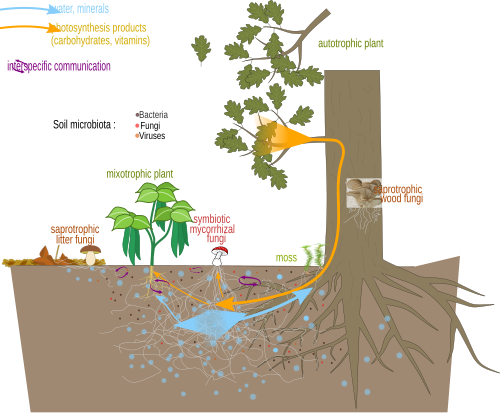
地球上の多くの植物は、単独で生きているわけではありません。彼らは地中で菌類(キノコやカビの仲間)と密接なパートナーシップを組んでいます。この植物の根と菌類が細胞レベルで結合した共生体を菌根(きんこん)と呼びます。菌根は植物の栄養吸収を助けるだけでなく、土壌の化学組成や生物多様性の維持に不可欠な役割を果たしています。
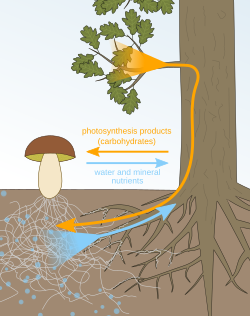
基本的には、植物が光合成で作り出した糖分(炭素源)を菌類に提供し、代わりに菌類が土壌から効率的に吸収した水やミネラルを植物に受け渡すという「物々交換」のような相互共生関係が築かれています。
Key Facts
- 共生の仕組み: 植物は光合成産物(炭素)を、菌類は水とミネラルを提供し合う。
- 広範な分布: アーバスキュラー菌根は全植物種の約78%に形成される。
- 環境への影響: 菌類が生成する「グロマリン」という糖タンパク質が、土壌中の重要な炭素貯蔵源となる。
- 進化の歴史: 最古の菌根(アーバスキュラー菌根)は、約4億〜4億6千万年前の陸上植物進出期に現れた。
- 多様な形態: 菌糸が細胞内に入るタイプ(内生)と、細胞の外側に留まるタイプ(外生)が存在する。
菌根の主要な種類と特徴
菌根は、菌類が植物の根にどのように定着するかによって、大きくいくつかのタイプに分類されます。
アーバスキュラー菌根 (AM)
グロメリコータ門(Glomeromycota)の菌類によって形成される、最も古く、かつ最も一般的なタイプです。菌糸が根の細胞壁を突き抜け、細胞内部に樹状体(アーバスキュル)という構造を作るのが特徴です。このタイプは宿主への特異性が低く、多くの被子植物や一部の裸子植物、さらには非維管束植物まで幅広く共生します。
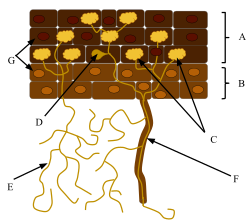
驚くべきことに、地球の表層土壌にあるAM菌の菌糸の総延長は、地球から太陽までの距離の約10億倍に達すると推定されており、そのバイオマスは全人類の4〜6倍に相当します。
外生菌根 (EM)
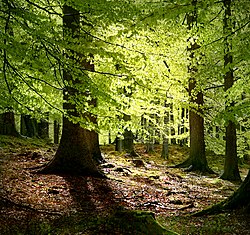
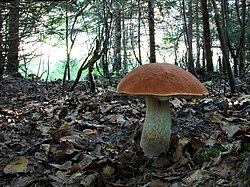
主に担子菌門や子嚢菌門の菌類によって形成されます。AM菌とは異なり、菌糸は細胞内に入らず、根の表面を覆う「菌鞘」や細胞間を縫う「ハルティヒネット」という構造を作ります。もともと有機物を分解して生きる腐生菌から進化したと考えられており、ブナなどの樹木に多く見られます。
その他の特殊な菌根
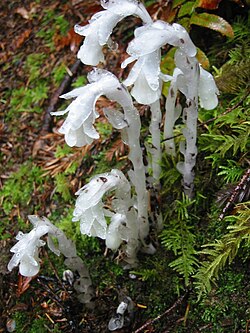
特定の植物群に見られる特殊な共生形態もあります。例えば、ツツジ科植物に見られるエリコイド菌根や、ラン科植物に見られるラン菌根が挙げられます。また、光合成を行わず、菌根を通じて栄養を得るモノトロポイド菌根(例:キンギョソウ属の一種など)のような、寄生的な関係を持つケースも存在します。
![An ericoid mycorrhizal fungus isolated from Woollsia pungens[67]](/images/7c/c7/7cc701e45c25732f771fa0df51d8cbf98121c99c717b237c922d4d8db883e94d.jpg)
菌根が植物と環境にもたらすメリット
菌根は単なる栄養補給ルートではなく、植物の生存戦略において多面的な機能を提供します。
- ストレス耐性の向上: 乾燥や塩害に対する耐性を高め、厳しい環境下での生存をサポートします。
- 病害虫からの保護: 土壌伝染性の病原菌に対する抵抗力を高めたり、昆虫による食害を抑制したりする効果があります。
- 不毛地の開拓: 栄養分が極めて少ない不毛な土壌においても、菌糸が広範囲に広がることで効率的に資源を回収し、植物の定着を助けます。
- 毒性物質の緩和: 重金属などの有害物質に対する耐性を付与することがあります。
菌根の分類まとめ
| タイプ | 主な菌類 | 定着形態 | 主な宿主植物 | 特徴 |
|---|---|---|---|---|
| アーバスキュラー菌根 | グロメリコータ門 | 細胞内(樹状体) | 多くの被子植物・作物 | 最古の系統、広範な宿主範囲 |
| 外生菌根 | 担子菌門・子嚢菌門 | 細胞外(菌鞘) | ブナ、マツなどの樹木 | 腐生菌から進化、多様な菌種 |
| エリコイド菌根 | Ascomycotaなど | 細胞内 | ツツジ科植物 | 酸性土壌や貧栄養地に適応 |
| モノトロポイド菌根 | 特定の菌類 | 細胞内 | 非光合成植物 | 菌類から栄養を奪う寄生関係 |
Frequently Asked Questions
菌根はすべての植物に存在するのですか?
いいえ、すべての植物ではありませんが、非常に多くの種が菌根を形成します。特にアーバスキュラー菌根は全植物種の約78%に見られ、多くの農作物や野生植物にとって不可欠な存在です。
菌類は植物から何を得ているのですか?
菌類は自ら光合成ができないため、植物が太陽光を使って作り出した炭水化物(糖分)をエネルギー源として受け取っています。
菌根が土壌の炭素貯蔵にどう関わっているのですか?
アーバスキュラー菌根菌は「グロマリン」という糖タンパク質を生成します。これが土壌中で安定して存在することで、大量の炭素を地中に固定し、地球温暖化の抑制に寄与していると考えられています。
外生菌根と内生菌根の決定的な違いは何ですか?
最大の違いは、菌糸が植物の細胞壁を突破して「細胞内部」に入るかどうかです。内生(アーバスキュラーなど)は細胞内に入り込みますが、外生は細胞の外側や細胞間に留まります。
菌根は農業に利用されていますか?
はい。リンなどのミネラル吸収を促進し、病害虫への耐性を高めるため、持続可能な農業や土壌改良の観点から研究・活用が進められています。
References
- Deacon, Jim. "The Microbial World: Mycorrhizas". bio.ed.ac.uk (archived). Archived from the original on 2018-04-27. Retrieved 11 January 2019.
- Kirk, P. M.; Cannon, P. F.; David, J. C.; Stalpers, J. (2001). Ainsworth and Bisby's Dictionary of the Fungi (9th ed.). Wallingford, UK: CAB International.
- Read, D.J. (2013). "Mycorrhiza- the state of the art". In Varma, Ajit; Hock, Bertold (eds.). Mycorrhiza: Structure, Function, Molecular Biology and Biotechnology. Springer Science & Business Media. pp. 3–5. .
- Brundrett, Marc C (2004). "Diversity and classification of mycorrhizal associations". Biological Reviews of the Cambridge Philosophical Society. 79 (3): 473–95. :10.1017/S1464793103006316. 15366760.
"A new definition of mycorrhizas that encompasses all types of these associations while excluding other plant-fungus interactions is provided. This definition recognises the importance of nutrient transfer at an interface resulting from synchronised plant-fungus development."
- Balestrini, Rafaella; Bonfante, Paola (2014). "Cell wall remodeling in mycorrhizal symbiosis: a way towards biotrophism". Frontiers in Plant Science. 5: 237. :2014FrPS....5..237B. :10.3389/fpls.2014.00237. 4044974. 24926297.
"All mycorrhizal interactions achieve full symbiotic functionality through the development of an extensive contact surface between the plant and fungal cells, where signals and nutrients are exchanged."
- Wu, Qiang-Sheng, ed. (2017). Arbuscular Mycorrhizas and Stress Tolerance of Plants (1st ed.). Springer Singapore. p. 1. :10.1007/978-981-10-4115-0. .
- Johnson, N. C.; Graham, J. H.; Smith, F. A. (1997). "Functioning of mycorrhizal associations along the mutualism–parasitism continuum". . 135 (4): 575–585. :1997NewPh.135..575J. :10.1046/j.1469-8137.1997.00729.x. 42871574.
- "Mycorrhizal Fungi - Oklahoma State University". extension.okstate.edu. 2017-04-01. Retrieved 2025-11-08.
- Kottke, I.; Nebel, M. (2005). "The evolution of mycorrhiza-like associations in liverworts: An update". New Phytologist. 167 (2): 330–334. :2005NewPh.167..330K. :10.1111/j.1469-8137.2005.01471.x. 15998388.
- Remy, W.; Taylor, T. N.; Hass, H.; Kerp, H. (6 December 1994). "Four hundred-million-year-old vesicular arbuscular mycorrhizae". Proceedings of the National Academy of Sciences. 91 (25): 11841–11843. :1994PNAS...9111841R. :10.1073/pnas.91.25.11841. 45331. 11607500.
📸 フォトギャラリー