タグ

元素

29 件の記事

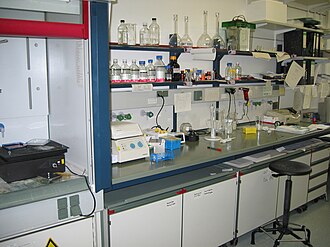
Laboratory, Institute of Biochemistry, University of Cologne in Germany

化学の基礎知識物質の構造から現代科学の発展まで

化学原子構造元素化学反応
Color lines in a spectral range

酸素の科学性質から地球環境、産業利用までを徹底解説

酸素化学的性質光合成液体酸素

Color lines in a spectral range

シリコン(ケイ素)の特性と現代社会への影響

シリコンケイ素半導体電子デバイス

Color lines in a spectral range

鉄(Fe)の科学基礎特性から産業利用、生物学的役割まで

元素周期表冶金
Color lines in a spectral range

カリウムの特性と役割化学的性質から生命維持への影響まで

カリウムアルカリ金属元素生理機能

Color lines in a spectral range

硫黄の科学性質から産業利用、生物学的役割まで

硫黄元素同素体硫酸
Color lines in a spectral range

水素の特性と産業利用宇宙の根源から次世代エネルギーまで

水素元素水素エネルギー水電解

Color lines in a spectral range

炭素(カーボン)の特性と多様な同素体生命と物質の基礎となる元素

炭素カーボン同素体ダイヤモンド
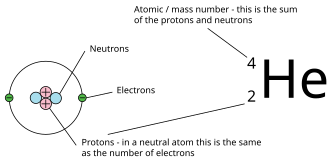
This is a diagram that explains AZE notation. On the left is a model of an atom, with a nucleus in the middle consisting of two circular protons marked with a "+" symbol tightly placed next to two blue neutrons. A ring surrounds the nucleus, containing two circular electrons that are smaller than the neutrons and the electrons. A description for protons says in a neutral atom they are the same as the number of electrons. On the right is the AZE notation of Helium, with the chemical symbol He with a superscript and subscript to the left of the symbol. The superscript, 4, is the atomic / mass number, the sum of the protons and neutrons. The subscript, 2, is the number of protons.

原子番号の基礎知識元素を定義する正体とその歴史

原子番号陽子数周期表ヘンリー・モーゼリー
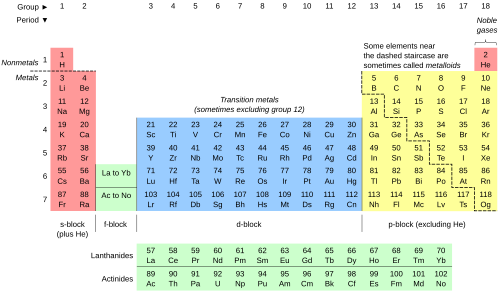
Periodic table of the chemical elements showing the most or more commonly named sets of elements (in periodic tables), and a traditional dividing line between metals and nonmetals. The f-block actually fits between groups 2 and 3; it is usually shown at the foot of the table to save horizontal space.

周期表の構造と化学的性質の体系的解説

周期表元素電子配置原子番号
Color lines in a spectral range

オスミウムの特性と用途世界で最も密度が高い希少金属

オスミウム白金族元素密度希少金属

Color lines in a spectral range

銅(Copper)の特性と産業的価値古代から現代のエネルギー転換まで

電気伝導性エネルギー転換銅鉱石



