Kennedy Space Center Launch Complex 39B
Jump to content


.jpg/1280px-Artemis_I_Arrives_at_Pad_39B_(Cropped).jpg) Space Launch System atop LC-39B on March 18, 2022 | |||||||||||||
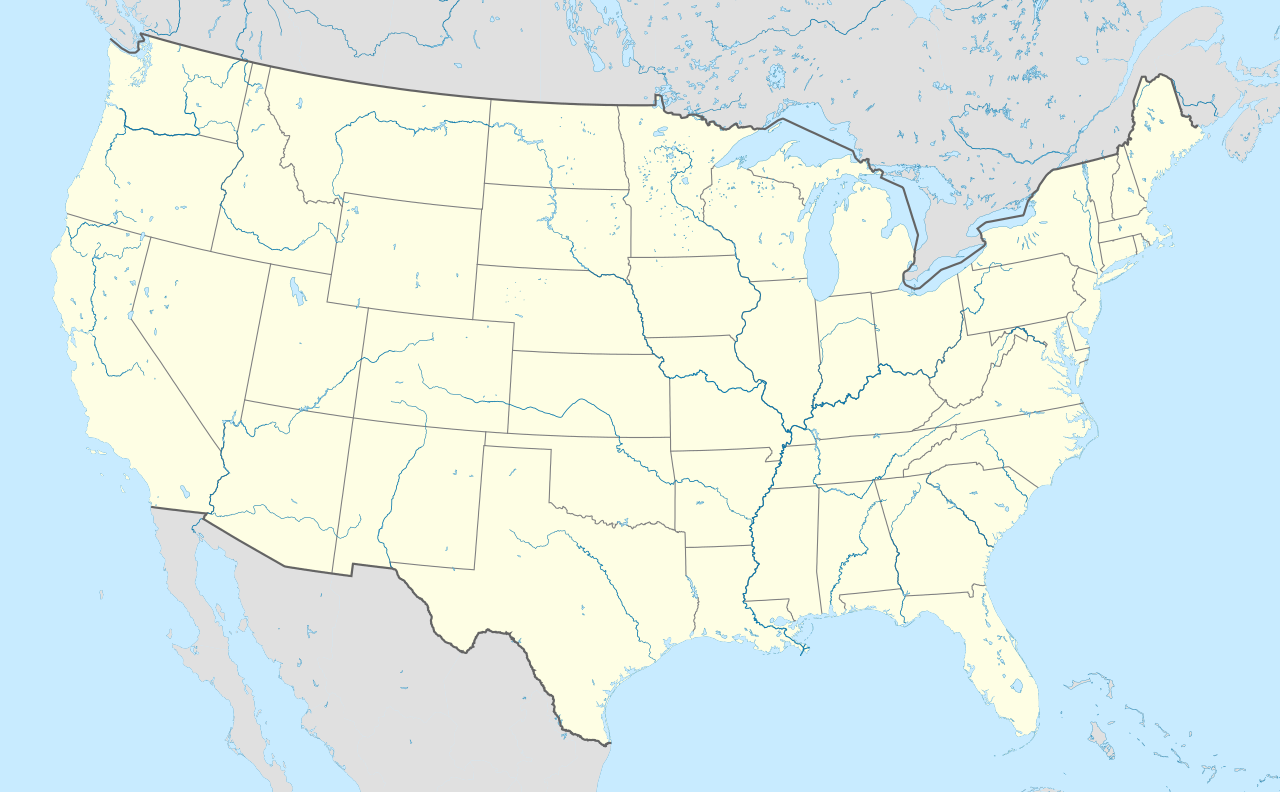
 Interactive map of Launch Complex 39B | |||||||||||||
| Launch site | Kennedy Space Center | ||||||||||||
|---|---|---|---|---|---|---|---|---|---|---|---|---|---|
| Location | Merritt Island, Florida | ||||||||||||
| Coordinates | 28°37′38″N 80°37′15″W / 28.62722°N 80.62083°W | ||||||||||||
| Time zone | UTC−05:00 (EST) | ||||||||||||
• Summer (DST) | UTC−04:00 (EDT) | ||||||||||||
| Operator | NASA (1967–present) | ||||||||||||
| Orbital inclination range | 28–62° | ||||||||||||
| |||||||||||||
Launch Complex 39--Pad B | |||||||||||||
   | |||||||||||||
| Location | John F. Kennedy Space Center, Titusville, Florida | ||||||||||||
| Area | 160 acres (65 ha) | ||||||||||||
| Built | 1967-1968 | ||||||||||||
| MPS | John F. Kennedy Space Center MPS | ||||||||||||
| NRHP reference No. | 99001639[1] | ||||||||||||
| Added to NRHP | January 21, 2000 | ||||||||||||


Launch Complex 39B (LC-39B) is the second of Launch Complex 39's three launch pads, located at NASA's Kennedy Space Center in Merritt Island, Florida. The pad, along with Launch Complex 39A, was first designed for the Saturn V launch vehicle, which at the time was the United States' most powerful rocket. Typically used to launch NASA's crewed spaceflight missions since the late 1960s, the pad is currently configured for use by the agency's Space Launch System rocket, a Shuttle-derived launch vehicle which is currently used in the Artemis program and subsequent Moon to Mars campaigns. The pad had also been leased by NASA to aerospace company Northrop Grumman, for use as a launch site for their Shuttle-derived OmegA launch vehicle, for National Security Space Launch flights and commercial launches, before the OmegA program was cancelled.
History
[edit]Apollo program
[edit]In 1961, President Kennedy proposed to Congress the goal of landing a man on the Moon by the end of the decade. Congressional approval led to the launch of the Apollo program, which required a massive expansion of NASA operations, including an expansion of launch operations from the Cape to adjacent Merritt Island to the north and west.[2]
Launch Complex 39B was designed to handle launches of the Saturn V rocket, the largest and most powerful launch vehicle, which would propel Apollo spacecraft to the Moon. Launch Complex 39B's inaugural launch in May 1969 was also that of the only Saturn V to launch from the pad; SA-505, used to launch the Apollo 10 mission.
After the Apollo 17 mission in 1972, Pad 39B was used for Saturn IB launches. The Mobile Launchers were then modified for the Saturn IB rocket, by adding a "milk-stool" extension platform to the launch pedestal, so that the S-IVB upper stage and Apollo spacecraft swing arms would reach their targets. These were used for three crewed Skylab flights and the Apollo–Soyuz, since the Saturn IB pads 34 and 37 at Cape Canaveral had been decommissioned.[3][4]
Space Shuttle
[edit]With the advent of the Space Shuttle program in the early 1980s, the original structure of the launch pads were remodeled for the needs of the Space Shuttle. Pad 39A hosted all Space Shuttle launches until January 1986, when Space Shuttle Challenger would become the first to launch from pad 39B during the ill-fated STS-51-L mission, which ended with the destruction of Challenger and the death of the mission's crew a minute into the flight.
Launch Complex 39B hosted 53 Space Shuttle launches until December 2006, when Discovery launched from the pad for the final time during the STS-116 mission. The program's remaining flights launched from pad 39A. To support the final Shuttle mission to the Hubble Space Telescope STS-125 launched from pad 39A in May 2009, Endeavour was placed on 39B if needed to launch the STS-400 rescue mission.
Constellation program
[edit]Launch Complex 39B would subsequently be reconfigured for crewed Ares I launches as part of the Constellation program; the Ares I-X mission launched a prototype Ares I from 39B in October 2009, prior to the program's cancellation the following year.
Artemis program
[edit]On November 16, 2022, at 06:47:44 UTC, the Space Launch System (SLS) was launched from Complex 39B as part of the Artemis 1 mission.[5][6]
Current status
[edit]After the Ares I-X test flight in 2009, NASA removed the Fixed Service Structure (FSS) from Pad 39B, returning the location to an Apollo-like "clean pad" design for the first time since 1977. This approach is intended to make the pad available to multiple types of vehicles that will arrive at the pad with service structures on the mobile launcher platform, as opposed to using fixed structures on the pad.[7] The LH2, LOX, and water tanks used for the sound suppression system are the only structures left from the Space Shuttle era.[8][9][10]
In 2014, NASA announced that it would make LC-39B available to commercial users during times when it is not needed by the Space Launch System.[11] NASA subsequently agreed to allow Orbital ATK to use LC-39B for their OmegA launch vehicle.[12] However Northrop Grumman, who absorbed Orbital ATK in June 2018,[13] cancelled the development of OmegA in September 2020 before any launches had taken place; SLS will therefore remain the only user of LC-39B for the foreseeable future.[14][15]
As of November 2022[update], LC-39B manages the Space Launch System (SLS)'s processing and launch operations, as part of the first phase of a five-phase project, were being completed. The second phase of this project is currently budgeted for $89.2 million.[16][17][6]
Launch statistics
[edit]Apollo and Apollo Applications
[edit]All flights operated by NASA.
| No. | Date | Time (UTC) | Launch vehicle | Serial number | Mission | Result | Remarks |
|---|---|---|---|---|---|---|---|
| 1 | 18 May 1969 | 16:49 | Saturn V | SA-505 | Apollo 10 (CSM Charlie Brown and LM Snoopy) | Success | First launch, first crewed launch, and only Saturn V launch from LC-39B. Launch was conducted at the pad to practice high Saturn V launch cadence. Only crewed flight from 39B so far to go beyond low Earth orbit. |
| 2 | 25 May 1973 | 13:00 | Saturn IB | SA-206 | Skylab 2 | Success | First visit to Skylab, making emergency repairs sustained during space station's launch. First launch of the Saturn IB from LC-39B, and the first launch of the Saturn IB since Apollo 7 in 1968. |
| 3 | 28 July 1973 | 11:10 | Saturn IB | SA-207 | Skylab 3 | Success | Second visit to Skylab. |
| 4 | 16 November 1973 | 14:01 | Saturn IB | SA-208 | Skylab 4 | Success | Last visit to Skylab. Set American record for time in space that stayed until the advent of ISS expeditions. |
| 5 | 15 July 1975 | 19:50 | Saturn IB | SA-210 | Apollo–Soyuz | Success | The Apollo component of the Apollo–Soyuz Test Project, complementing Soyuz 19. First crewed international spaceflight for NASA, and last flight of the Saturn IB, Saturn family, and Apollo CSM. |
Space Shuttle
[edit]All flights operated by NASA.
| No. | Date | Time (UTC) | Launch vehicle | Shuttle | Mission | Result | Remarks |
|---|---|---|---|---|---|---|---|
| 6 | 28 January 1986 | 16:38 | Space Shuttle | Challenger | STS-51-L | Failure | First Space Shuttle launch from LC-39B. Intended to launch and deploy TDRS-B for the Tracking and Data Relay Satellite System. A failure of the solid rocket booster led to breakup 73 seconds after launch, causing the Space Shuttle Challenger disaster. |
| 7 | 28 September 1988 | 15:37 | Space Shuttle | Discovery | STS-26 | Success | First Space Shuttle launch following the Challenger disaster. Launch and deployment of TDRS-3 (as TDRS-C) for the Tracking and Data Relay Satellite System. |
| 8 | 2 December 1988 | 14:30 | Space Shuttle | Atlantis | STS-27 | Success | Classified Department of Defense mission. Deployment of Lacrosse satellite, also known as USA-34. Shuttle's thermal protection system was extensively damaged during liftoff, but survived reentry. |
| 9 | 13 March 1989 | 14:37 | Space Shuttle | Discovery | STS-29 | Success | Launch and deployment of TDRS-4 (as TDRS-D) for the Tracking and Data Relay Satellite System. |
| 10 | 4 May 1989 | 14:46 | Space Shuttle | Atlantis | STS-30 | Success | Launch and deployment of Magellan, aiming to study and create a radar map of Venus. |
| 11 | 8 August 1989 | 12:37 | Space Shuttle | Columbia | STS-28 | Success | DoD mission. Deployment of SDS satellite and SSF satellite, also known as USA-40 and USA-41 respectively. |
| 12 | 18 October 1989 | 16:53 | Space Shuttle | Atlantis | STS-34 | Success | Launch and deployment Galileo. Part of the Large Strategic Science Missions, designed to study Jupiter and its moons. First spacecraft to enter orbit of Jupiter and of an outer planet, and first spacecraft to enter the atmosphere of a gas giant with atmospheric probe. First Shuttle launch with an RTG. |
| 13 | 23 November 1989 | 00:23 | Space Shuttle | Discovery | STS-33 | Success | DoD mission. Deployment of Magnum satellite, also known as USA-48. |
| 14 | 12 April 1990 | 12:33 | Space Shuttle | Discovery | STS-31 | Success | Launch and deployment of the Hubble Space Telescope. Part of the Large Strategic Science Missions, a space telescope designed to conduct optical astronomy. Collaboration between NASA and ESA. Was serviced five times over the following 20 years. |
| 15 | 6 October 1990 | 11:47 | Space Shuttle | Discovery | STS-41 | Success | Launch and deployment of Ulysses. Collaboration between NASA and ESA, designed to study the Sun from various inclinations. First spacecraft to enter polar heliocentric orbit, thanks to a gravity assist from Jupiter. |
| 16 | 2 December 1990 | 06:49 | Space Shuttle | Columbia | STS-35 | Success | |
| 17 | 5 April 1991 | 14:22 | Space Shuttle | Atlantis | STS-37 | Success | Launch and deployment of the Compton Gamma Ray Observatory. Part of the Large Strategic Science Missions, a space telescope designed to conduct gamma-ray astronomy. |
| 18 | 5 June 1991 | 13:24 | Space Shuttle | Columbia | STS-40 | Success | |
| 19 | 7 May 1992 | 23:40 | Space Shuttle | Endeavour | STS-49 | Success | Maiden flight of Space Shuttle Endeavour. Servicing mission for Intelsat 603, following staging failure during launch on a Commercial Titan III in 1990. Only spacewalk so far to feature three astronauts. |
| 20 | 31 July 1992 | 13:56 | Space Shuttle | Atlantis | STS-46 | Success | |
| 21 | 12 September 1992 | 14:23 | Space Shuttle | Endeavour | STS-47 | Success | |
| 22 | 22 October 1992 | 17:09 | Space Shuttle | Columbia | STS-52 | Success | |
| 23 | 13 January 1993 | 13:59 | Space Shuttle | Endeavour | STS-54 | Success | Launch and deployment of TDRS-6 (as TDRS-F) for the Tracking and Data Relay Satellite System. |
| 24 | 8 April 1993 | 05:29 | Space Shuttle | Discovery | STS-56 | Success | |
| 25 | 21 June 1993 | 13:07 | Space Shuttle | Endeavour | STS-57 | Success | |
| 26 | 12 September 1993 | 11:45 | Space Shuttle | Discovery | STS-51 | Success | |
| 27 | 18 October 1993 | 14:53 | Space Shuttle | Columbia | STS-58 | Success | |
| 28 | 2 December 1993 | 09:27 | Space Shuttle | Endeavour | STS-61 | Success | Servicing mission for the Hubble Space Telescope. Notable for correcting its optics caused by incorrect mirror grounding made before launch. |
| 29 | 4 March 1994 | 13:53 | Space Shuttle | Columbia | STS-62 | Success | |
| 30 | 9 September 1994 | 22:22 | Space Shuttle | Discovery | STS-64 | Success | |
| 31 | 3 November 1994 | 16:59 | Space Shuttle | Atlantis | STS-66 | Success | |
| 32 | 3 February 1995 | 05:22 | Space Shuttle | Discovery | STS-63 | Success | First shuttle mission to the space station Mir. Rendezvoused, but did not dock. |
| 33 | 13 July 1995 | 13:41 | Space Shuttle | Discovery | STS-70 | Success | Launch and deployment of TDRS-7 (as TDRS-G). Last Shuttle launch for the Tracking and Data Relay Satellite System. |
| 34 | 20 October 1995 | 13:53 | Space Shuttle | Columbia | STS-73 | Success | |
| 35 | 11 January 1996 | 09:41 | Space Shuttle | Endeavour | STS-72 | Success | |
| 36 | 22 February 1996 | 20:18 | Space Shuttle | Columbia | STS-75 | Success | |
| 37 | 22 March 1996 | 08:13 | Space Shuttle | Atlantis | STS-76 | Success | Docking with Mir. |
| 38 | 19 May 1996 | 10:30 | Space Shuttle | Endeavour | STS-77 | Success | |
| 39 | 20 June 1996 | 14:49 | Space Shuttle | Columbia | STS-78 | Success | |
| 40 | 19 November 1996 | 19:55 | Space Shuttle | Columbia | STS-80 | Success | Longest ever Space Shuttle flight, at 17 days and 15 hours. |
| 41 | 12 January 1997 | 09:27 | Space Shuttle | Atlantis | STS-81 | Success | Docking with Mir. |
| 42 | 19 November 1997 | 19:46 | Space Shuttle | Columbia | STS-87 | Success | |
| 43 | 17 April 1998 | 18:19 | Space Shuttle | Columbia | STS-90 | Success | Final Spacelab flight. |
| 44 | 29 October 1998 | 19:19 | Space Shuttle | Discovery | STS-95 | Success | Carried senator and Mercury-Atlas 6 veteran John Glenn into orbit. |
| 45 | 27 May 1999 | 10:49 | Space Shuttle | Discovery | STS-96 | Success | First non-assembly Space Shuttle flight to the International Space Station. |
| 46 | 23 July 1999 | 04:31 | Space Shuttle | Columbia | STS-93 | Success | Launch and deployment of the Chandra X-Ray Observatory. Part of the Large Strategic Science Missions, a space telescope designed to conduct x-ray astronomy. |
| 47 | 19 December 1999 | 00:50 | Space Shuttle | Discovery | STS-103 | Success | Servicing mission for the Hubble Space Telescope. |
| 48 | 8 September 2000 | 12:45 | Space Shuttle | Atlantis | STS-106 | Success | Docking with the ISS. |
| 49 | 1 December 2000 | 03:06 | Space Shuttle | Endeavour | STS-97 | Success | ISS assembly flight, adding the P6 solar array and radiators. |
| 50 | 8 March 2001 | 11:42 | Space Shuttle | Discovery | STS-102 | Success | Docking with the ISS. |
| 51 | 12 July 2001 | 09:03 | Space Shuttle | Atlantis | STS-104 | Success | ISS assembly flight, adding the Quest Joint Airlock. |
| 52 | 5 December 2001 | 22:19 | Space Shuttle | Endeavour | STS-108 | Success | Docking with the ISS. |
| 53 | 8 April 2002 | 20:44 | Space Shuttle | Atlantis | STS-110 | Success | ISS assembly flight, adding the S0 truss. |
| 54 | 7 October 2002 | 19:45 | Space Shuttle | Atlantis | STS-112 | Success | ISS assembly flight, adding the S1 truss. |
| 55 | 26 July 2005 | 14:39 | Space Shuttle | Discovery | STS-114 | Success | Docking with the ISS. First Space Shuttle flight following the Columbia disaster in 2003. |
| 56 | 4 July 2006 | 18:37 | Space Shuttle | Discovery | STS-121 | Success | Docking with the ISS. |
| 57 | 9 September 2006 | 15:14 | Space Shuttle | Atlantis | STS-115 | Success | ISS assembly flight, adding the P3/P4 truss and solar arrays. |
| 58 | 10 December 2006 | 00:47 | Space Shuttle | Discovery | STS-116 | Success | ISS assembly flight, adding the P5 truss. Final Space Shuttle flight from LC-39B. |
Constellation and Artemis
[edit]All flights operated by NASA.
| No. | Date | Time (UTC) | Launch vehicle | Configuration | Spacecraft | Mission | Result | Remarks |
|---|---|---|---|---|---|---|---|---|
| 59 | 28 October 2009 | 15:30 | Ares I | Ares I-X | Boilerplate | Ares I-X | Success | Suborbital launch. Carried a boilerplate upper stage and Orion spacecraft. Only launch of the Ares I and of the Constellation Program. First uncrewed launch from LC-39B. |
| 60 | 16 November 2022 | 06:47 | Space Launch System | SLS Block 1 | CM-002 | Artemis I | Success | Maiden flight of SLS and first launch of the Artemis Program. Inaugural flight of a completed Orion spacecraft. First flight of a crewable spacecraft to the Moon since Apollo 17 in 1972, and first 39B launch beyond LEO since Apollo 10 in 1969. |
Upcoming launches
[edit]| Date | Launch vehicle | Mission |
|---|---|---|
| 5 February 2026 | Space Launch System | Artemis II |
Gallery
[edit]- Pad 9B holding a Saturn IB on the "milkstool" launcher to be used for the Apollo-Soyuz Test Project (1975)
- An aerial shot LC-39B during the Space Shuttle era, looking towards the south (1998)
- The Ares I-X launches from LC-39B (2009)
- LC-39B with added lightning towers and holding the SLS Block 1 mobile launcher (2019)


.jpg/1280px-Launch_Pad_39B_(KSC-98PC-0238).jpg)


.jpg/1280px-Artemis_1_on_Launch_Pad_39B_(NHQ202204210010).jpg)
See also
[edit]

References
[edit]Sources
- Ward, Jonathan H. (2015). Countdown to a Moon Launch: Preparing Apollo for Its Historic Journey. Greensboro, North Carolina: Springer. doi:10.1007/978-3-319-17792-2. ISBN 978-3-319-17792-2. Archived from the original on February 17, 2023. Retrieved May 20, 2020.
- Bergin, Chris (May 30, 2017). "KSC's historic Pad 39B laying the foundations for hosting big rockets". NASASpaceFlight.com. Archived from the original on May 20, 2020. Retrieved May 20, 2020.
Citations
- ^ "National Register Information System". National Register of Historic Places. National Park Service. July 9, 2010.
- ^ "The History of Cape Canaveral, Chapter 3: NASA Arrives (1959–Present)". Spaceline.org. Archived from the original on February 4, 2012. Retrieved July 6, 2009.
- ^ "Launch Complex 34". Archived from the original on February 12, 2017. Retrieved February 11, 2017.
- ^ "Launch Complex 37". Archived from the original on March 2, 2017. Retrieved February 11, 2017.
- ^ Artemis I Launch to the Moon (Official NASA Broadcast) - Nov. 16, 2022, November 16, 2022, archived from the original on November 16, 2022, retrieved November 16, 2022
- ^ a b "NASA Prepares Rocket, Spacecraft Ahead of Tropical Storm Nicole, Re-targets Launch". NASA. November 8, 2022. Archived from the original on November 8, 2022. Retrieved November 8, 2022.
- ^ Halvorson, Todd (March 23, 2011). "Historic space shuttle pad soon to be scrap". USA Today. Archived from the original on July 26, 2011. Retrieved July 14, 2020.
- ^ Bergin, Chris (March 22, 2015). "KSC Pads continue preparations for future vehicles". NASASpaceFlight.com. Archived from the original on March 24, 2015. Retrieved March 24, 2015.
- ^ "Sound Suppression System". NASA. 2006. Archived from the original on June 29, 2011. Retrieved September 30, 2007.
- ^ "STS-127 Rollaround starts". Space Flight Now. Archived from the original on February 27, 2021. Retrieved May 31, 2009.
- ^ Clark, Stephen (April 15, 2014). "SpaceX's mega-rocket to debut next year at pad 39A". SpaceflightNow. Archived from the original on March 8, 2020. Retrieved April 16, 2014.
- ^ "Orbital ATK optimistic about proposed KSC rocket". floridatoday.com. Archived from the original on November 20, 2021. Retrieved November 20, 2021.
- ^ "Northrop Grumman completes acquisition of Orbital ATK for $9.2 billion". flightglobal.com. June 7, 2018. Archived from the original on December 8, 2021. Retrieved November 20, 2021.
- ^ Clark, Stephen (September 14, 2020). "Northrop Grumman ends OmegA rocket program". spaceflightnow.com. Archived from the original on November 20, 2021. Retrieved November 20, 2021.
- ^ "OmegA Launch Tower to be demolished as KSC 39B fails to become a multi-user pad". nasaspaceflight.com. September 11, 2020. Archived from the original on January 6, 2021. Retrieved November 20, 2021.
- ^ "NASA FY13 Budget" (PDF). NASA. Archived from the original (PDF) on February 17, 2017. Retrieved February 23, 2016.
- ^ Artemis I Launch to the Moon (Official NASA Broadcast) - Nov. 16, 2022. NASA. November 16, 2022. Archived from the original on November 16, 2022. Retrieved November 16, 2022 – via YouTube.
External links
[edit]
- Launch Pad 39B at NASA
- Cape Canaveral LC39B at Encyclopedia Astronautica
- Pad B modifications for Ares 1-X, level 300 Archived October 31, 2009, at the Wayback Machine
- Pad B modifications for Ares 1-X, level 275 Archived October 26, 2009, at the Wayback Machine
- Pad B modifications for Ares 1-X, level 255 Archived November 1, 2009, at the Wayback Machine
- Pad B modifications for Ares 1-X, level 235 Archived October 31, 2009, at the Wayback Machine
| Facilities |
|  | ||||||
|---|---|---|---|---|---|---|---|---|
| Launch sites | ||||||||
NASA programs | |||||||||||||||||||||||||||||||||||||||||||||||||||||||||||||||||||||||||||||||||||||||||||||||||||||
|---|---|---|---|---|---|---|---|---|---|---|---|---|---|---|---|---|---|---|---|---|---|---|---|---|---|---|---|---|---|---|---|---|---|---|---|---|---|---|---|---|---|---|---|---|---|---|---|---|---|---|---|---|---|---|---|---|---|---|---|---|---|---|---|---|---|---|---|---|---|---|---|---|---|---|---|---|---|---|---|---|---|---|---|---|---|---|---|---|---|---|---|---|---|---|---|---|---|---|---|---|---|
| |||||||||||||||||||||||||||||||||||||||||||||||||||||||||||||||||||||||||||||||||||||||||||||||||||||


.svg)

Space Launch System atop LC-39B on March 18, 2022 | |||||||||||||
Interactive map of Launch Complex 39B | |||||||||||||
| Launch site | Kennedy Space Center | ||||||||||||
|---|---|---|---|---|---|---|---|---|---|---|---|---|---|
| Location | Merritt Island, Florida | ||||||||||||
| Coordinates | 28°37′38″N 80°37′15″W / 28.62722°N 80.62083°W / 28.62722; -80.62083 | ||||||||||||
| Time zone | UTC−05:00 (EST) | ||||||||||||
• Summer (DST) | UTC−04:00 (EDT) | ||||||||||||
| Operator | NASA (1967–present) | ||||||||||||
| Orbital inclination range | 28–62° | ||||||||||||
| |||||||||||||
Launch Complex 39--Pad B | |||||||||||||
| Location | John F. Kennedy Space Center, Titusville, Florida | ||||||||||||
| Area | 160 acres (65 ha) | ||||||||||||
| Built | 1967-1968 | ||||||||||||
| MPS | John F. Kennedy Space Center MPS | ||||||||||||
| NRHP reference No. | 99001639[1] | ||||||||||||
| Added to NRHP | January 21, 2000 | ||||||||||||



Launch Complex 39B (LC-39B) is the second of Launch Complex 39's three launch pads, located at NASA's Kennedy Space Center in Merritt Island, Florida. The pad, along with Launch Complex 39A, was first designed for the Saturn V launch vehicle, which at the time was the United States' most powerful rocket. Typically used to launch NASA's crewed spaceflight missions since the late 1960s, the pad is currently configured for use by the agency's Space Launch System rocket, a Shuttle-derived launch vehicle which is currently used in the Artemis program and subsequent Moon to Mars campaigns. The pad had also been leased by NASA to aerospace company Northrop Grumman, for use as a launch site for their Shuttle-derived OmegA launch vehicle, for National Security Space Launch flights and commercial launches, before the OmegA program was cancelled.
History
Apollo program
In 1961, President Kennedy proposed to Congress the goal of landing a man on the Moon by the end of the decade. Congressional approval led to the launch of the Apollo program, which required a massive expansion of NASA operations, including an expansion of launch operations from the Cape to adjacent Merritt Island to the north and west.[2]
Launch Complex 39B was designed to handle launches of the Saturn V rocket, the largest and most powerful launch vehicle, which would propel Apollo spacecraft to the Moon. Launch Complex 39B's inaugural launch in May 1969 was also that of the only Saturn V to launch from the pad; SA-505, used to launch the Apollo 10 mission.
After the Apollo 17 mission in 1972, Pad 39B was used for Saturn IB launches. The Mobile Launchers were then modified for the Saturn IB rocket, by adding a "milk-stool" extension platform to the launch pedestal, so that the S-IVB upper stage and Apollo spacecraft swing arms would reach their targets. These were used for three crewed Skylab flights and the Apollo–Soyuz, since the Saturn IB pads 34 and 37 at Cape Canaveral had been decommissioned.[3][4]
Space Shuttle
With the advent of the Space Shuttle program in the early 1980s, the original structure of the launch pads were remodeled for the needs of the Space Shuttle. Pad 39A hosted all Space Shuttle launches until January 1986, when Space Shuttle Challenger would become the first to launch from pad 39B during the ill-fated STS-51-L mission, which ended with the destruction of Challenger and the death of the mission's crew a minute into the flight.
Launch Complex 39B hosted 53 Space Shuttle launches until December 2006, when Discovery launched from the pad for the final time during the STS-116 mission. The program's remaining flights launched from pad 39A. To support the final Shuttle mission to the Hubble Space Telescope STS-125 launched from pad 39A in May 2009, Endeavour was placed on 39B if needed to launch the STS-400 rescue mission.
Constellation program
Launch Complex 39B would subsequently be reconfigured for crewed Ares I launches as part of the Constellation program; the Ares I-X mission launched a prototype Ares I from 39B in October 2009, prior to the program's cancellation the following year.
Artemis program
On November 16, 2022, at 06:47:44 UTC, the Space Launch System (SLS) was launched from Complex 39B as part of the Artemis 1 mission.[5][6]
Current status
After the Ares I-X test flight in 2009, NASA removed the Fixed Service Structure (FSS) from Pad 39B, returning the location to an Apollo-like "clean pad" design for the first time since 1977. This approach is intended to make the pad available to multiple types of vehicles that will arrive at the pad with service structures on the mobile launcher platform, as opposed to using fixed structures on the pad.[7] The LH2, LOX, and water tanks used for the sound suppression system are the only structures left from the Space Shuttle era.[8][9][10]
In 2014, NASA announced that it would make LC-39B available to commercial users during times when it is not needed by the Space Launch System.[11] NASA subsequently agreed to allow Orbital ATK to use LC-39B for their OmegA launch vehicle.[12] However Northrop Grumman, who absorbed Orbital ATK in June 2018,[13] cancelled the development of OmegA in September 2020 before any launches had taken place; SLS will therefore remain the only user of LC-39B for the foreseeable future.[14][15]
As of November 2022[update], LC-39B manages the Space Launch System (SLS)'s processing and launch operations, as part of the first phase of a five-phase project, were being completed. The second phase of this project is currently budgeted for $89.2 million.[16][17][6]
Launch statistics
Apollo and Apollo Applications
All flights operated by NASA.
| No. | Date | Time (UTC) | Launch vehicle | Serial number | Mission | Result | Remarks |
|---|---|---|---|---|---|---|---|
| 1 | 18 May 1969 | 16:49 | Saturn V | SA-505 | Apollo 10 (CSM Charlie Brown and LM Snoopy) | Success | First launch, first crewed launch, and only Saturn V launch from LC-39B. Launch was conducted at the pad to practice high Saturn V launch cadence. Only crewed flight from 39B so far to go beyond low Earth orbit. |
| 2 | 25 May 1973 | 13:00 | Saturn IB | SA-206 | Skylab 2 | Success | First visit to Skylab, making emergency repairs sustained during space station's launch. First launch of the Saturn IB from LC-39B, and the first launch of the Saturn IB since Apollo 7 in 1968. |
| 3 | 28 July 1973 | 11:10 | Saturn IB | SA-207 | Skylab 3 | Success | Second visit to Skylab. |
| 4 | 16 November 1973 | 14:01 | Saturn IB | SA-208 | Skylab 4 | Success | Last visit to Skylab. Set American record for time in space that stayed until the advent of ISS expeditions. |
| 5 | 15 July 1975 | 19:50 | Saturn IB | SA-210 | Apollo–Soyuz | Success | The Apollo component of the Apollo–Soyuz Test Project, complementing Soyuz 19. First crewed international spaceflight for NASA, and last flight of the Saturn IB, Saturn family, and Apollo CSM. |
Space Shuttle
All flights operated by NASA.
| No. | Date | Time (UTC) | Launch vehicle | Shuttle | Mission | Result | Remarks |
|---|---|---|---|---|---|---|---|
| 6 | 28 January 1986 | 16:38 | Space Shuttle | Challenger | STS-51-L | Failure | First Space Shuttle launch from LC-39B. Intended to launch and deploy TDRS-B for the Tracking and Data Relay Satellite System. A failure of the solid rocket booster led to breakup 73 seconds after launch, causing the Space Shuttle Challenger disaster. |
| 7 | 28 September 1988 | 15:37 | Space Shuttle | Discovery | STS-26 | Success | First Space Shuttle launch following the Challenger disaster. Launch and deployment of TDRS-3 (as TDRS-C) for the Tracking and Data Relay Satellite System. |
| 8 | 2 December 1988 | 14:30 | Space Shuttle | Atlantis | STS-27 | Success | Classified Department of Defense mission. Deployment of Lacrosse satellite, also known as USA-34. Shuttle's thermal protection system was extensively damaged during liftoff, but survived reentry. |
| 9 | 13 March 1989 | 14:37 | Space Shuttle | Discovery | STS-29 | Success | Launch and deployment of TDRS-4 (as TDRS-D) for the Tracking and Data Relay Satellite System. |
| 10 | 4 May 1989 | 14:46 | Space Shuttle | Atlantis | STS-30 | Success | Launch and deployment of Magellan, aiming to study and create a radar map of Venus. |
| 11 | 8 August 1989 | 12:37 | Space Shuttle | Columbia | STS-28 | Success | DoD mission. Deployment of SDS satellite and SSF satellite, also known as USA-40 and USA-41 respectively. |
| 12 | 18 October 1989 | 16:53 | Space Shuttle | Atlantis | STS-34 | Success | Launch and deployment Galileo. Part of the Large Strategic Science Missions, designed to study Jupiter and its moons. First spacecraft to enter orbit of Jupiter and of an outer planet, and first spacecraft to enter the atmosphere of a gas giant with atmospheric probe. First Shuttle launch with an RTG. |
| 13 | 23 November 1989 | 00:23 | Space Shuttle | Discovery | STS-33 | Success | DoD mission. Deployment of Magnum satellite, also known as USA-48. |
| 14 | 12 April 1990 | 12:33 | Space Shuttle | Discovery | STS-31 | Success | Launch and deployment of the Hubble Space Telescope. Part of the Large Strategic Science Missions, a space telescope designed to conduct optical astronomy. Collaboration between NASA and ESA. Was serviced five times over the following 20 years. |
| 15 | 6 October 1990 | 11:47 | Space Shuttle | Discovery | STS-41 | Success | Launch and deployment of Ulysses. Collaboration between NASA and ESA, designed to study the Sun from various inclinations. First spacecraft to enter polar heliocentric orbit, thanks to a gravity assist from Jupiter. |
| 16 | 2 December 1990 | 06:49 | Space Shuttle | Columbia | STS-35 | Success | |
| 17 | 5 April 1991 | 14:22 | Space Shuttle | Atlantis | STS-37 | Success | Launch and deployment of the Compton Gamma Ray Observatory. Part of the Large Strategic Science Missions, a space telescope designed to conduct gamma-ray astronomy. |
| 18 | 5 June 1991 | 13:24 | Space Shuttle | Columbia | STS-40 | Success | |
| 19 | 7 May 1992 | 23:40 | Space Shuttle | Endeavour | STS-49 | Success | Maiden flight of Space Shuttle Endeavour. Servicing mission for Intelsat 603, following staging failure during launch on a Commercial Titan III in 1990. Only spacewalk so far to feature three astronauts. |
| 20 | 31 July 1992 | 13:56 | Space Shuttle | Atlantis | STS-46 | Success | |
| 21 | 12 September 1992 | 14:23 | Space Shuttle | Endeavour | STS-47 | Success | |
| 22 | 22 October 1992 | 17:09 | Space Shuttle | Columbia | STS-52 | Success | |
| 23 | 13 January 1993 | 13:59 | Space Shuttle | Endeavour | STS-54 | Success | Launch and deployment of TDRS-6 (as TDRS-F) for the Tracking and Data Relay Satellite System. |
| 24 | 8 April 1993 | 05:29 | Space Shuttle | Discovery | STS-56 | Success | |
| 25 | 21 June 1993 | 13:07 | Space Shuttle | Endeavour | STS-57 | Success | |
| 26 | 12 September 1993 | 11:45 | Space Shuttle | Discovery | STS-51 | Success | |
| 27 | 18 October 1993 | 14:53 | Space Shuttle | Columbia | STS-58 | Success | |
| 28 | 2 December 1993 | 09:27 | Space Shuttle | Endeavour | STS-61 | Success | Servicing mission for the Hubble Space Telescope. Notable for correcting its optics caused by incorrect mirror grounding made before launch. |
| 29 | 4 March 1994 | 13:53 | Space Shuttle | Columbia | STS-62 | Success | |
| 30 | 9 September 1994 | 22:22 | Space Shuttle | Discovery | STS-64 | Success | |
| 31 | 3 November 1994 | 16:59 | Space Shuttle | Atlantis | STS-66 | Success | |
| 32 | 3 February 1995 | 05:22 | Space Shuttle | Discovery | STS-63 | Success | First shuttle mission to the space station Mir. Rendezvoused, but did not dock. |
| 33 | 13 July 1995 | 13:41 | Space Shuttle | Discovery | STS-70 | Success | Launch and deployment of TDRS-7 (as TDRS-G). Last Shuttle launch for the Tracking and Data Relay Satellite System. |
| 34 | 20 October 1995 | 13:53 | Space Shuttle | Columbia | STS-73 | Success | |
| 35 | 11 January 1996 | 09:41 | Space Shuttle | Endeavour | STS-72 | Success | |
| 36 | 22 February 1996 | 20:18 | Space Shuttle | Columbia | STS-75 | Success | |
| 37 | 22 March 1996 | 08:13 | Space Shuttle | Atlantis | STS-76 | Success | Docking with Mir. |
| 38 | 19 May 1996 | 10:30 | Space Shuttle | Endeavour | STS-77 | Success | |
| 39 | 20 June 1996 | 14:49 | Space Shuttle | Columbia | STS-78 | Success | |
| 40 | 19 November 1996 | 19:55 | Space Shuttle | Columbia | STS-80 | Success | Longest ever Space Shuttle flight, at 17 days and 15 hours. |
| 41 | 12 January 1997 | 09:27 | Space Shuttle | Atlantis | STS-81 | Success | Docking with Mir. |
| 42 | 19 November 1997 | 19:46 | Space Shuttle | Columbia | STS-87 | Success | |
| 43 | 17 April 1998 | 18:19 | Space Shuttle | Columbia | STS-90 | Success | Final Spacelab flight. |
| 44 | 29 October 1998 | 19:19 | Space Shuttle | Discovery | STS-95 | Success | Carried senator and Mercury-Atlas 6 veteran John Glenn into orbit. |
| 45 | 27 May 1999 | 10:49 | Space Shuttle | Discovery | STS-96 | Success | First non-assembly Space Shuttle flight to the International Space Station. |
| 46 | 23 July 1999 | 04:31 | Space Shuttle | Columbia | STS-93 | Success | Launch and deployment of the Chandra X-Ray Observatory. Part of the Large Strategic Science Missions, a space telescope designed to conduct x-ray astronomy. |
| 47 | 19 December 1999 | 00:50 | Space Shuttle | Discovery | STS-103 | Success | Servicing mission for the Hubble Space Telescope. |
| 48 | 8 September 2000 | 12:45 | Space Shuttle | Atlantis | STS-106 | Success | Docking with the ISS. |
| 49 | 1 December 2000 | 03:06 | Space Shuttle | Endeavour | STS-97 | Success | ISS assembly flight, adding the P6 solar array and radiators. |
| 50 | 8 March 2001 | 11:42 | Space Shuttle | Discovery | STS-102 | Success | Docking with the ISS. |
| 51 | 12 July 2001 | 09:03 | Space Shuttle | Atlantis | STS-104 | Success | ISS assembly flight, adding the Quest Joint Airlock. |
| 52 | 5 December 2001 | 22:19 | Space Shuttle | Endeavour | STS-108 | Success | Docking with the ISS. |
| 53 | 8 April 2002 | 20:44 | Space Shuttle | Atlantis | STS-110 | Success | ISS assembly flight, adding the S0 truss. |
| 54 | 7 October 2002 | 19:45 | Space Shuttle | Atlantis | STS-112 | Success | ISS assembly flight, adding the S1 truss. |
| 55 | 26 July 2005 | 14:39 | Space Shuttle | Discovery | STS-114 | Success | Docking with the ISS. First Space Shuttle flight following the Columbia disaster in 2003. |
| 56 | 4 July 2006 | 18:37 | Space Shuttle | Discovery | STS-121 | Success | Docking with the ISS. |
| 57 | 9 September 2006 | 15:14 | Space Shuttle | Atlantis | STS-115 | Success | ISS assembly flight, adding the P3/P4 truss and solar arrays. |
| 58 | 10 December 2006 | 00:47 | Space Shuttle | Discovery | STS-116 | Success | ISS assembly flight, adding the P5 truss. Final Space Shuttle flight from LC-39B. |
Constellation and Artemis
All flights operated by NASA.
| No. | Date | Time (UTC) | Launch vehicle | Configuration | Spacecraft | Mission | Result | Remarks |
|---|---|---|---|---|---|---|---|---|
| 59 | 28 October 2009 | 15:30 | Ares I | Ares I-X | Boilerplate | Ares I-X | Success | Suborbital launch. Carried a boilerplate upper stage and Orion spacecraft. Only launch of the Ares I and of the Constellation Program. First uncrewed launch from LC-39B. |
| 60 | 16 November 2022 | 06:47 | Space Launch System | SLS Block 1 | CM-002 | Artemis I | Success | Maiden flight of SLS and first launch of the Artemis Program. Inaugural flight of a completed Orion spacecraft. First flight of a crewable spacecraft to the Moon since Apollo 17 in 1972, and first 39B launch beyond LEO since Apollo 10 in 1969. |
Upcoming launches
| Date | Launch vehicle | Mission |
|---|---|---|
| 5 February 2026 | Space Launch System | Artemis II |
Gallery
- Pad 9B holding a Saturn IB on the "milkstool" launcher to be used for the Apollo-Soyuz Test Project (1975)
- An aerial shot LC-39B during the Space Shuttle era, looking towards the south (1998)
- The Ares I-X launches from LC-39B (2009)
- LC-39B with added lightning towers and holding the SLS Block 1 mobile launcher (2019)
See also


References
Sources
- Ward, Jonathan H. (2015). Countdown to a Moon Launch: Preparing Apollo for Its Historic Journey. Greensboro, North Carolina: Springer. doi:10.1007/978-3-319-17792-2. ISBN 978-3-319-17792-2. Archived from the original on February 17, 2023. Retrieved May 20, 2020.
- Bergin, Chris (May 30, 2017). "KSC's historic Pad 39B laying the foundations for hosting big rockets". NASASpaceFlight.com. Archived from the original on May 20, 2020. Retrieved May 20, 2020.
Citations
- ^ "National Register Information System". National Register of Historic Places. National Park Service. July 9, 2010.
- ^ "The History of Cape Canaveral, Chapter 3: NASA Arrives (1959–Present)". Spaceline.org. Archived from the original on February 4, 2012. Retrieved July 6, 2009.
- ^ "Launch Complex 34". Archived from the original on February 12, 2017. Retrieved February 11, 2017.
- ^ "Launch Complex 37". Archived from the original on March 2, 2017. Retrieved February 11, 2017.
- ^ Artemis I Launch to the Moon (Official NASA Broadcast) - Nov. 16, 2022, November 16, 2022, archived from the original on November 16, 2022, retrieved November 16, 2022
- ^ a b "NASA Prepares Rocket, Spacecraft Ahead of Tropical Storm Nicole, Re-targets Launch". NASA. November 8, 2022. Archived from the original on November 8, 2022. Retrieved November 8, 2022.
- ^ Halvorson, Todd (March 23, 2011). "Historic space shuttle pad soon to be scrap". USA Today. Archived from the original on July 26, 2011. Retrieved July 14, 2020.
- ^ Bergin, Chris (March 22, 2015). "KSC Pads continue preparations for future vehicles". NASASpaceFlight.com. Archived from the original on March 24, 2015. Retrieved March 24, 2015.
- ^ "Sound Suppression System". NASA. 2006. Archived from the original on June 29, 2011. Retrieved September 30, 2007.
- ^ "STS-127 Rollaround starts". Space Flight Now. Archived from the original on February 27, 2021. Retrieved May 31, 2009.
- ^ Clark, Stephen (April 15, 2014). "SpaceX's mega-rocket to debut next year at pad 39A". SpaceflightNow. Archived from the original on March 8, 2020. Retrieved April 16, 2014.
- ^ "Orbital ATK optimistic about proposed KSC rocket". floridatoday.com. Archived from the original on November 20, 2021. Retrieved November 20, 2021.
- ^ "Northrop Grumman completes acquisition of Orbital ATK for $9.2 billion". flightglobal.com. June 7, 2018. Archived from the original on December 8, 2021. Retrieved November 20, 2021.
- ^ Clark, Stephen (September 14, 2020). "Northrop Grumman ends OmegA rocket program". spaceflightnow.com. Archived from the original on November 20, 2021. Retrieved November 20, 2021.
- ^ "OmegA Launch Tower to be demolished as KSC 39B fails to become a multi-user pad". nasaspaceflight.com. September 11, 2020. Archived from the original on January 6, 2021. Retrieved November 20, 2021.
- ^ "NASA FY13 Budget" (PDF). NASA. Archived from the original (PDF) on February 17, 2017. Retrieved February 23, 2016.
- ^ Artemis I Launch to the Moon (Official NASA Broadcast) - Nov. 16, 2022. NASA. November 16, 2022. Archived from the original on November 16, 2022. Retrieved November 16, 2022 – via YouTube.
External links

- Launch Pad 39B at NASA
- Cape Canaveral LC39B at Encyclopedia Astronautica
- Pad B modifications for Ares 1-X, level 300 Archived October 31, 2009, at the Wayback Machine
- Pad B modifications for Ares 1-X, level 275 Archived October 26, 2009, at the Wayback Machine
- Pad B modifications for Ares 1-X, level 255 Archived November 1, 2009, at the Wayback Machine
- Pad B modifications for Ares 1-X, level 235 Archived October 31, 2009, at the Wayback Machine
| Facilities |
| |||||||
|---|---|---|---|---|---|---|---|---|
| Launch sites | ||||||||

NASA programs | |||||||||||||||||||||||||||||||||||||||||||||||||||||||||||||||||||||||||||||||||||||||||||||||||||||
|---|---|---|---|---|---|---|---|---|---|---|---|---|---|---|---|---|---|---|---|---|---|---|---|---|---|---|---|---|---|---|---|---|---|---|---|---|---|---|---|---|---|---|---|---|---|---|---|---|---|---|---|---|---|---|---|---|---|---|---|---|---|---|---|---|---|---|---|---|---|---|---|---|---|---|---|---|---|---|---|---|---|---|---|---|---|---|---|---|---|---|---|---|---|---|---|---|---|---|---|---|---|
| |||||||||||||||||||||||||||||||||||||||||||||||||||||||||||||||||||||||||||||||||||||||||||||||||||||


.svg/1280px-Artemis_program_(original_with_wordmark).svg.png)
.jpg)


.jpg)


.jpg)
| Policy and history |
| ||||||
|---|---|---|---|---|---|---|---|
| Human spaceflight programs |
| ||||||
| Robotic programs |
| ||||||
| Individual featured missions (human and robotic) |
| ||||||
| Communications and navigation | |||||||
| NASA lists | |||||||
| NASA images and artwork |
| ||||||
| Related |
| ||||||