Cargo airline
Jump to content


.jpg/1280px-N866FD@PEK_(20200420152652).jpg)

Cargo airlines (or air freight carriers, and derivatives of these names) are airlines mainly dedicated to the transport of cargo by air. Some cargo airlines are divisions or subsidiaries of larger passenger airlines. In 2018, airline cargo traffic represented 262,333 million tonne-kilometres with a 49.3% load factor: 52.1% for dedicated cargo operations, and 47.9% within mixed operations (belly freight of passenger airliners).[1]
Dedicated cargo airlines such as FedEx, UPS, and DHL, operate a fleet of cargo aircraft and handle the entire freight transportation process. Many airlines, like Emirates and Qatar Airways, have dedicated cargo divisions that operate their own fleet of cargo aircraft alongside their passenger operations. During the COVID-19 pandemic, airlines like American Airlines, Air Canada, and Delta Air Lines utilized their passenger planes, removing seats to create space for cargo, to meet the demand for freight transport.[2][3]
Pilots
[edit]A higher proportion of cargo flights are red-eye (overnight flights) than passenger flights. Compared to passenger airline pilots, cargo pilots are paid less but do not have to be responsible for passengers. Cargo pilots also have better job security due to air freight demand being more stable, as opposed to passenger airlines which often furlough their pilots in response to falling passenger demand.[4]
Freight rates
[edit]Air freight offers the fastest way to move cargo across long distances.[5][6]
Amid the COVID-19 pandemic, adjusted cargo capacity fell by 4.4% in February while air cargo demand also fell by 9.1%, but the near-halt in passenger traffic cut capacity even deeper as half of global air cargo is carried in passenger jets’ bellies. Air freight rates rose as a consequence, from $0.80 per kg for transatlantic cargoes to $2.50-4 per kg, enticing passenger airlines to operate cargo-only flights through the use of preighters, while cargo airlines bring back into service fuel-guzzling stored aircraft, helped by falling oil prices.[7]
Logistics
[edit]
Air transport is a component of many international logistics networks, managing and controlling the flow of goods, energy, information and other resources like products, services, and people, from the source of production to the marketplace. Logistics involves the geographical repositioning of raw materials, work in process, and finished inventories.[8]
Aircraft used
[edit]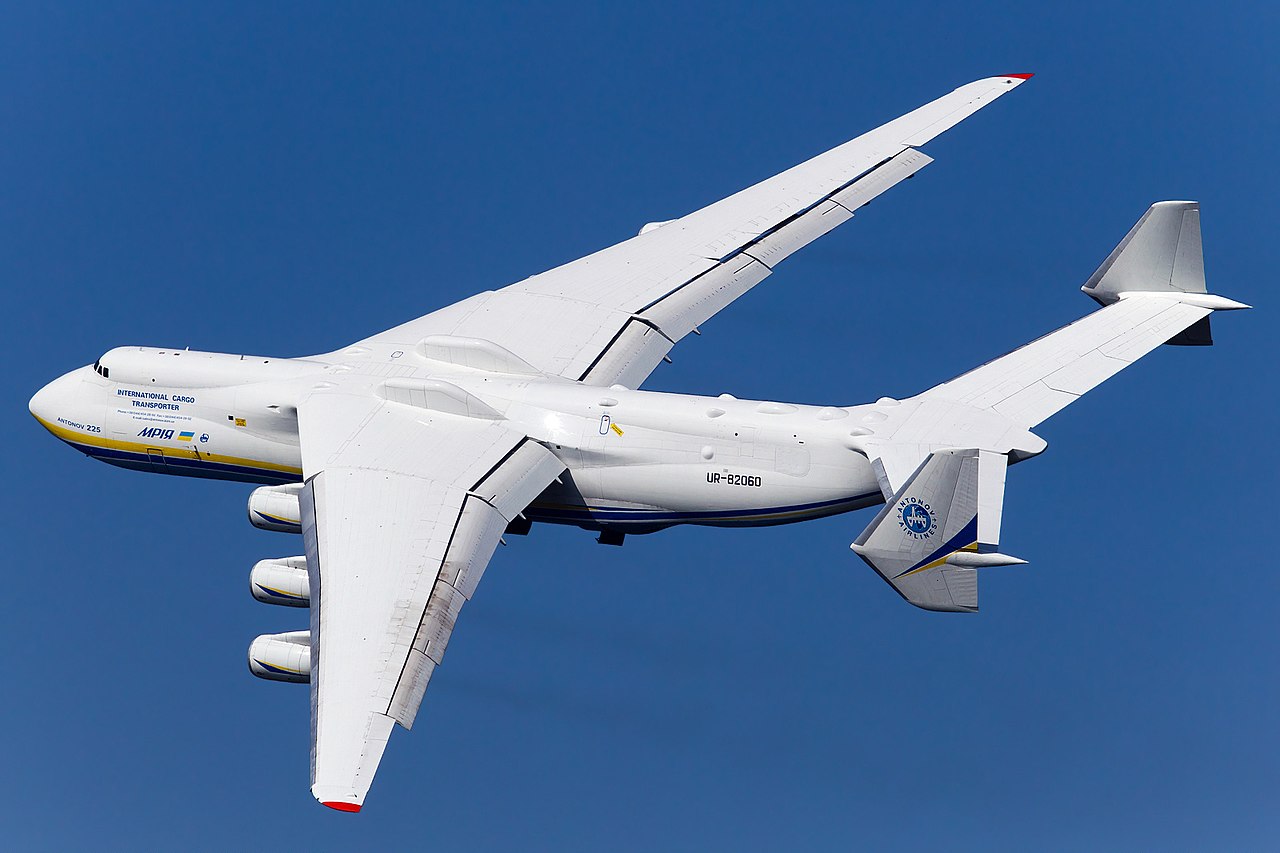
Larger cargo airlines tend to use new or recently built aircraft to carry their freight.[9] Current passenger aircraft such as the Boeing 777 and Airbus A330 offer freighter variants either from new the factory or as a conversion. Compared to the passenger variant, the freighter has a supernumerary area, which includes four business-class seats forward of the rigid cargo barrier, full main deck access, bunks, and a galley. Passenger planes converted to freighters have their windows plugged, passenger doors deactivated, fuselage and floor reinforced, and a main-deck cargo door installed.
Many cargo airlines still utilize older aircraft, including those no longer suited for passenger service, like the Boeing 727, Douglas DC-8, McDonnell Douglas DC-10, McDonnell Douglas MD-11, Airbus A300, and the Ilyushin Il-76. Examples of the 80+-year-old Douglas DC-3 are still flying around the world carrying cargo (as well as passengers). Short range turboprop airliners such as the Antonov An-12, Antonov An-26, Fokker Friendship, and British Aerospace ATP are being modified to accept standard air freight pallets to extend their working lives. This normally involves the replacement of glazed windows with opaque panels, the strengthening of the cabin floor and insertion of a broad top-hinged door in one side of the fuselage.
The Antonov An-225 Mriya, an enlarged version of the Antonov An-124 Ruslan, was the world's largest aircraft, used for transporting large shipments and oversized cargos.[10][11]
Usage of large military airplanes for commercial purposes, pioneered by Ukraine's Antonov Airlines in the 1990s, has allowed new types of cargo in aerial transportation.
Passenger and cargo
[edit]In the past, some cargo airlines would carry a few passengers from time to time on flights, and UPS Airlines once unsuccessfully tried a passenger charter airline division.
Passenger airlines regularly use their largest passenger aircraft like the Boeing 777-300 to earn additional revenue beyond passengers on a scheduled flight, by transporting a limited amount of cargo alongside passengers' luggage underneath the passenger cabin.[12] This is known as mixed operations or belly freight, and makes up 47.9% airline cargo traffic as of 2018.[1] Alaska Airlines operates a series of short flights nicknamed the "Milk Run" to small towns in Southeast Alaska that do not have road access, using five Boeing 737-400 Combi aircraft whose cabin is divided in half with cargo up front and 72 seats in the back.[13]
Low-cost carriers do not tend to operate cargo subsidiaries.[citation needed]
Types of cargo airlines
[edit]Several airlines dominate the sector.[14][15]
Top 10 cargo carriers in ctk (m)
[edit]_@_HKG,_Jan_2019_(01).jpg/1280px-FedEx_Express_B777F_(N850FD)_@_HKG,_Jan_2019_(01).jpg)
| Rank[16] | Airline | Country | 2024 | 2023 | 2022 | 2021 | 2020 | 2019 | 2018 |
|---|---|---|---|---|---|---|---|---|---|
| 1 | FedEx Express |  United States United States | 18,133 | 17,923 | 19,547 | 20,660 | 19,656 | 17,503 | 17,499 |
| 2 | Qatar Airways Cargo |  Qatar Qatar | 15,211 | 14,406 | 14,267 | 16,102 | 13,740 | 13,024 | 12,695 |
| 3 | UPS Airlines | United States | 15,094 | 14,239 | 15,889 | 15,529 | 14,371 | 12,842 | 12,459 |
| 4 | Emirates SkyCargo |  United Arab Emirates United Arab Emirates | 12,354 | 10,636 | 10,153 | 11,842 | 9,569 | 12,052 | 12,713 |
| 5 | Atlas Air | United States | 11,942 | 8,915 | 8,675 | 8,441 | 5,458 #12 | 4,522 #16 | 4,553 #16 |
| 6 | Korean Air Cargo |  South Korea South Korea | 8,728 | 8,411 | 9,518 | 10,429 | 8,104 | 7,412 | 7,839 |
| 7 | Turkish Cargo |  Turkey Turkey | 10,240 | 8,325 | 8,318 | 9,223 | 6,977 | 7,029 | 5,890 |
| 8 | Cathay Pacific Cargo |  Hong Kong Hong Kong | 8,503 | 8,099 | 5,774 #13 | 8,215 | 8,137 | 10,930 | 11,284 |
| 9 | China Southern Airlines Cargo |  China China | 8,653 | 7,610 | 6,915 | 8,078 | 6,591 | 6,825 | 6,597 |
| 10 | Cargolux |  Luxembourg Luxembourg | 8,263 | 6,807 | 7,971 | 8,587 | 7,345 | 7,180 | 7,322 |
Largest cargo carriers
[edit].jpg/1280px-N876FD@PEK_(20200114143922).jpg)


Some more large cargo carriers are:[17]
- Air France Cargo Division
- American Airlines Cargo Division
- Asiana Airlines Cargo Division
- Atlas Air
- British Airways Cargo Division
- China Airlines
- EVA Air Cargo Division
- Etihad Airways Cargo Division
- KLM Cargo Division
- Polar Air Cargo
- Turkish Airlines
- United Airlines Cargo Division
- WestJet Cargo Division
All-cargo subsidiary
[edit]
_HS-TGH_%22Chaiprakarn%22_(33832009916).jpg/1280px-Thai_Cargo_Boeing_747-4D7(BCF)_HS-TGH_%22Chaiprakarn%22_(33832009916).jpg)
The following are freight divisions of passenger airlines operating their own or leased freighter aircraft. Some have shut down or merged with others:[18]
- Aeroflot-Cargo
- Air Canada Cargo
- Air China Cargo
- Air France Cargo
- Air Hong Kong (Cathay Pacific)
- Air India Cargo
- Air Macau Cargo
- ANA Cargo
- Asiana Cargo
- Avianca Cargo
- Cathay Pacific Cargo
- Cebu Pacific Cargo (Cebu Pacific)
- China Airlines Cargo
- China Cargo Airlines (China Eastern Airlines)
- China Southern Cargo
- Delta Air Freight
- EgyptAir Cargo
- EL AL Cargo
- Emirates SkyCargo
- Ethiopian Airlines Cargo
- Etihad Cargo
- EVA Air Cargo
- Finnair Cargo
- Hong Kong Air Cargo (Hong Kong Airlines)
- IAG Cargo
- Icelandair Cargo
- Iran Air Cargo
- KLM Cargo
- Korean Air Cargo
- LAN Cargo
- Lufthansa Cargo
- MASkargo
- Qatar Airways Cargo
- RAM Cargo
- Royal Jordanian Cargo
- Saudia Cargo
- Shanghai Airlines Cargo
- Singapore Airlines Cargo
- South African Airways Cargo
- SpiceXpress
- TAM Cargo
- Turkish Airlines Cargo
- Uzbekistan Airways Cargo
- Yakutia Airlines Cargo
The following are freight divisions without freighter fleets, using passenger aircraft holds or having other cargo airlines fly on their behalf. Some of these previously had freighters:
- Alaska Air Cargo (2 cargo planes, 13 on order)
- American Airlines Freight
- British Airways World Cargo (opb Global Supply, three a/c to be in full BA Cargo scheme)
- Caribbean Airlines
- Cargo Garuda Indonesia
- Czech Airlines Cargo
- Delta Air Lines Cargo
- Dragon Air Cargo
- Gol Transportes Aéreos
- Gulf Air Cargo
- Hainan Airlines Cargo
- Iberia Cargo
- Japan Airlines Cargo
- Kenya Airways Cargo
- KLM Cargo (opb Martinair Cargo, four a/c in full KLM scheme)
- Kuwait Airways Cargo
- LOT Polish Airlines Cargo
- Pakistan International Airlines Cargo
- Philippine Airlines Cargo
- Qantas Freight (two a/c opb Express Freighters in Qantas scheme minus logo)
- SAS Cargo Group
- Shenzhen Airlines Cargo
- Sichuan Airlines Cargo
- South African Airways
- SriLankan Cargo
- Sudan Airways
- Swiss WorldCargo
- Thai Airways Cargo (two aircraft operated by Southern Air in full Thai Cargo scheme)
- United Airlines Cargo
- Virgin Atlantic Cargo
- Virgin Australia Cargo
These carriers operate freighter aircraft but do not have cargo divisions:
These carriers operate freighter aircraft exclusively
See also
[edit]- Airlift
- Cargo aircraft
- Cargo terminal
- Counter-to-counter package
- Dangerous goods
- List of cargo airlines
- Timeline of Air Cargo
References
[edit]- ^ a b "World Air Transport Statistics" (PDF). IATA. 2019. Archived from the original (PDF) on 2020-08-15. Retrieved 2020-06-04.
- ^ Asquith, James (March 28, 2020). "Commercial Airlines Are Now Operating Cargo-Only Flights". Forbes. Retrieved 2025-07-11.
- ^ Kulisch, Eric (2020-03-27). "Passenger airlines morph into cargo carriers". FreightWaves. Retrieved 2025-07-11.
- ^ Cargo Pilot, flycanada.org.
- ^ "Aircraft: the role of freighters – past, present and future", Air Cargo Management, Routledge, pp. 153–160, 2016-12-16, ISBN 978-1-315-62016-9, retrieved 2025-07-11
- ^ "Flying high: Understanding air freight and when to use it". www.maersk.com. Retrieved 2025-07-11.
- ^ Cirium (3 April 2020). "Freight rates on the rise amid slump in passenger flights". Flightglobal.
- ^ Stattimes, Media (3 Oct 2020). "How these trends are shaping up the future of logistics". Stattimes. Stattimes. Archived from the original on 2020-11-30. Retrieved 3 Oct 2020.
- ^ "Cargo Freighter Aircraft | AirFreight.com". www.airfreight.com. Retrieved 2025-07-11.
- ^ "Chapman Freeborn charters first AN-225 to South America". Chapman Freeborn Airchartering.
- ^ "Argentina's First Satellite Delivered on AN-124 Cargo Charter". Chapman Freeborn Airchartering. 2 October 2014.
- ^ "Boeing 777-300". ANA Cargo (in Japanese). Retrieved 2025-12-27.
- ^ Cosgrove, Cole (2015-06-11). "The Milk Run is a hop, skip and a jump along Southeast Alaska's coast". Alaska Airlines, Hawaiian Airlines and Horizon Air. Retrieved 2025-12-27.
- ^ Lee, Jeff (2020-09-16). "7 airlines with the most cargo-only flights". CARGOFACTS.COM. Retrieved 2025-07-11.
- ^ Kulisch, Eric (2021-03-29). "Who is king of cargo-only passenger flights?". FreightWaves. Retrieved 2025-07-11.
- ^ "Top 25 cargo airlines: Goes Slow on Growth in 2023". 2 September 2024.
- ^ "Top 25 cargo airlines 2018: FedEx at the top as Qatar closes in on Emirates". 15 July 2019.
- ^ "World's 50 largest air cargo carriers in 2014: FedEx leading the way". Air Cargo News. 15 September 2015.
External links
[edit]
- "Air Freight: A Market Study with Implications for Landlocked Countries" (PDF). World Bank. August 2009.

Cargo airlines (or air freight carriers, and derivatives of these names) are airlines mainly dedicated to the transport of cargo by air. Some cargo airlines are divisions or subsidiaries of larger passenger airlines. In 2018, airline cargo traffic represented 262,333 million tonne-kilometres with a 49.3% load factor: 52.1% for dedicated cargo operations, and 47.9% within mixed operations (belly freight of passenger airliners).[1]
Dedicated cargo airlines such as FedEx, UPS, and DHL, operate a fleet of cargo aircraft and handle the entire freight transportation process. Many airlines, like Emirates and Qatar Airways, have dedicated cargo divisions that operate their own fleet of cargo aircraft alongside their passenger operations. During the COVID-19 pandemic, airlines like American Airlines, Air Canada, and Delta Air Lines utilized their passenger planes, removing seats to create space for cargo, to meet the demand for freight transport.[2][3]
Pilots
A higher proportion of cargo flights are red-eye (overnight flights) than passenger flights. Compared to passenger airline pilots, cargo pilots are paid less but do not have to be responsible for passengers. Cargo pilots also have better job security due to air freight demand being more stable, as opposed to passenger airlines which often furlough their pilots in response to falling passenger demand.[4]
Freight rates
Air freight offers the fastest way to move cargo across long distances.[5][6]
Amid the COVID-19 pandemic, adjusted cargo capacity fell by 4.4% in February while air cargo demand also fell by 9.1%, but the near-halt in passenger traffic cut capacity even deeper as half of global air cargo is carried in passenger jets’ bellies. Air freight rates rose as a consequence, from $0.80 per kg for transatlantic cargoes to $2.50-4 per kg, enticing passenger airlines to operate cargo-only flights through the use of preighters, while cargo airlines bring back into service fuel-guzzling stored aircraft, helped by falling oil prices.[7]
Logistics
Air transport is a component of many international logistics networks, managing and controlling the flow of goods, energy, information and other resources like products, services, and people, from the source of production to the marketplace. Logistics involves the geographical repositioning of raw materials, work in process, and finished inventories.[8]
Aircraft used
Larger cargo airlines tend to use new or recently built aircraft to carry their freight.[9] Current passenger aircraft such as the Boeing 777 and Airbus A330 offer freighter variants either from new the factory or as a conversion. Compared to the passenger variant, the freighter has a supernumerary area, which includes four business-class seats forward of the rigid cargo barrier, full main deck access, bunks, and a galley. Passenger planes converted to freighters have their windows plugged, passenger doors deactivated, fuselage and floor reinforced, and a main-deck cargo door installed.
Many cargo airlines still utilize older aircraft, including those no longer suited for passenger service, like the Boeing 727, Douglas DC-8, McDonnell Douglas DC-10, McDonnell Douglas MD-11, Airbus A300, and the Ilyushin Il-76. Examples of the 80+-year-old Douglas DC-3 are still flying around the world carrying cargo (as well as passengers). Short range turboprop airliners such as the Antonov An-12, Antonov An-26, Fokker Friendship, and British Aerospace ATP are being modified to accept standard air freight pallets to extend their working lives. This normally involves the replacement of glazed windows with opaque panels, the strengthening of the cabin floor and insertion of a broad top-hinged door in one side of the fuselage.
The Antonov An-225 Mriya, an enlarged version of the Antonov An-124 Ruslan, was the world's largest aircraft, used for transporting large shipments and oversized cargos.[10][11]
Usage of large military airplanes for commercial purposes, pioneered by Ukraine's Antonov Airlines in the 1990s, has allowed new types of cargo in aerial transportation.
Passenger and cargo
In the past, some cargo airlines would carry a few passengers from time to time on flights, and UPS Airlines once unsuccessfully tried a passenger charter airline division.
Passenger airlines regularly use their largest passenger aircraft like the Boeing 777-300 to earn additional revenue beyond passengers on a scheduled flight, by transporting a limited amount of cargo alongside passengers' luggage underneath the passenger cabin.[12] This is known as mixed operations or belly freight, and makes up 47.9% airline cargo traffic as of 2018.[1] Alaska Airlines operates a series of short flights nicknamed the "Milk Run" to small towns in Southeast Alaska that do not have road access, using five Boeing 737-400 Combi aircraft whose cabin is divided in half with cargo up front and 72 seats in the back.[13]
Low-cost carriers do not tend to operate cargo subsidiaries.[citation needed]
Types of cargo airlines
Several airlines dominate the sector.[14][15]
Top 10 cargo carriers in ctk (m)
| Rank[16] | Airline | Country | 2024 | 2023 | 2022 | 2021 | 2020 | 2019 | 2018 |
|---|---|---|---|---|---|---|---|---|---|
| 1 | FedEx Express |  United States United States | 18,133 | 17,923 | 19,547 | 20,660 | 19,656 | 17,503 | 17,499 |
| 2 | Qatar Airways Cargo |  Qatar Qatar | 15,211 | 14,406 | 14,267 | 16,102 | 13,740 | 13,024 | 12,695 |
| 3 | UPS Airlines | United States | 15,094 | 14,239 | 15,889 | 15,529 | 14,371 | 12,842 | 12,459 |
| 4 | Emirates SkyCargo |  United Arab Emirates United Arab Emirates | 12,354 | 10,636 | 10,153 | 11,842 | 9,569 | 12,052 | 12,713 |
| 5 | Atlas Air | United States | 11,942 | 8,915 | 8,675 | 8,441 | 5,458 #12 | 4,522 #16 | 4,553 #16 |
| 6 | Korean Air Cargo |  South Korea South Korea | 8,728 | 8,411 | 9,518 | 10,429 | 8,104 | 7,412 | 7,839 |
| 7 | Turkish Cargo |  Turkey Turkey | 10,240 | 8,325 | 8,318 | 9,223 | 6,977 | 7,029 | 5,890 |
| 8 | Cathay Pacific Cargo |  Hong Kong Hong Kong | 8,503 | 8,099 | 5,774 #13 | 8,215 | 8,137 | 10,930 | 11,284 |
| 9 | China Southern Airlines Cargo |  China China | 8,653 | 7,610 | 6,915 | 8,078 | 6,591 | 6,825 | 6,597 |
| 10 | Cargolux |  Luxembourg Luxembourg | 8,263 | 6,807 | 7,971 | 8,587 | 7,345 | 7,180 | 7,322 |
Largest cargo carriers
Some more large cargo carriers are:[17]
- Air France Cargo Division
- American Airlines Cargo Division
- Asiana Airlines Cargo Division
- Atlas Air
- British Airways Cargo Division
- China Airlines
- EVA Air Cargo Division
- Etihad Airways Cargo Division
- KLM Cargo Division
- Polar Air Cargo
- Turkish Airlines
- United Airlines Cargo Division
- WestJet Cargo Division
All-cargo subsidiary
The following are freight divisions of passenger airlines operating their own or leased freighter aircraft. Some have shut down or merged with others:[18]
- Aeroflot-Cargo
- Air Canada Cargo
- Air China Cargo
- Air France Cargo
- Air Hong Kong (Cathay Pacific)
- Air India Cargo
- Air Macau Cargo
- ANA Cargo
- Asiana Cargo
- Avianca Cargo
- Cathay Pacific Cargo
- Cebu Pacific Cargo (Cebu Pacific)
- China Airlines Cargo
- China Cargo Airlines (China Eastern Airlines)
- China Southern Cargo
- Delta Air Freight
- EgyptAir Cargo
- EL AL Cargo
- Emirates SkyCargo
- Ethiopian Airlines Cargo
- Etihad Cargo
- EVA Air Cargo
- Finnair Cargo
- Hong Kong Air Cargo (Hong Kong Airlines)
- IAG Cargo
- Icelandair Cargo
- Iran Air Cargo
- KLM Cargo
- Korean Air Cargo
- LAN Cargo
- Lufthansa Cargo
- MASkargo
- Qatar Airways Cargo
- RAM Cargo
- Royal Jordanian Cargo
- Saudia Cargo
- Shanghai Airlines Cargo
- Singapore Airlines Cargo
- South African Airways Cargo
- SpiceXpress
- TAM Cargo
- Turkish Airlines Cargo
- Uzbekistan Airways Cargo
- Yakutia Airlines Cargo
The following are freight divisions without freighter fleets, using passenger aircraft holds or having other cargo airlines fly on their behalf. Some of these previously had freighters:
- Alaska Air Cargo (2 cargo planes, 13 on order)
- American Airlines Freight
- British Airways World Cargo (opb Global Supply, three a/c to be in full BA Cargo scheme)
- Caribbean Airlines
- Cargo Garuda Indonesia
- Czech Airlines Cargo
- Delta Air Lines Cargo
- Dragon Air Cargo
- Gol Transportes Aéreos
- Gulf Air Cargo
- Hainan Airlines Cargo
- Iberia Cargo
- Japan Airlines Cargo
- Kenya Airways Cargo
- KLM Cargo (opb Martinair Cargo, four a/c in full KLM scheme)
- Kuwait Airways Cargo
- LOT Polish Airlines Cargo
- Pakistan International Airlines Cargo
- Philippine Airlines Cargo
- Qantas Freight (two a/c opb Express Freighters in Qantas scheme minus logo)
- SAS Cargo Group
- Shenzhen Airlines Cargo
- Sichuan Airlines Cargo
- South African Airways
- SriLankan Cargo
- Sudan Airways
- Swiss WorldCargo
- Thai Airways Cargo (two aircraft operated by Southern Air in full Thai Cargo scheme)
- United Airlines Cargo
- Virgin Atlantic Cargo
- Virgin Australia Cargo
These carriers operate freighter aircraft but do not have cargo divisions:
These carriers operate freighter aircraft exclusively
See also
- Airlift
- Cargo aircraft
- Cargo terminal
- Counter-to-counter package
- Dangerous goods
- List of cargo airlines
- Timeline of Air Cargo
References
- ^ a b "World Air Transport Statistics" (PDF). IATA. 2019. Archived from the original (PDF) on 2020-08-15. Retrieved 2020-06-04.
- ^ Asquith, James (March 28, 2020). "Commercial Airlines Are Now Operating Cargo-Only Flights". Forbes. Retrieved 2025-07-11.
- ^ Kulisch, Eric (2020-03-27). "Passenger airlines morph into cargo carriers". FreightWaves. Retrieved 2025-07-11.
- ^ Cargo Pilot, flycanada.org.
- ^ "Aircraft: the role of freighters – past, present and future", Air Cargo Management, Routledge, pp. 153–160, 2016-12-16, ISBN 978-1-315-62016-9, retrieved 2025-07-11
- ^ "Flying high: Understanding air freight and when to use it". www.maersk.com. Retrieved 2025-07-11.
- ^ Cirium (3 April 2020). "Freight rates on the rise amid slump in passenger flights". Flightglobal.
- ^ Stattimes, Media (3 Oct 2020). "How these trends are shaping up the future of logistics". Stattimes. Stattimes. Archived from the original on 2020-11-30. Retrieved 3 Oct 2020.
- ^ "Cargo Freighter Aircraft | AirFreight.com". www.airfreight.com. Retrieved 2025-07-11.
- ^ "Chapman Freeborn charters first AN-225 to South America". Chapman Freeborn Airchartering.
- ^ "Argentina's First Satellite Delivered on AN-124 Cargo Charter". Chapman Freeborn Airchartering. 2 October 2014.
- ^ "Boeing 777-300". ANA Cargo (in Japanese). Retrieved 2025-12-27.
- ^ Cosgrove, Cole (2015-06-11). "The Milk Run is a hop, skip and a jump along Southeast Alaska's coast". Alaska Airlines, Hawaiian Airlines and Horizon Air. Retrieved 2025-12-27.
- ^ Lee, Jeff (2020-09-16). "7 airlines with the most cargo-only flights". CARGOFACTS.COM. Retrieved 2025-07-11.
- ^ Kulisch, Eric (2021-03-29). "Who is king of cargo-only passenger flights?". FreightWaves. Retrieved 2025-07-11.
- ^ "Top 25 cargo airlines: Goes Slow on Growth in 2023". 2 September 2024.
- ^ "Top 25 cargo airlines 2018: FedEx at the top as Qatar closes in on Emirates". 15 July 2019.
- ^ "World's 50 largest air cargo carriers in 2014: FedEx leading the way". Air Cargo News. 15 September 2015.
External links

.jpg)


_@_HKG,_Jan_2019_(01).jpg)
.jpg)


_HS-TGH_%22Chaiprakarn%22_(33832009916).jpg)
- "Air Freight: A Market Study with Implications for Landlocked Countries" (PDF). World Bank. August 2009.