タグ

天体力学

27 件の記事

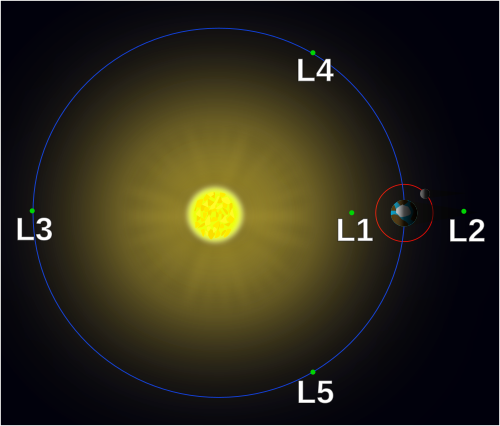
Lagrange points in the Sun–Earth system (not to scale). This view is from the north, such that Earth's orbit is counterclockwise.

ラグランジュ点宇宙の「重力の均衡点」とその活用

ラグランジュ点軌道力学ジェイムズ・ウェッブ宇宙望遠鏡L1
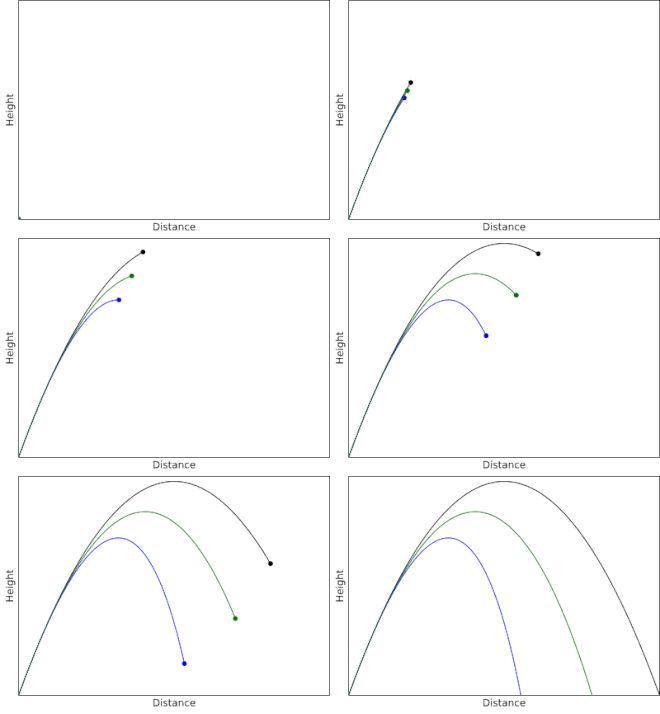
Trajectories of three objects thrown at the same angle (70°): Stokes' drag Newtonian drag No form of drag and moves along a parabola

弾道学の基礎と歴史投射体のメカニズムから宇宙航行まで

弾道学投射体内部弾道学外部弾道学
Figure 1: Tidal interaction between the spiral galaxy NGC 169 and a smaller companion[1]

潮汐力とは何か?天体を歪ませる重力の差とその影響

潮汐力重力勾配ロッシュ限界潮汐ロック
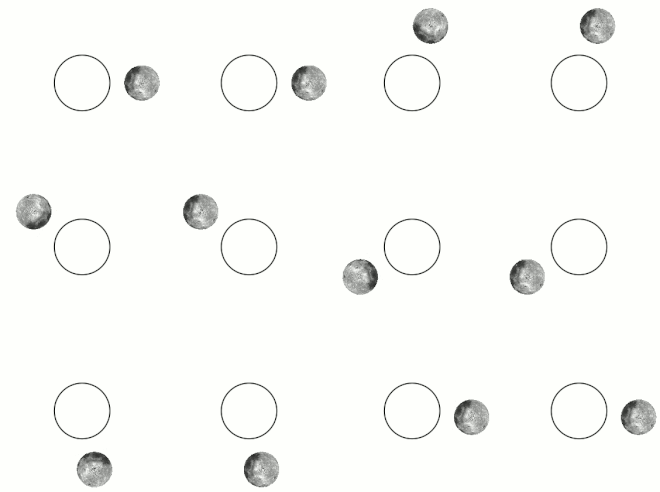
At left, tidally locked, the Moon rotates at the same rate it orbits the Earth, keeping the same face toward the planet. At right, not tidally locked, if the Moon did not rotate then the face would change over the course of an orbit. Viewed from north; not to scale.

潮汐ロックの仕組みと宇宙における影響

潮汐ロック同期回転天体力学
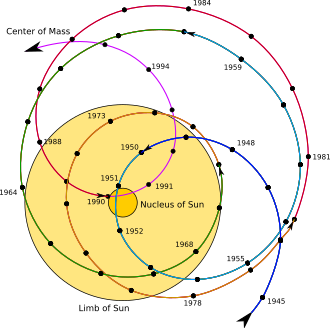
Motion of the Solar System's barycenter relative to the Sun

主星(プライマリー)とは天体力学における中心天体の定義と役割

主星プライマリー重心バリセンター
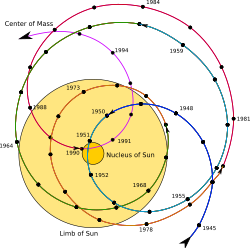
Motion of the Solar System's barycenter relative to the Sun

重心(バリセンター)が解き明かす天体のダイナミクス

重心バリセンター天体力学二体問題
Figure 1: Tidal interaction between the spiral galaxy NGC 169 and a smaller companion[1]

潮汐力とは何か?天体を歪ませる重力の差とその影響

潮汐力重力勾配ロッシュ限界潮汐ロック
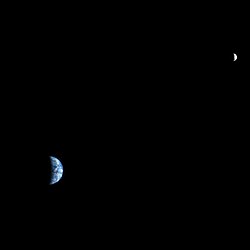
A picture of Earth and the Moon from Mars. The presence of the Moon (which has about 1/81 the mass of Earth), is slowing Earth's rotation and extending the day by a little under 2 milliseconds every 100 years.

潮汐加速と地球・月系のダイナミクス回転速度と軌道の変化

潮汐加速潮汐ブレーキ地球の自転月の軌道
Motion of the Solar System's barycenter relative to the Sun

主星(プライマリー)とは天体システムにおける中心的な役割と重心の仕組み

主星プライマリー重心バリセンター
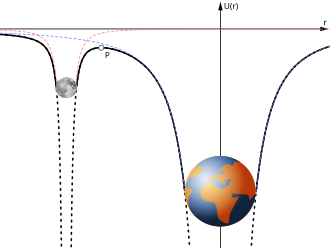
In sectional/side view, a two-dimensional representation of the three-dimensional concept of the Hill sphere, here showing the Earth's "gravity well" (gravitational potential of Earth, blue line), the same for the Moon (red line) and their combined potential (black thick line). Point P is the force free spot, where gravitational forces of Earth and Moon cancel. The sizes of Earth and Moon are in the proportion, but distances and energies are not to scale.

ヒル圏天体の重力支配領域とその力学

ヒル圏重力圏ラグランジュ点軌道力学
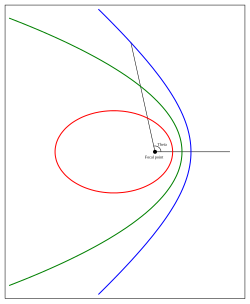
An elliptic, parabolic, and hyperbolic Kepler orbit: Elliptic (eccentricity = 0.7) Parabolic (eccentricity = 1) Hyperbolic orbit (eccentricity = 1.3)

軌道離心率天体の軌道形状を決定するメカニズム

軌道離心率ケプラー軌道天体力学楕円軌道
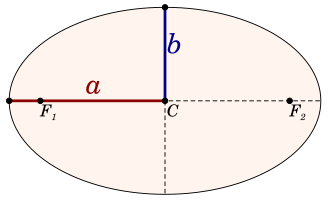
The semi-major (a) and semi-minor (b) axes of an ellipse

軌道要素の基礎軌道長半径と軌道短半径の幾何学と天文学的意味

軌道長半径軌道短半径離心率ケプラーの法則